Zhang Han-Ting, Huang Ying, Masood Anbrin, Stolinski Lisa R, Li Yunfeng, Zhang Lei, Dlaboga Daniel, Jin S-L Catherine, Conti Marco, O'Donnell James M
Department of Behavioral Medicine and Psychiatry, West Virginia University Health Sciences Center, Morgantown, WV 26506, USA.
Neuropsychopharmacology. 2008 Jun;33(7):1611-23. doi: 10.1038/sj.npp.1301537. Epub 2007 Aug 15.
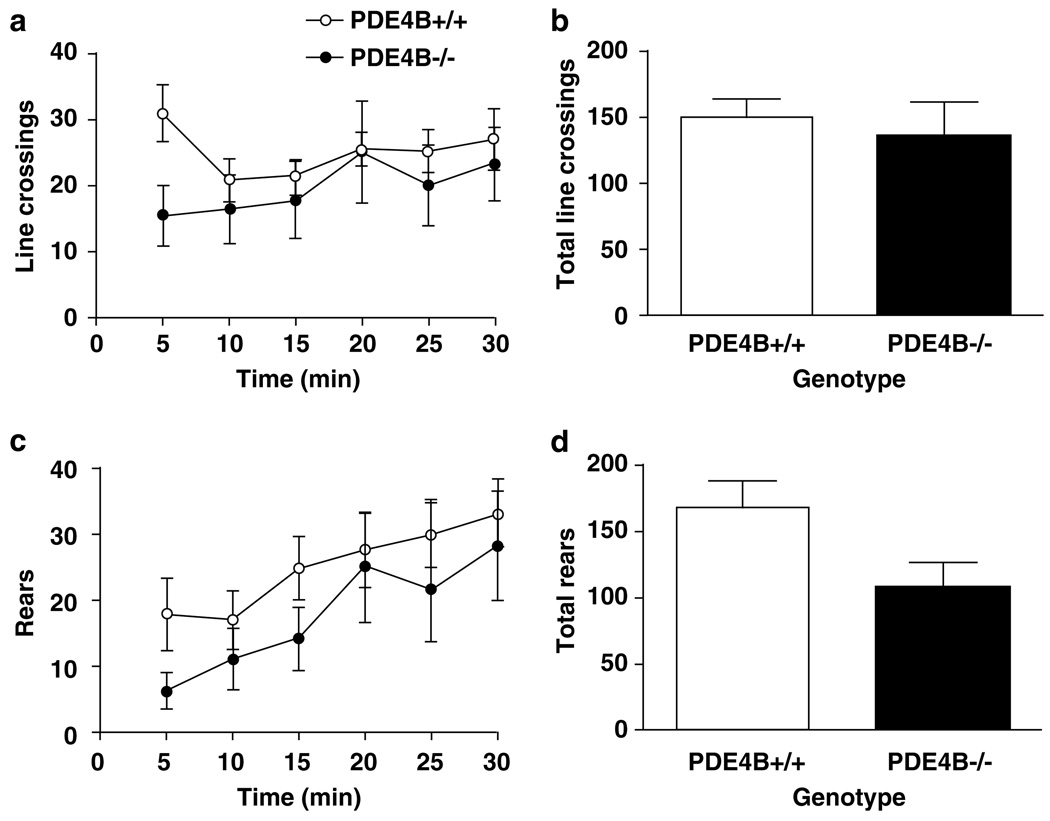
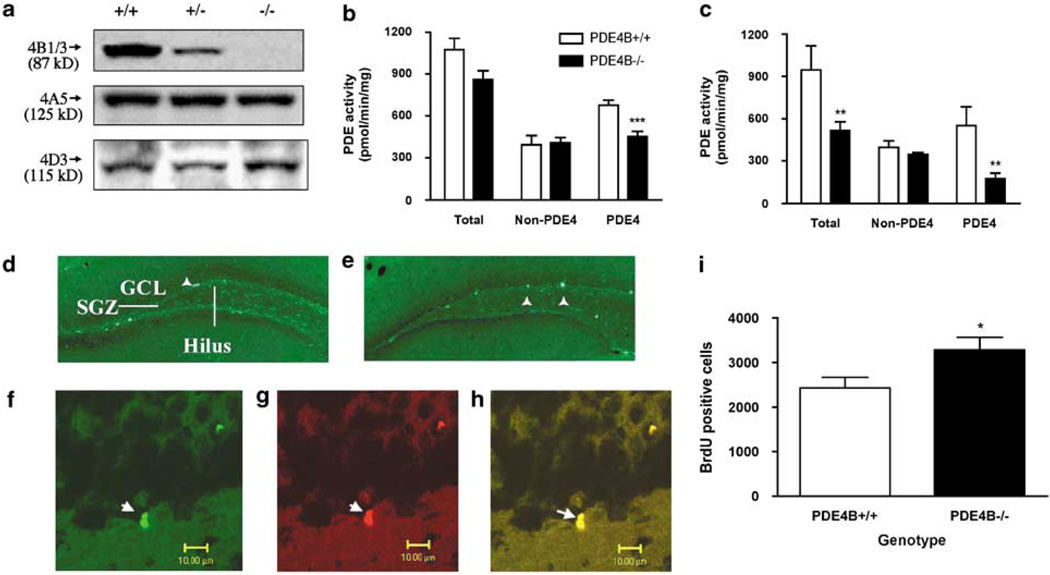
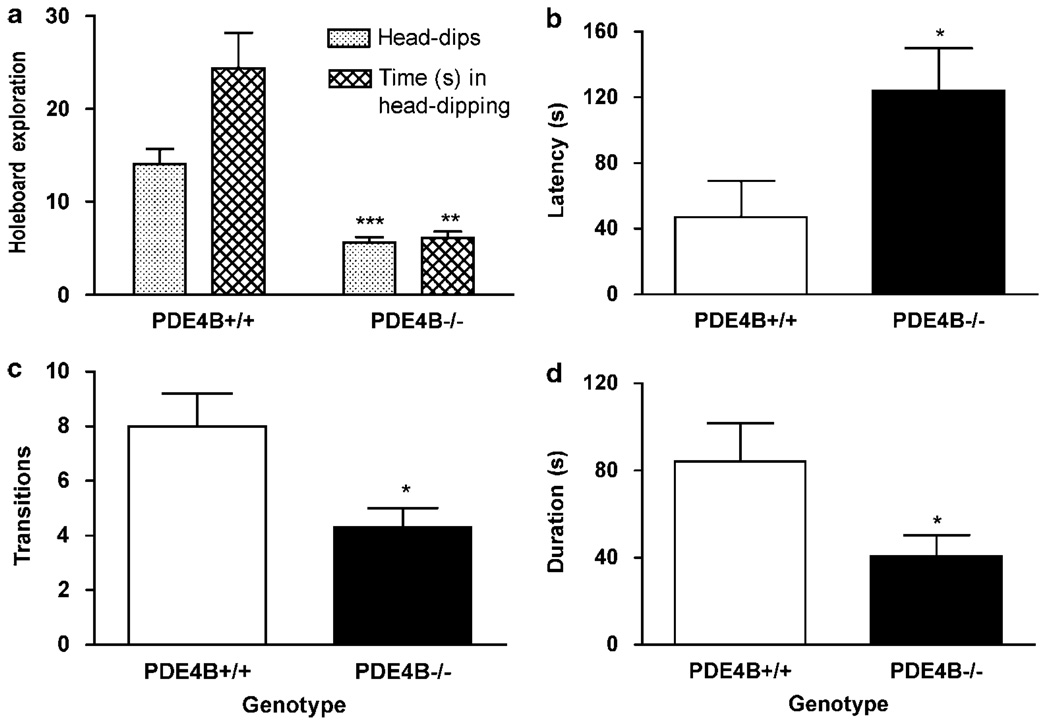
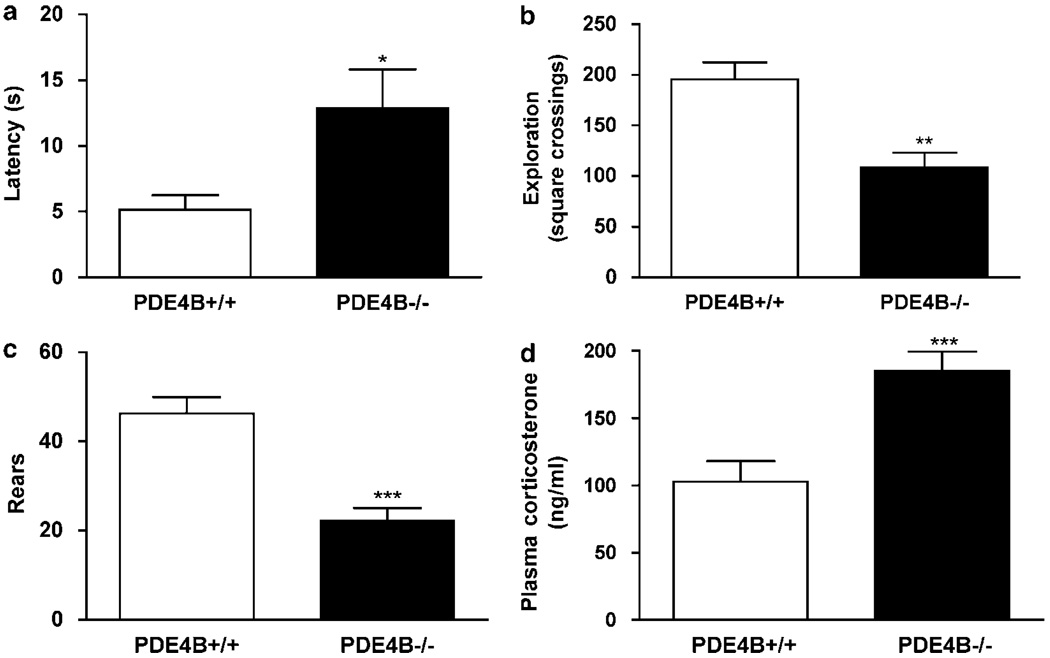
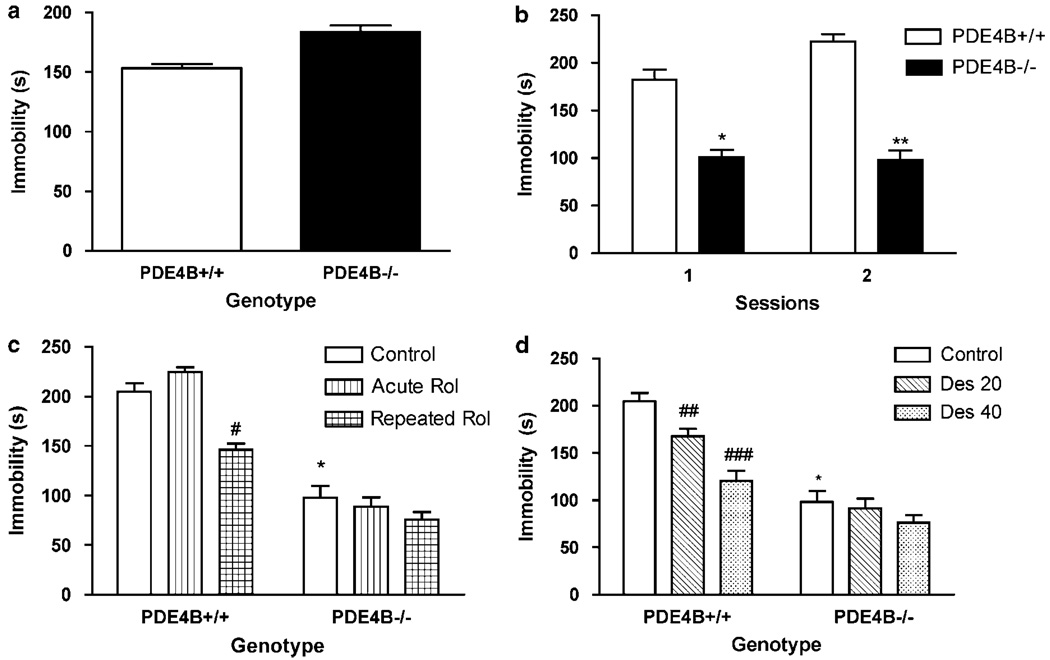
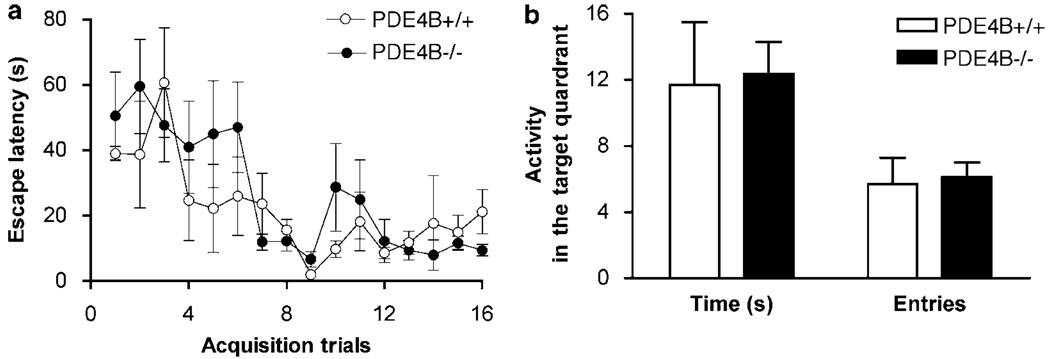
Phosphodiesterase-4 (PDE4), an enzyme that catalyzes the hydrolysis of cyclic AMP and plays a critical role in controlling its intracellular concentration, has been implicated in depression- and anxiety-like behaviors. However, the functions of the four PDE4 subfamilies (PDE4A, PDE4B, PDE4C, and PDE4D) remain largely unknown. In animal tests sensitive to anxiolytics, antidepressants, memory enhancers, or analgesics, we examined the behavioral phenotype of mice deficient in PDE4B (PDE4B-/-). Immunoblot analysis revealed loss of PDE4B expression in the cerebral cortex and amygdala of PDE4B-/- mice. The reduction of PDE4B expression was accompanied by decreases in PDE4 activity in the brain regions of PDE4B-/- mice. Compared to PDE4B+/+ littermates, PDE4B-/- mice displayed anxiogenic-like behavior, as evidenced by decreased head-dips and time spent in head-dipping in the holeboard test, reduced transitions and time on the light side in the light-dark transition test, and decreased initial exploration and rears in the open-field test. Consistent with anxiogenic-like behavior, PDE4B-/- mice displayed increased levels of plasma corticosterone. In addition, these mice also showed a modest increase in the proliferation of neuronal cells in the hippocampal dentate gyrus. In the forced-swim test, PDE4B-/- mice exhibited decreased immobility; however, this was not supported by the results from the tail-suspension test. PDE4B-/- mice did not display changes in memory, locomotor activity, or nociceptive responses. Taken together, these results suggest that the PDE4B subfamily is involved in signaling pathways that contribute to anxiogenic-like effects on behavior.
磷酸二酯酶4(PDE4)是一种催化环磷酸腺苷水解并在控制其细胞内浓度方面起关键作用的酶,它与抑郁样和焦虑样行为有关。然而,四个PDE4亚家族(PDE4A、PDE4B、PDE4C和PDE4D)的功能在很大程度上仍不清楚。在对抗焦虑药、抗抑郁药、记忆增强剂或镇痛药敏感的动物试验中,我们研究了PDE4B基因缺失小鼠(PDE4B-/-)的行为表型。免疫印迹分析显示PDE4B-/-小鼠大脑皮层和杏仁核中PDE4B表达缺失。PDE4B表达的减少伴随着PDE4B-/-小鼠脑区PDE4活性的降低。与PDE4B+/+同窝小鼠相比,PDE4B-/-小鼠表现出焦虑样行为,如在洞板试验中头部浸入次数减少和头部浸入时间缩短、明暗转换试验中转换次数和在亮侧停留时间减少、旷场试验中初始探索和竖毛次数减少。与焦虑样行为一致,PDE4B-/-小鼠血浆皮质酮水平升高。此外,这些小鼠海马齿状回中神经元细胞的增殖也有适度增加。在强迫游泳试验中,PDE4B-/-小鼠的不动时间减少;然而,尾悬试验的结果并不支持这一点。PDE4B-/-小鼠在记忆、运动活动或伤害性反应方面没有表现出变化。综上所述,这些结果表明PDE4B亚家族参与了对行为产生焦虑样影响的信号通路。