Humboldt-Universität zu Berlin, Museum für Naturkunde, Berlin, Germany.
PLoS One. 2007 Sep 12;2(9):e889. doi: 10.1371/journal.pone.0000889.
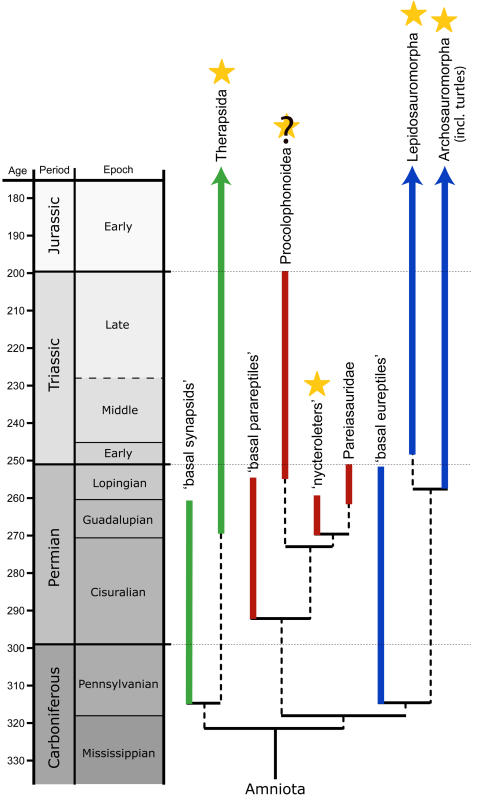
Insights into the onset of evolutionary novelties are key to the understanding of amniote origins and diversification. The possession of an impedance-matching tympanic middle ear is characteristic of all terrestrial vertebrates with a sophisticated hearing sense and an adaptively important feature of many modern terrestrial vertebrates. Whereas tympanic ears seem to have evolved multiple times within tetrapods, especially among crown-group members such as frogs, mammals, squamates, turtles, crocodiles, and birds, the presence of true tympanic ears has never been recorded in a Paleozoic amniote, suggesting they evolved fairly recently in amniote history.
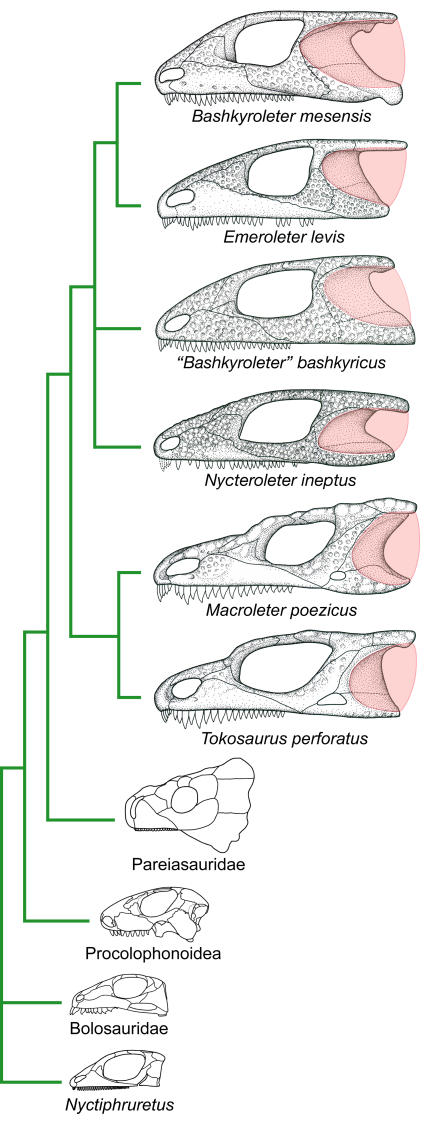
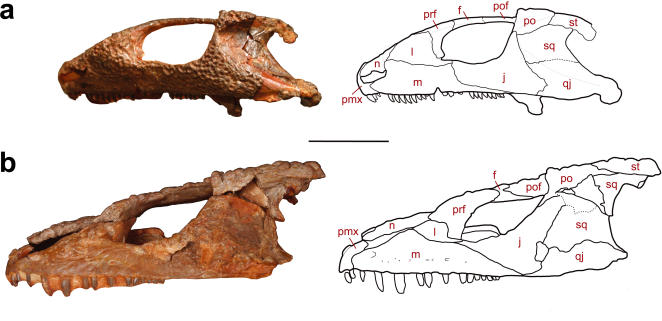
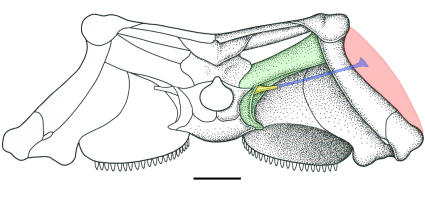
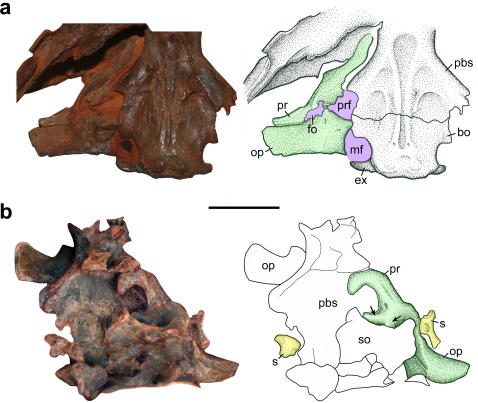
METHODOLOGY/PRINCIPAL FINDINGS: In the present study, we performed a morphological examination and a phylogenetic analysis of poorly known parareptiles from the Middle Permian of the Mezen River Basin in Russia. We recovered a well-supported clade that is characterized by a unique cheek morphology indicative of a tympanum stretching across large parts of the temporal region to an extent not seen in other amniotes, fossil or extant, and a braincase specialized in showing modifications clearly related to an increase in auditory function, unlike the braincase of any other Paleozoic tetrapod. In addition, we estimated the ratio of the tympanum area relative to the stapedial footplate for the basalmost taxon of the clade, which, at 23:1, is in close correspondence to that of modern amniotes capable of efficient impedance-matching hearing.
CONCLUSIONS/SIGNIFICANCE: Using modern amniotes as analogues, the possession of an impedance-matching middle ear in these parareptiles suggests unique ecological adaptations potentially related to living in dim-light environments. More importantly, our results demonstrate that already at an early stage of amniote diversification, and prior to the Permo-Triassic extinction event, the complexity of terrestrial vertebrate ecosystems had reached a level that proved advanced sensory perception to be of notable adaptive significance.
深入了解进化创新的起源对于理解羊膜动物的起源和多样化至关重要。中耳具有阻抗匹配功能是所有具有复杂听觉感觉的陆地脊椎动物的特征,也是许多现代陆地脊椎动物的重要适应性特征。尽管中耳似乎在四足动物中多次进化,尤其是在青蛙、哺乳动物、有鳞目动物、龟鳖目动物、鳄目动物和鸟类等冠群成员中,但在古生代羊膜动物中从未记录到真正的中耳,这表明它们在羊膜动物的历史中相对较晚才进化出来。
方法/主要发现:在本研究中,我们对俄罗斯梅津河流域中二叠纪中期的一种未知的副爬行动物进行了形态学检查和系统发育分析。我们发现了一个支持度很高的分支,其特征是独特的颊部形态,表明鼓膜延伸到颞区的很大一部分,这在其他羊膜动物、化石或现存动物中都没有见过,而且头骨专门用于显示与听觉功能增强明显相关的变化,这与任何其他古生代四足动物的头骨都不同。此外,我们还估算了分支中最基础的分类群的鼓膜面积与镫骨足板的比例,为 23:1,与具有高效阻抗匹配听觉能力的现代羊膜动物非常接近。
结论/意义:利用现代羊膜动物作为类比,这些副爬行动物具有阻抗匹配的中耳,这表明它们具有独特的生态适应能力,可能与生活在微光环境中有关。更重要的是,我们的研究结果表明,在羊膜动物多样化的早期阶段,即在二叠纪三叠纪灭绝事件之前,陆地脊椎动物生态系统的复杂性已经达到了一个水平,证明了先进的感官感知具有显著的适应性意义。