Garcia-Frigola Cristina, Carreres Maria Isabel, Vegar Celia, Herrera Eloisa
Instituto de Neurociencias de Alicante, Universidad Miguel Hernández-CSIC, Campus de San Juan, Apt 18, San Juan de Alicante, Alicante 03550, Spain.
BMC Dev Biol. 2007 Sep 17;7:103. doi: 10.1186/1471-213X-7-103.
The neural retina is a highly structured tissue of the central nervous system that is formed by seven different cell types that are arranged in layers. Despite much effort, the genetic mechanisms that underlie retinal development are still poorly understood. In recent years, large-scale genomic analyses have identified candidate genes that may play a role in retinal neurogenesis, axon guidance and other key processes during the development of the visual system. Thus, new and rapid techniques are now required to carry out high-throughput analyses of all these candidate genes in mammals. Gene delivery techniques have been described to express exogenous proteins in the retina of newborn mice but these approaches do not efficiently introduce genes into the only retinal cell type that transmits visual information to the brain, the retinal ganglion cells (RGCs).
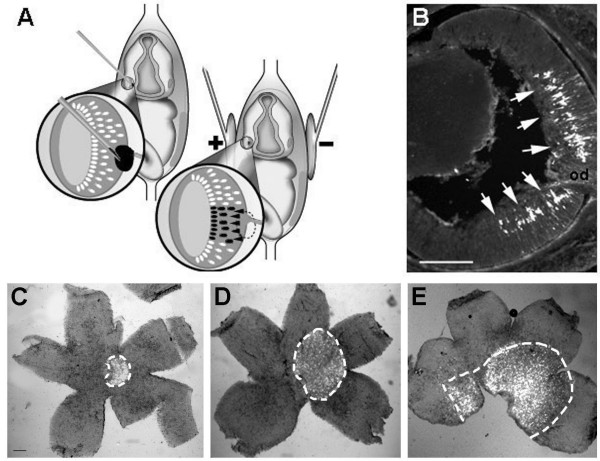
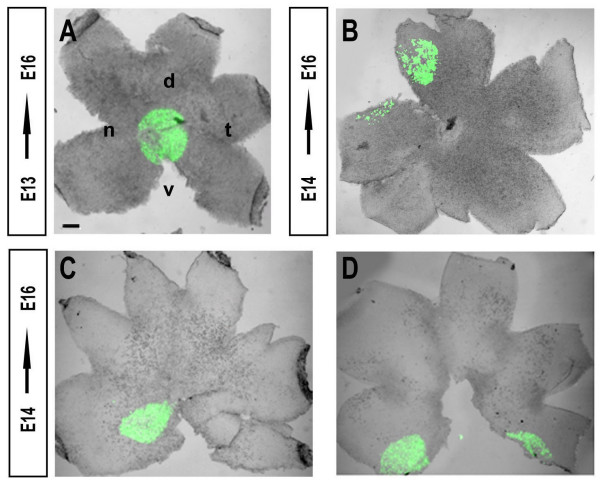
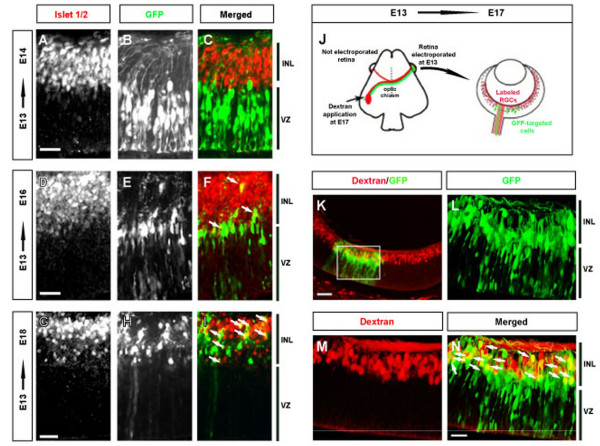
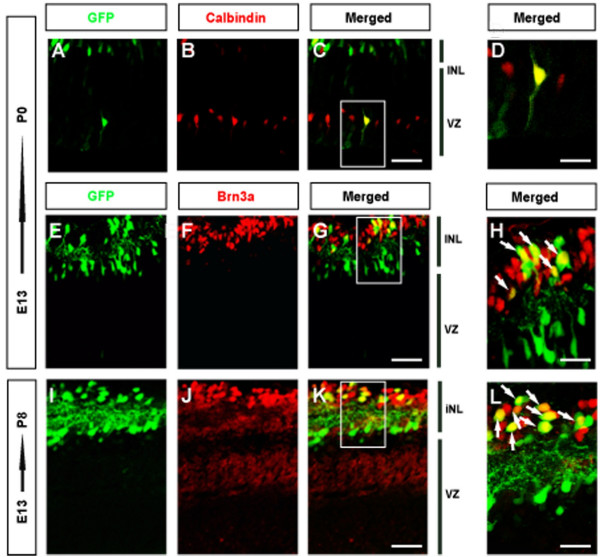
Here we show that RGCs can be targeted for gene expression by in utero electroporation of the eye of mouse embryos. Accordingly, using this technique we have monitored the morphology of electroporated RGCs expressing reporter genes at different developmental stages, as well as their projection to higher visual targets.
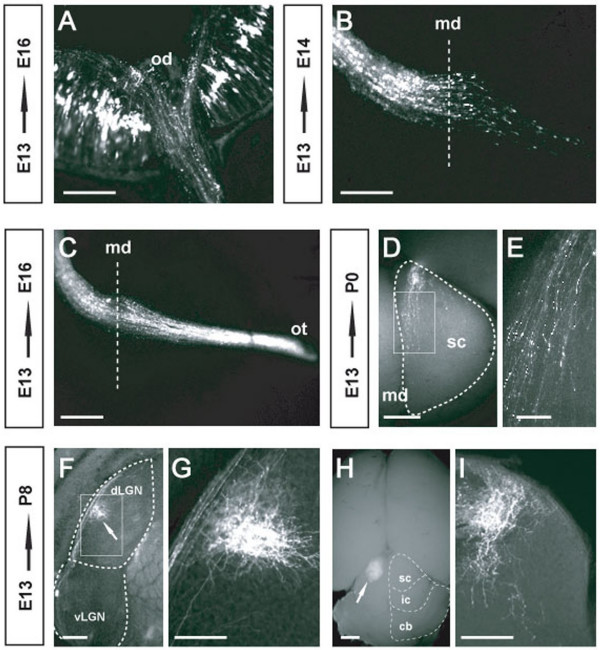
Our method to deliver ectopic genes into mouse embryonic retinas enables us to follow the course of the entire retinofugal pathway by visualizing RGC bodies and axons. Thus, this technique will permit to perform functional studies in vivo focusing on neurogenesis, axon guidance, axon projection patterning or neural connectivity in mammals.
神经视网膜是中枢神经系统中一种高度结构化的组织,由排列成层的七种不同细胞类型组成。尽管付出了很多努力,但视网膜发育的遗传机制仍知之甚少。近年来,大规模基因组分析已鉴定出可能在视觉系统发育过程中的视网膜神经发生、轴突导向及其他关键过程中发挥作用的候选基因。因此,现在需要新的快速技术来对哺乳动物中的所有这些候选基因进行高通量分析。已有文献描述了基因递送技术可在新生小鼠视网膜中表达外源蛋白,但这些方法不能有效地将基因导入唯一能将视觉信息传递至大脑的视网膜细胞类型,即视网膜神经节细胞(RGCs)。
在此我们表明,通过对小鼠胚胎的眼睛进行子宫内电穿孔可靶向RGCs进行基因表达。相应地,利用该技术我们监测了在不同发育阶段表达报告基因的电穿孔RGCs的形态,以及它们向更高视觉靶点的投射。
我们将异位基因导入小鼠胚胎视网膜的方法使我们能够通过可视化RGCs的细胞体和轴突来追踪整个视网膜传出通路的进程。因此,该技术将允许在体内进行聚焦于哺乳动物神经发生、轴突导向、轴突投射模式或神经连接的功能研究。