Rathore Anurag, Chatterjee Animesh, Sivarama P, Yamamoto Naohiko, Dhole Tapan N
Department of Microbiology, Sanjay Gandhi Post Graduate Institute of Medical Sciences, Raebarelli Road, Lucknow 226014, India.
J Clin Immunol. 2008 Jan;28(1):50-7. doi: 10.1007/s10875-007-9131-x. Epub 2007 Sep 18.
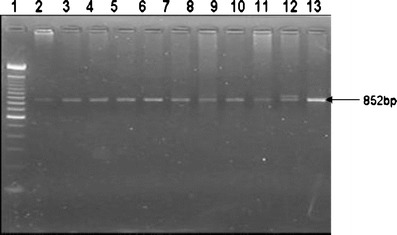
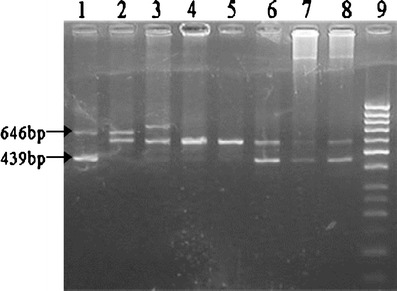
Despite multiple sexual exposures to HIV-1 virus, some individuals remain HIV-1 seronegative. Although several genetic factors have been related to HIV-1 resistance, the homozygosity for a mutation in CCR5 gene (the 32-bp deletion, i.e., CCR5-Delta32 allele) is presently considered the most relevant one. The C-type lectins, DC-SIGN (present on dendritic cells and macrophages) and DC-SIGNR (present on endothelial cells in liver and lymph nodes) efficiently bind and transmit HIV-1 to susceptible cell in trans, thereby augmenting the infection. A potential association of the DC-SIGN and DC-SIGNR neck domain repeat polymorphism and risk of HIV-1 infection is currently under debate. To determine the influence of host genetic factors on HIV-1 resistance, we conducted genetic risk association study in HIV-1-exposed seronegative (n = 47) individuals, HIV-1 seronegative (n = 262) healthy control, and HIV-1-infected seropositive patients (n = 168) for polymorphism in neck domain of DC-SIGN and DC-SIGNR genes. The DC-SIGN and DC-SIGNR genotypes were identified by polymerase chain reaction method in DNA extracted from peripheral blood and confirmed by sequencing. Fisher exact or chi (2) test was used for static analysis. DC-SIGN genotype and allele distribution was fairly similar in HIV-1-exposed seronegative, HIV-1 seropositive, and HIV-1 seronegative control. There was no statistical significance in the differences in the distribution of DC-SIGN genotypes. A total of 13 genotypes were found in DC-SIGNR neck repeat region polymorphism. Among all the genotypes, only 5/5 homozygous showed significant reduced risk of HIV-1 infection in HIV-1-exposed seronegative individuals (p = 0.009). A unique genotype 8/5 heterozygous was also found in HIV-1 seropositive individual, which is not reported elsewhere.
尽管多次暴露于HIV-1病毒,但一些个体仍保持HIV-1血清阴性。虽然有几个遗传因素与HIV-1抗性有关,但目前认为CCR5基因中的一个突变(32碱基对缺失,即CCR5-Δ32等位基因)的纯合性是最相关的。C型凝集素DC-SIGN(存在于树突状细胞和巨噬细胞上)和DC-SIGNR(存在于肝脏和淋巴结的内皮细胞上)能有效地结合HIV-1并将其传递给易感染细胞,从而增强感染。目前关于DC-SIGN和DC-SIGNR颈部结构域重复多态性与HIV-1感染风险之间的潜在关联仍存在争议。为了确定宿主遗传因素对HIV-1抗性的影响,我们对暴露于HIV-1的血清阴性个体(n = 47)、HIV-1血清阴性健康对照(n = 262)以及HIV-1感染的血清阳性患者(n = 168)进行了DC-SIGN和DC-SIGNR基因颈部结构域多态性的遗传风险关联研究。通过聚合酶链反应方法在外周血提取的DNA中鉴定DC-SIGN和DC-SIGNR基因型,并通过测序进行确认。采用Fisher精确检验或卡方检验进行统计学分析。在暴露于HIV-1的血清阴性个体、HIV-1血清阳性个体和HIV-1血清阴性对照中,DC-SIGN基因型和等位基因分布相当相似。DC-SIGN基因型分布的差异无统计学意义。在DC-SIGNR颈部重复区域多态性中总共发现了13种基因型。在所有基因型中,只有5/5纯合子在暴露于HIV-1的血清阴性个体中显示出HIV-1感染风险显著降低(p = 0.009)。在HIV-1血清阳性个体中还发现了一种独特的8/5杂合基因型,其他地方未报道过。