Hussain Nazimul, Ghanekar Yashoda, Kaur Inderjeet
Smt. Kanuri Santhamma Retina Vitreous Centre, L.V. Prasad Eye Institute, Hyderabad, Andhra Pradesh, India.
Indian J Ophthalmol. 2007 Nov-Dec;55(6):445-50. doi: 10.4103/0301-4738.36480.
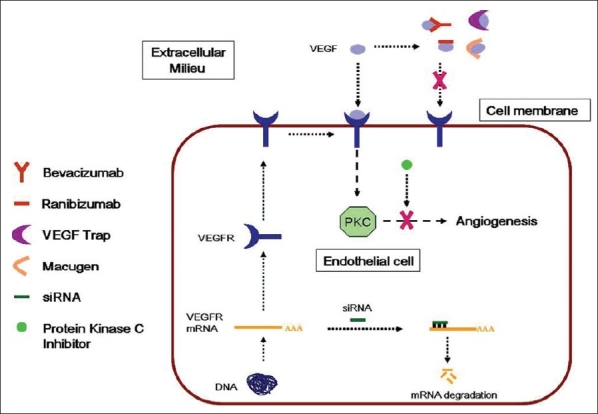
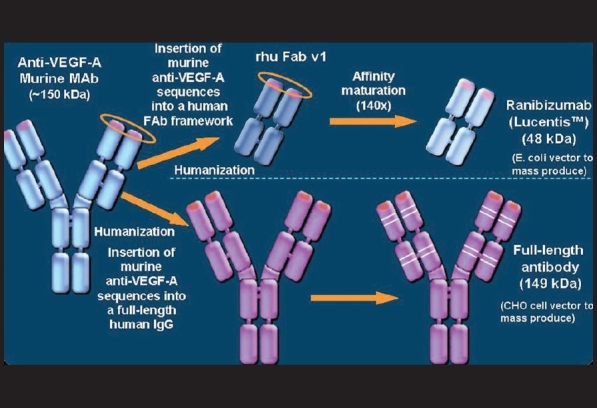
In the last few years anti-vascular endothelial growth factor (VEGF) therapy has changed the paradigm in the treatment of neovascular age-related macular degeneration (ARMD). Besides, its potential use in the treatment of diabetic retinopathy and other possible proliferative vascular disorders has also shown promise. Clinical trial results have shown tremendous beneficial effect of ranibizumab in ARMD. Off-label use of bevacizumab has also shown similar benefit but long-term and clinical trial results do not exist. Some of the potential questions in the use of anti-VEGF are recurring cost, possible long-term effect on physiological function of VEGF and determination of endpoint of treatment. Overall, the use of anti-VEGF therapy in ocular angiogenesis has proven to be beneficial at least now.
在过去几年中,抗血管内皮生长因子(VEGF)疗法改变了新生血管性年龄相关性黄斑变性(ARMD)的治疗模式。此外,其在糖尿病视网膜病变及其他可能的增殖性血管疾病治疗中的潜在应用也显示出前景。临床试验结果表明,雷珠单抗在ARMD治疗中具有巨大的有益效果。贝伐单抗的非标签使用也显示出类似的益处,但缺乏长期及临床试验结果。抗VEGF使用中的一些潜在问题包括反复出现的费用、对VEGF生理功能可能的长期影响以及治疗终点的确定。总体而言,至少目前抗VEGF疗法在眼部血管生成中的应用已被证明是有益的。