Steffensen Knut R, Bouzga Mariam, Skjeldal Frode, Kasi Cecilie, Karahasan Almira, Matre Vilborg, Bakke Oddmund, Guérin Sylvain, Eskild Winnie
Department of Molecular Biosciences, University of Oslo, Norway.
BMC Mol Biol. 2007 Nov 16;8:106. doi: 10.1186/1471-2199-8-106.
Novel, uncharacterised proteins represent a challenge in biochemistry and molecular biology. In this report we present an initial functional characterization of human kidney predominant protein, NCU-G1.
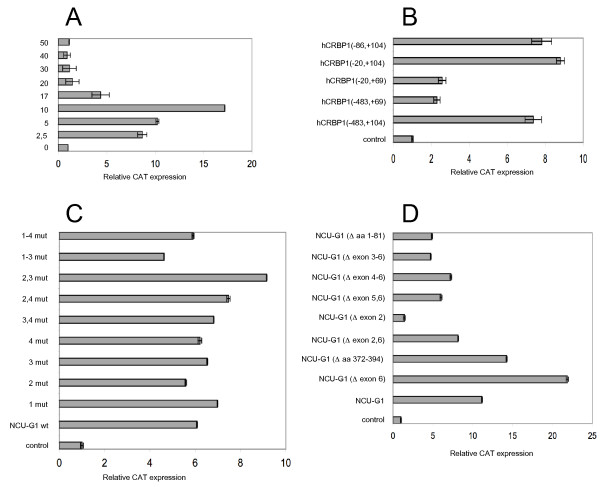
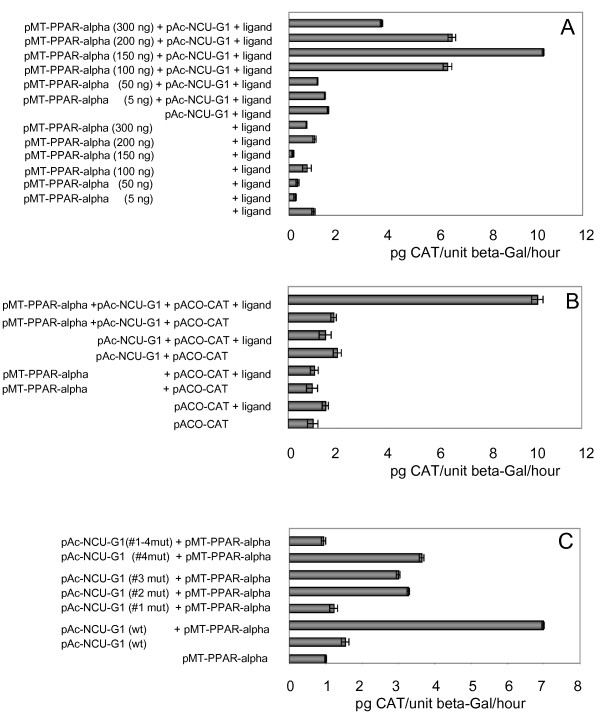
NCU-G1 was found to be a highly conserved nuclear protein rich in proline with a molecular weight of approximately 44 kDa. It is localized on chromosome 1 and consists of 6 exons. Analysis of the amino acid sequence revealed no known transcription activation domains or DNA binding regions, however, four nuclear receptor boxes (LXXLL), and four SH3-interaction motives in addition to numerous potential phosphorylation sites were found. Two nuclear export signals were identified, but no nuclear localization signal. In man, NCU-G1 was found to be widely expressed at the mRNA level with especially high levels detected in prostate, liver and kidney. Electrophoretic mobility shift analysis showed specific binding of NCU-G1 to an oligonucleotide representing the footprint 1 element of the human cellular retinol-binding protein 1 gene promoter. NCU-G1 was found to activate transcription from this promoter and required presence of the footprint 1 element. In transiently transfected Drosophila Schneider S2 cells, we demonstrated that NCU-G1 functions as a co-activator for ligand-activated PPAR-alpha, resulting in an increased expression of a CAT reporter gene under control of the peroxisome proliferator-activated receptor-alpha responsive acyl-CoA oxidase promoter.
We propose that NCU-G1 is a dual-function protein capable of functioning as a transcription factor as well as a nuclear receptor co-activator.
新型未表征蛋白质是生物化学和分子生物学中的一项挑战。在本报告中,我们对人肾优势蛋白NCU-G1进行了初步功能表征。
发现NCU-G1是一种富含脯氨酸的高度保守核蛋白,分子量约为44 kDa。它定位于1号染色体,由6个外显子组成。氨基酸序列分析未发现已知的转录激活域或DNA结合区域,然而,发现了四个核受体盒(LXXLL)、四个SH3相互作用基序以及众多潜在的磷酸化位点。鉴定出两个核输出信号,但未发现核定位信号。在人类中,发现NCU-G1在mRNA水平广泛表达,在前列腺、肝脏和肾脏中检测到的水平尤其高。电泳迁移率变动分析表明,NCU-G1与代表人类细胞视黄醇结合蛋白1基因启动子足迹1元件的寡核苷酸特异性结合。发现NCU-G1可激活该启动子的转录,且需要足迹1元件的存在。在瞬时转染的果蝇Schneider S2细胞中,我们证明NCU-G1作为配体激活的PPAR-α的共激活因子发挥作用,导致在过氧化物酶体增殖物激活受体-α应答性酰基辅酶A氧化酶启动子控制下的CAT报告基因表达增加。
我们提出NCU-G1是一种双功能蛋白,能够作为转录因子以及核受体共激活因子发挥作用。