Martignoni Guido, Pea Maurizio, Reghellin Daniela, Zamboni Giuseppe, Bonetti Franco
Department of Pathology, Università di Verona, Verona, Italy.
Virchows Arch. 2008 Feb;452(2):119-32. doi: 10.1007/s00428-007-0509-1. Epub 2007 Dec 14.
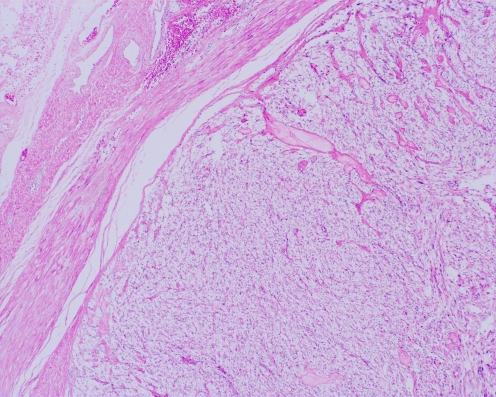
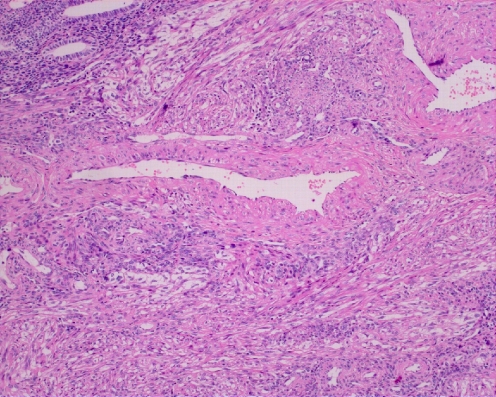
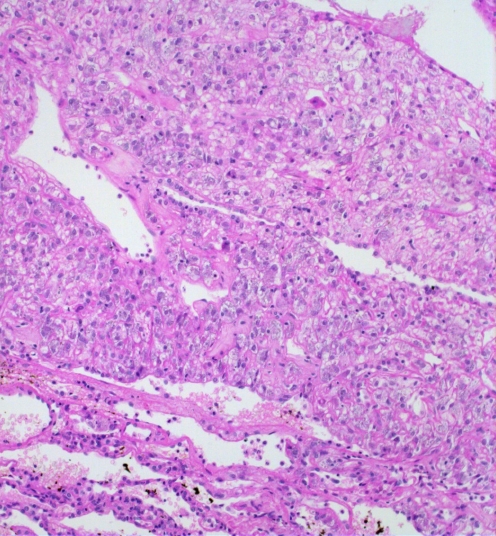
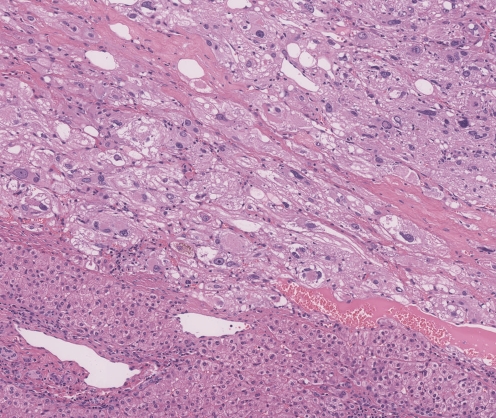
The perivascular epithelioid cell (PEC) is a cell type constantly present in a group of tumors called PEComas. PEC expresses myogenic and melanocytic markers, such as HMB45 and actin. Recently, recurrent chromosomal alterations have been demonstrated in PEC. At present, PEComa is a widely accepted entity. In the past 10 years, the use of this term has allowed to report and describe numerous cases permitting to start highlighting the biology of this group of lesions. PEComas are related to the genetic alterations of tuberous sclerosis complex (TSC), an autosomal dominant genetic disease due to losses of TSC1 (9q34) or TSC2 (16p13.3) genes which seem to have a role in the regulation of the Rheb/mTOR/p70S6K pathway. There are some open questions about PEComas regarding its histogenesis, the definition of epithelioid angiomyolipoma and the identification of the histological criteria of malignancy. An innovative therapeutic trial using rapamycin is under way for tumors occurring in TSC such as renal angiomyolipoma and lymphangioleiomyomatosis. Its success could provide the rationale for the use of the same drug in other lesions composed of PECs, especially in the malignant ones.
血管周上皮样细胞(PEC)是一种持续存在于一组称为PEComa的肿瘤中的细胞类型。PEC表达肌源性和黑素细胞标志物,如HMB45和肌动蛋白。最近,已在PEC中证实存在反复出现的染色体改变。目前,PEComa是一个被广泛接受的实体。在过去10年中,使用该术语已能够报告和描述众多病例,从而开始突出这组病变的生物学特性。PEComa与结节性硬化症复合体(TSC)的基因改变有关,TSC是一种常染色体显性遗传病,由TSC1(9q34)或TSC2(16p13.3)基因缺失引起,这些基因似乎在Rheb/mTOR/p70S6K途径的调节中起作用。关于PEComa,在其组织发生、上皮样血管平滑肌脂肪瘤的定义以及恶性组织学标准的识别方面存在一些未解决的问题。一项针对TSC相关肿瘤(如肾血管平滑肌脂肪瘤和淋巴管平滑肌瘤病)的使用雷帕霉素的创新治疗试验正在进行。其成功可能为在其他由PEC组成的病变中,尤其是恶性病变中使用同一药物提供理论依据。