Lamm Claus, Nusbaum Howard C, Meltzoff Andrew N, Decety Jean
Department of Psychology and Center for Cognitive and Social Neuroscience, The University of Chicago, Chicago, Illinois, United States of America.
PLoS One. 2007 Dec 12;2(12):e1292. doi: 10.1371/journal.pone.0001292.
Recent neuroscientific evidence suggests that empathy for pain activates similar neural representations as the first-hand experience of pain. However, empathy is not an all-or-none phenomenon but it is strongly malleable by interpersonal, intrapersonal and situational factors. This study investigated how two different top-down mechanisms - attention and cognitive appraisal - affect the perception of pain in others and its neural underpinnings.
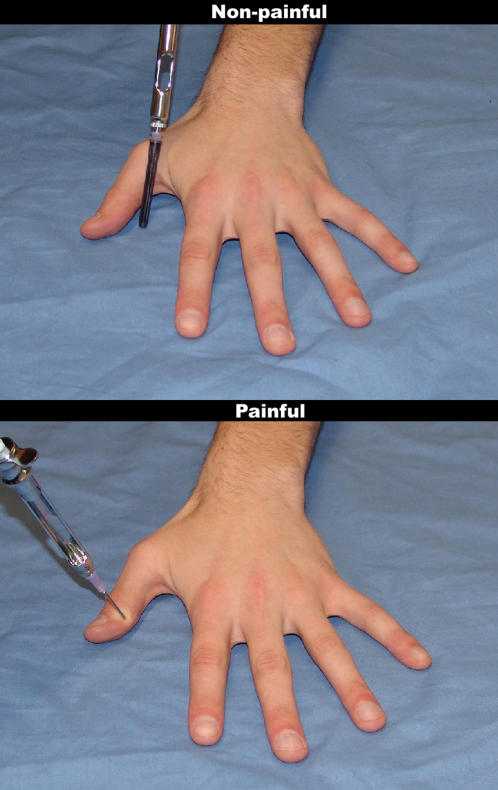
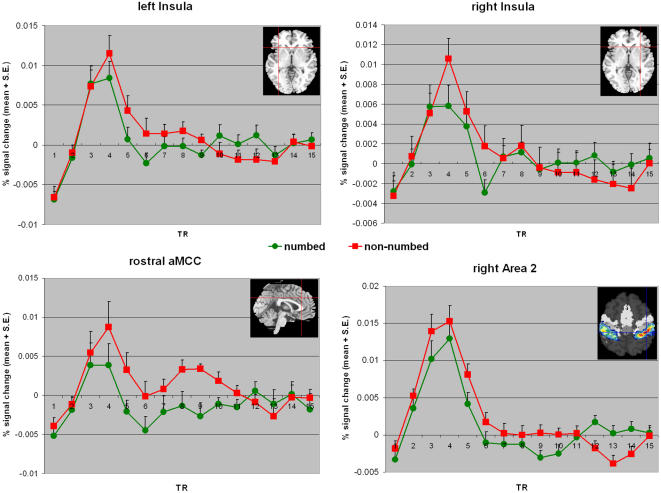
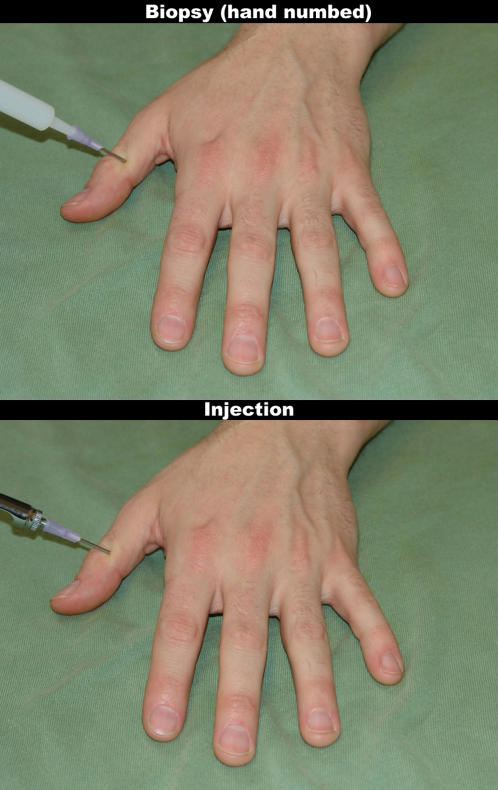
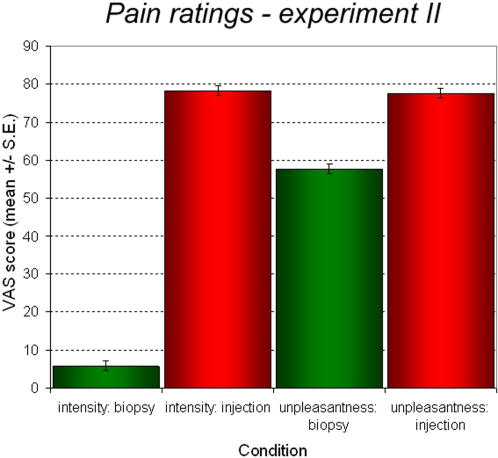
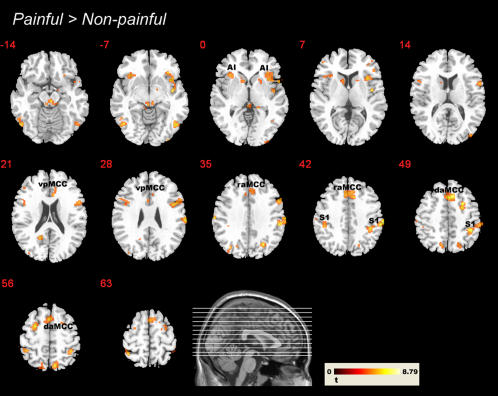
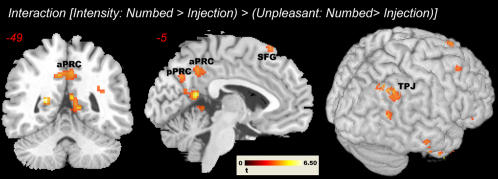
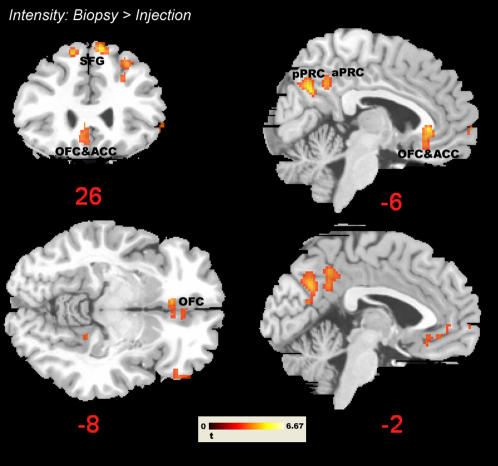
METHODOLOGY/PRINCIPAL FINDINGS: We performed one behavioral (N = 23) and two functional magnetic resonance imaging (fMRI) experiments (N = 18). In the first fMRI experiment, participants watched photographs displaying painful needle injections, and were asked to evaluate either the sensory or the affective consequences of these injections. The role of cognitive appraisal was examined in a second fMRI experiment in which participants watched injections that only appeared to be painful as they were performed on an anesthetized hand. Perceiving pain in others activated the affective-motivational and sensory-discriminative aspects of the pain matrix. Activity in the somatosensory areas was specifically enhanced when participants evaluated the sensory consequences of pain. Perceiving non-painful injections into the anesthetized hand also led to signal increase in large parts of the pain matrix, suggesting an automatic affective response to the putatively harmful stimulus. This automatic response was modulated by areas involved in self/other distinction and valence attribution - including the temporo-parietal junction and medial orbitofrontal cortex.
CONCLUSIONS/SIGNIFICANCE: Our findings elucidate how top-down control mechanisms and automatic bottom-up processes interact to generate and modulate other-oriented responses. They stress the role of cognitive processing in empathy, and shed light on how emotional and bodily awareness enable us to evaluate the sensory and affective states of others.
最近的神经科学证据表明,对疼痛的共情会激活与亲身经历疼痛时相似的神经表征。然而,共情并非全有或全无的现象,而是会受到人际、个体和情境因素的强烈影响。本研究调查了两种不同的自上而下的机制——注意力和认知评估——如何影响对他人疼痛的感知及其神经基础。
方法/主要发现:我们进行了一项行为实验(N = 23)和两项功能磁共振成像(fMRI)实验(N = 18)。在第一个fMRI实验中,参与者观看显示疼痛针刺注射的照片,并被要求评估这些注射的感觉或情感后果。在第二个fMRI实验中,参与者观看在麻醉手上进行的看似疼痛的注射,以此来检验认知评估的作用。对他人疼痛的感知激活了疼痛矩阵的情感动机和感觉辨别方面。当参与者评估疼痛的感觉后果时,体感区域的活动会特别增强。感知对麻醉手的无痛注射也会导致疼痛矩阵的大部分区域信号增加,这表明对假定有害刺激会产生自动情感反应。这种自动反应受到涉及自我/他人区分和效价归因的区域(包括颞顶联合区和内侧眶额皮质)的调节。
结论/意义:我们的研究结果阐明了自上而下的控制机制和自下而上的自动过程如何相互作用以产生和调节他人导向的反应。它们强调了认知加工在共情中的作用,并揭示了情感和身体意识如何使我们能够评估他人的感觉和情感状态。