Sakata Koh-ichi, Someya Masanori, Omatsu Mutsuko, Asanuma Hiroko, Hasegawa Tadashi, Ichimiya Shingo, Hareyama Masato, Himi Tetsuo
Department of Radiology, Sapporo Medical University, School of Medicine, Sapporo, Japan.
BMC Cancer. 2007 Dec 19;7:229. doi: 10.1186/1471-2407-7-229.
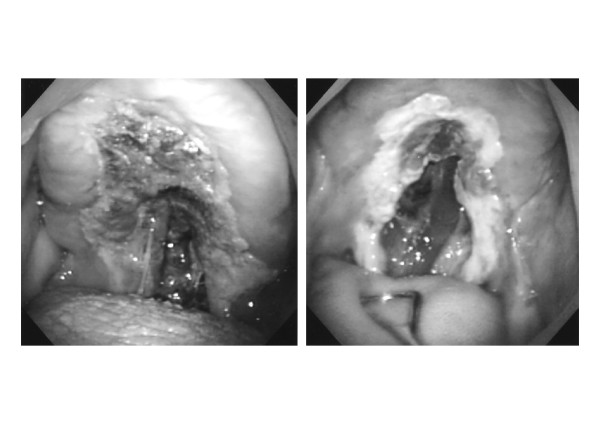
Nasal NK/T cell lymphoma is an aggressive disease and has a poor prognosis. Nasal NK/T cell lymphoma is refractory to conventional chemotherapy and has strong tendency of widespread relapse or dissemination into distant sites.
We immunohistochemically studied nasal NK/T-cell lymphoma to elucidate the unique characteristics of nasal NK/T-cell lymphoma, such as its higher metastatic tendency and its vast necrosis which leads to destruction of the involved tissues. The expression of P-glycoprotein and MMP-9 was evaluated in the 20 patients with nasal NK/T-cell lymphoma and 25 with nasal non-NK/T-cell lymphoma and the relationship between expression of these proteins and clinical results were analyzed in this report.
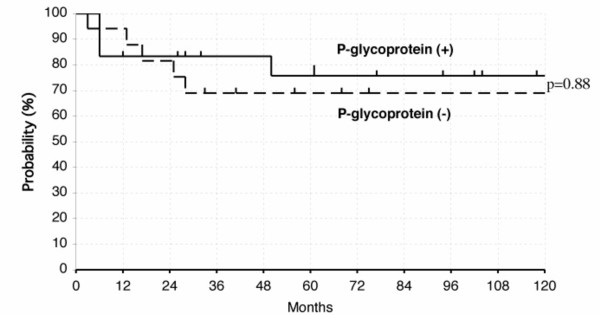
Overall 5-year survival rates for patients with nasal NK/T cell lymphoma, and nasal non-NK/T cell lymphoma were 51%, and 84%. Distant involvement free 5-year survival rates for patients with nasal NK/T cell lymphoma, and nasal non-NK/T cell lymphoma were 53%, and 79%. Overall positivity for P-glycoprotein was observed in 10 of 19 patients with NTL and in 13 of 23 patients with non-NTL. When the overall survival rate was compared between patients with P-glycoprotein positive and negative, there was no difference between them. Sixteen of the 19 patients with nasal NK/T cell lymphoma expressed MMP-9. In contrast, only 8 of the 22 patients with nasal non-NK/T cell lymphoma expressed MMP-9. Distant involvement free 5-year survival rates for patients with MMP-9 negative, and MMP-9 positive were 92%, and 61%, respectively. The difference was statistically significant (p = 0.027).
Positive immunoreactivity for P-glycoprotein was not an independent prognostic factor in nasal NK/T-cell lymphomas, which stresses the importance of exploring other mechanisms of drug resistance. The strong expression of MMP-9 is uniquely characteristic of nasal NK/T cell lymphoma and may contribute to its strong tendency to disseminatate and the extensive necrosis which is always seen. However, our results are based on univariate comparisons, and as such, should be viewed with some caution.
鼻型NK/T细胞淋巴瘤是一种侵袭性疾病,预后较差。鼻型NK/T细胞淋巴瘤对传统化疗耐药,且有很强的广泛复发或播散至远处部位的倾向。
我们采用免疫组织化学方法研究鼻型NK/T细胞淋巴瘤,以阐明其独特特征,如较高的转移倾向和导致受累组织破坏的广泛坏死。评估了20例鼻型NK/T细胞淋巴瘤患者和25例鼻型非NK/T细胞淋巴瘤患者中P-糖蛋白和基质金属蛋白酶-9(MMP-9)的表达情况,并分析了这些蛋白表达与临床结果之间的关系。
鼻型NK/T细胞淋巴瘤患者和鼻型非NK/T细胞淋巴瘤患者的总体5年生存率分别为51%和84%。鼻型NK/T细胞淋巴瘤患者和鼻型非NK/T细胞淋巴瘤患者的无远处受累5年生存率分别为53%和79%。19例鼻型NK/T细胞淋巴瘤患者中有10例P-糖蛋白总体呈阳性,23例非鼻型NK/T细胞淋巴瘤患者中有13例呈阳性。比较P-糖蛋白阳性和阴性患者的总体生存率,两者之间无差异。19例鼻型NK/T细胞淋巴瘤患者中有16例表达MMP-9。相比之下,22例鼻型非NK/T细胞淋巴瘤患者中只有8例表达MMP-9。MMP-9阴性和阳性患者的无远处受累5年生存率分别为92%和61%。差异具有统计学意义(p = 0.027)。
P-糖蛋白免疫反应阳性不是鼻型NK/T细胞淋巴瘤的独立预后因素,这强调了探索其他耐药机制的重要性。MMP-9的强表达是鼻型NK/T细胞淋巴瘤的独特特征,可能导致其强烈的播散倾向和常见的广泛坏死。然而,我们的结果基于单因素比较,因此应谨慎看待。