Lin Qing S, Weis Sebastian, Yang Guang, Zhuang Tiangang, Abate Aida, Dennery Phyllis A
Children's Hospital of Philadelphia, University of Pennsylvania, 34th and Civic Center Boulevard, Philadelphia, PA 19104, USA.
Free Radic Biol Med. 2008 Mar 1;44(5):847-55. doi: 10.1016/j.freeradbiomed.2007.11.012. Epub 2007 Dec 4.
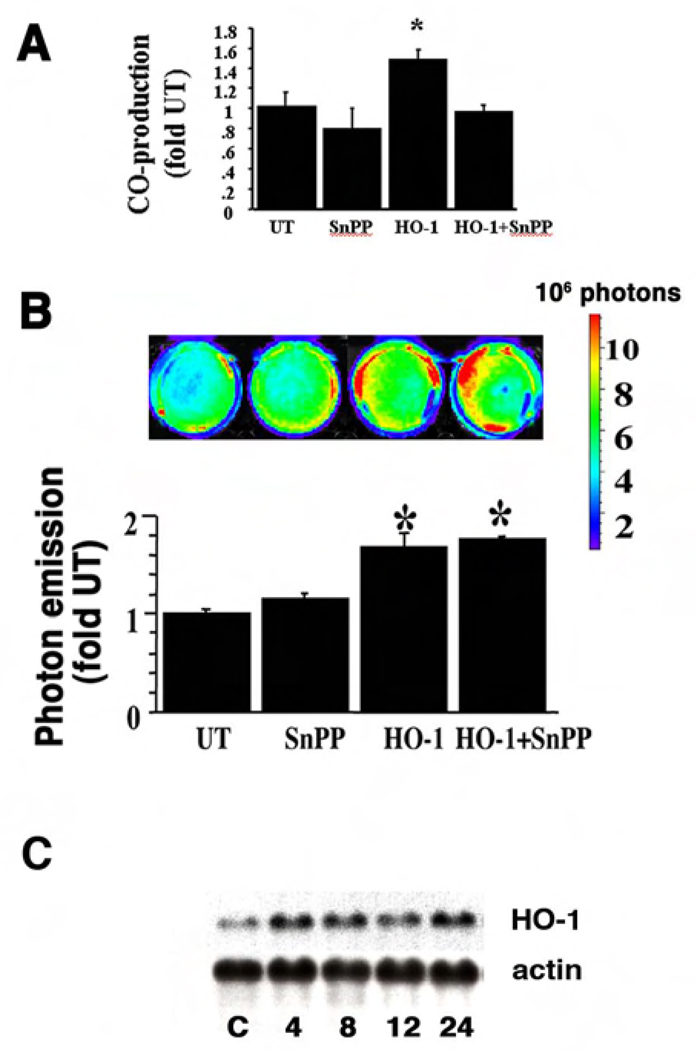
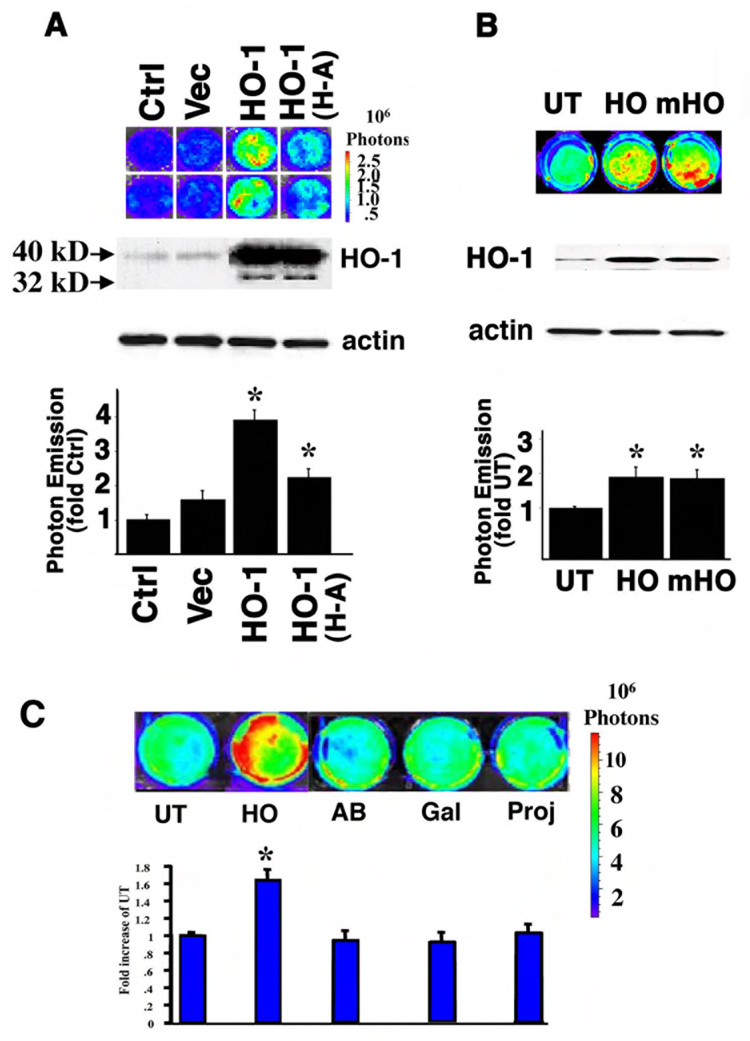
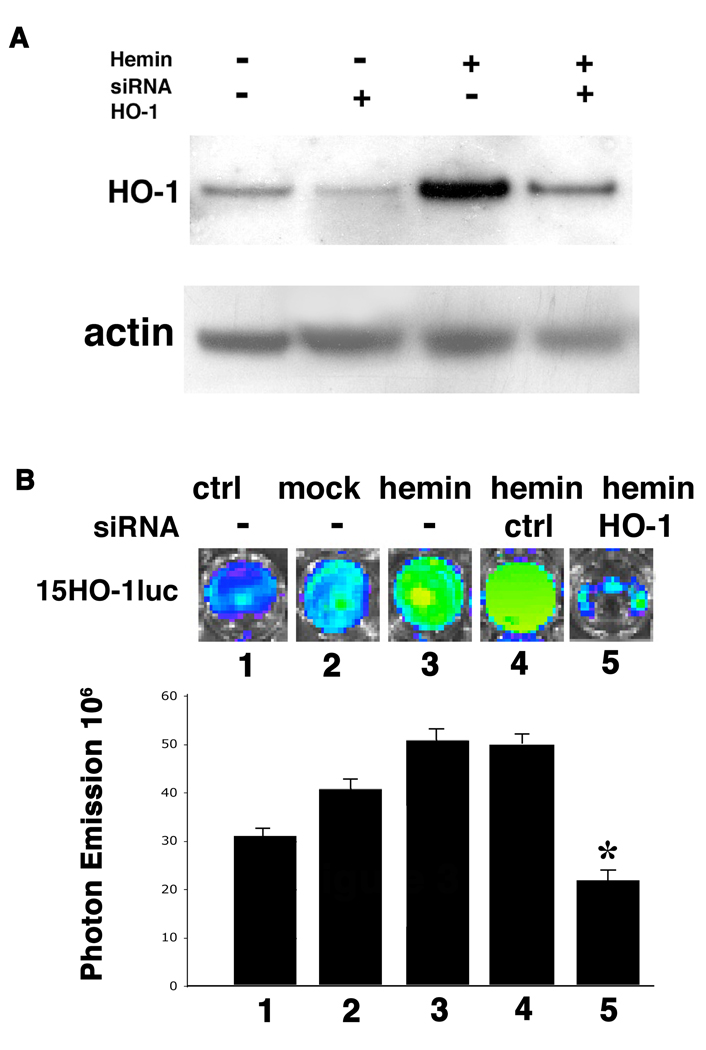
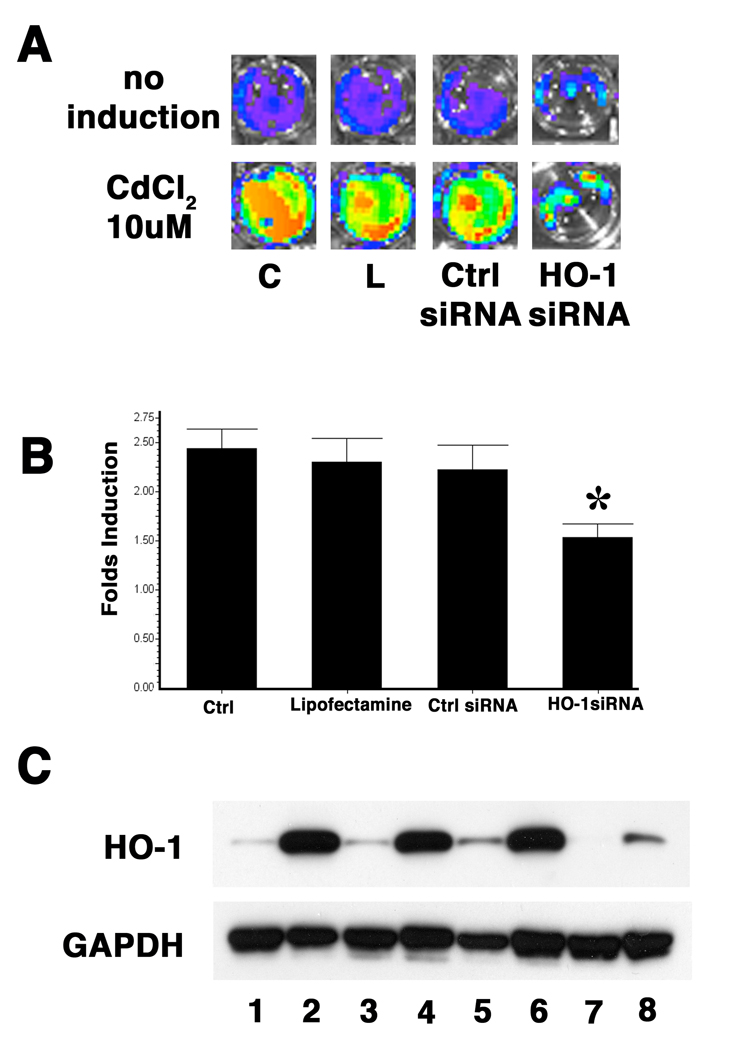
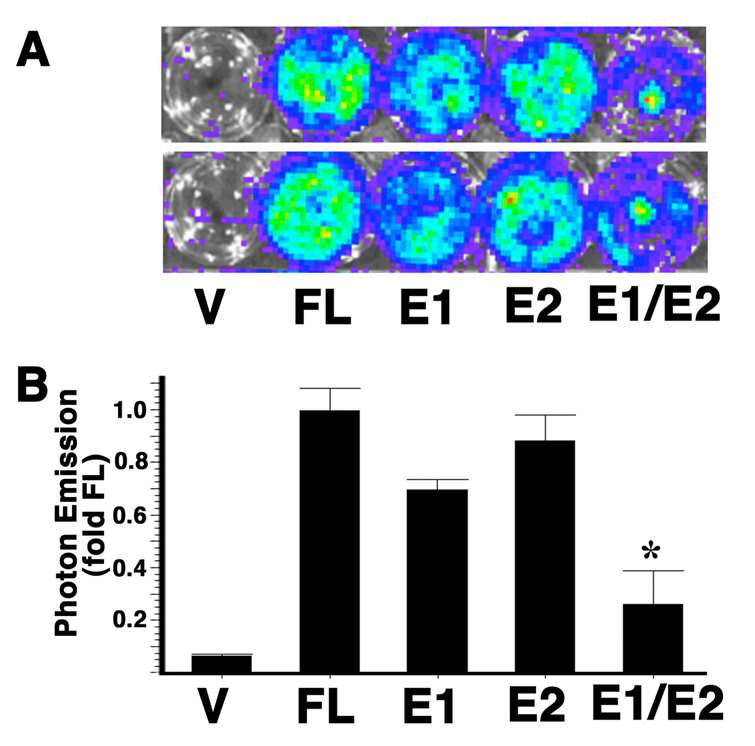
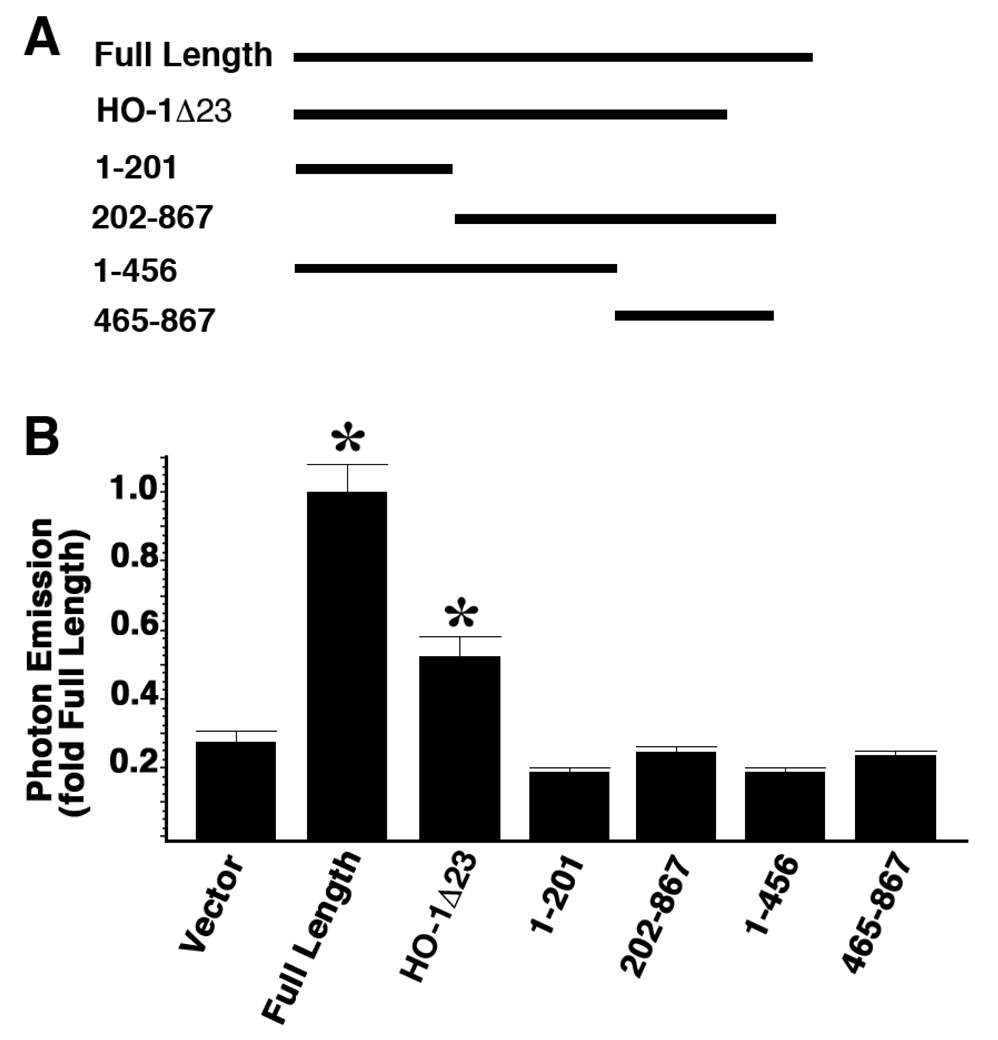
Heme oxygenase-1 (HO-1) catalyzes the degradation of heme and forms antioxidant bile pigments as well as the signaling molecule carbon monoxide. HO-1 is inducible in response to a variety of chemical and physical stress conditions to function as a cytoprotective molecule. Therefore, it is important to maintain the basal level of HO-1 expression even when substrate availability is limited. We hypothesized that the HO-1 protein itself could regulate its own expression in a positive feedback manner, and that this positive feedback was important in the HO-1 gene induction in response to oxidative stress. In cultured NIH 3T3 cells, transfection of HO-1 cDNA or intracellular delivery of pure HO-1 protein resulted in activation of a 15-kb HO-1 promoter upstream of luciferase as visualized by bioluminescent technology and increased HO-1 mRNA and protein levels. These effects were independent of HO activity because an enzymatically inactive mutant form of HO-1 similarly activated the HO-1 promoter and incubation with HO inhibitor metalloporphyrin SnPP did not affect the promoter activation. In addition, HO-1-specific siRNA significantly reduced hemin and cadmium chloride-mediated HO-1 induction. Furthermore, deletion analyses demonstrated that the E1 and E2 distal enhancers of the HO-1 promoter are required for this HO-1 autoregulation. These experiments document feed-forward autoregulation of HO-1 in oxidative stress and suggest that HO-1 protein has a role in the induction process. We speculate that this mechanism may be useful for maintaining HO-1 expression when substrate is limited and may also serve to up-regulate other genes to promote cytoprotection and to modulate cell proliferation.
血红素加氧酶-1(HO-1)催化血红素降解,生成抗氧化性胆色素以及信号分子一氧化碳。HO-1可被多种化学和物理应激条件诱导,发挥细胞保护分子的作用。因此,即使底物可用性有限,维持HO-1表达的基础水平也很重要。我们推测HO-1蛋白本身可能以正反馈方式调节其自身表达,并且这种正反馈在HO-1基因对氧化应激的诱导中起重要作用。在培养的NIH 3T3细胞中,转染HO-1 cDNA或细胞内递送纯HO-1蛋白导致荧光素酶上游15-kb HO-1启动子激活,这通过生物发光技术得以可视化,同时HO-1 mRNA和蛋白水平增加。这些效应与HO活性无关,因为HO-1的无酶活性突变形式同样激活HO-1启动子,并且与HO抑制剂金属卟啉SnPP孵育不影响启动子激活。此外,HO-1特异性siRNA显著降低血红素和氯化镉介导的HO-1诱导。此外,缺失分析表明HO-1启动子的E1和E2远端增强子是这种HO-1自动调节所必需的。这些实验证明了HO-1在氧化应激中的前馈自动调节,并表明HO-1蛋白在诱导过程中起作用。我们推测这种机制可能有助于在底物有限时维持HO-1表达,也可能用于上调其他基因以促进细胞保护和调节细胞增殖。