Ostberg Therese, Wähämaa Heidi, Palmblad Karin, Ito Norimasa, Stridh Pernilla, Shoshan Maria, Lotze Michael T, Harris Helena Erlandsson, Andersson Ulf
Department of Woman and Child Health, Pediatric Rheumatology Research Unit, Karolinska Institutet/Karolinska University Hospital, 171 176 Stockholm, Sweden.
Arthritis Res Ther. 2008;10(1):R1. doi: 10.1186/ar2347. Epub 2008 Jan 7.
High mobility group box chromosomal protein 1 (HMGB1) is a nuclear protein that acts as a pro-inflammatory mediator following extracellular release. The protein is aberrantly expressed extracellularly in the settings of clinical and experimental synovitis. Therapy based on HMGB1 antagonists has shown encouraging results in experimental arthritis and warrants further scientific exploration using independent methods. In the present study we asked whether nuclear sequestration of HMGB1 preventing HMGB1 release would be beneficial for synovitis treatment.
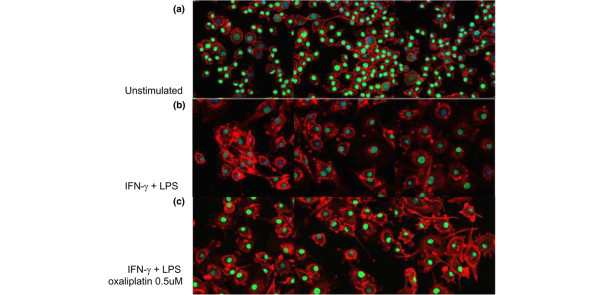
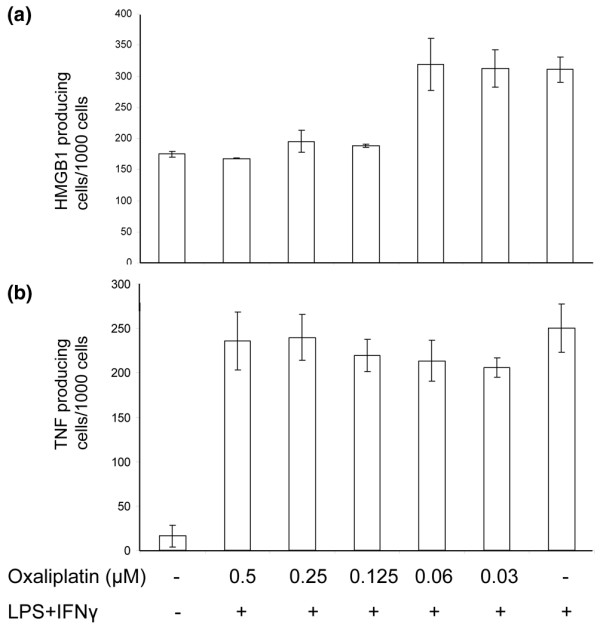
Oxaliplatin-based therapy was evaluated in collagen type II-induced arthritis in DBA/1 mice by clinical scoring and immunostaining of articular tissue. Oxaliplatin is an antineoplastic platinum-based compound that generates DNA adducts which tightly bind HMGB1. Secretion and intracellular location of HMGB1 were assessed by a novel HMGB1-specific ELISPOT assay and immunofluorescent staining.
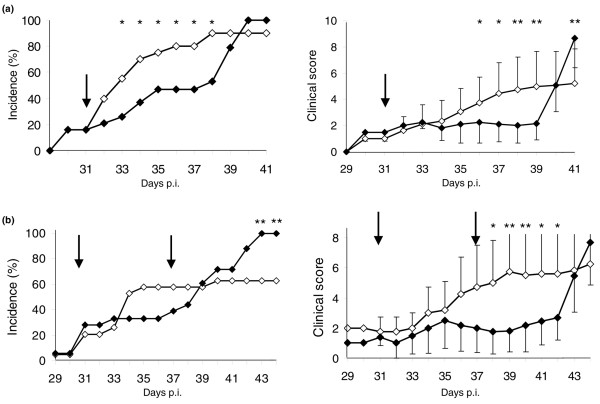
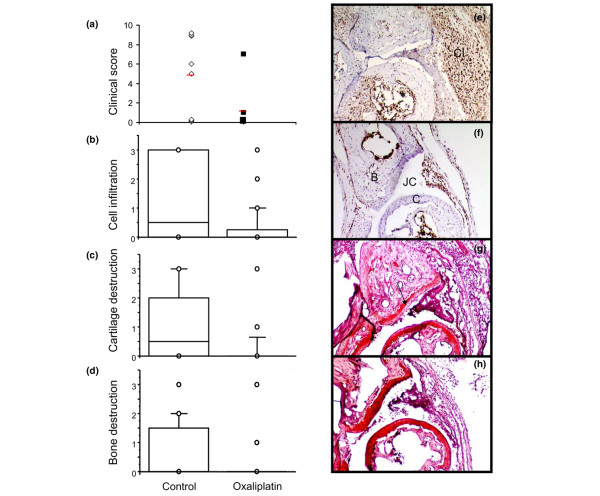
Intraperitoneal injections of oxaliplatin in early collagen type II-induced arthritis trapped HMGB1 with a distinct biphasic response pattern. Oxaliplatin therapy showed beneficial results for approximately 1 week. Microscopic evaluation of synovitis during this period showed strong nuclear HMGB1 staining in the oxaliplatin treated animals with much lower quantities of extracellular HMGB1 when compared to control treated animals. Furthermore, cellular infiltration, as well as cartilage and bone damage, were all reduced in the oxaliplatin treated group. A dramatic and as yet unexplained clinical relapse occurred later in the oxaliplatin exposed animals, which coincided with a massive synovial tissue expression of extracellular HMGB1 in all treated animals. This rebound-like reaction was also accompanied by a significantly increased incidence of arthritis in the oxaliplatin treated group. These results indicate a distinct temporal and spatial relationship between the clinical course of disease and the cellular localization of HMGB1. Beneficial effects were noted when extracellular HMGB1 expression was low, while severe inflammation coincided with substantial extracellular synovial HMGB1 expression.
Therapeutic compounds like oxaliplatin and gold salts share a capacity to inhibit nuclear HMGB1 release and to ameliorate the course of synovial inflammation. These observations support the hypothesis that HMGB1 plays an important functional role in the pathogenesis of arthritis and may represent a novel target molecule for therapy.
高迁移率族蛋白B1(HMGB1)是一种核蛋白,在细胞外释放后作为促炎介质发挥作用。在临床和实验性滑膜炎的情况下,该蛋白在细胞外异常表达。基于HMGB1拮抗剂的治疗在实验性关节炎中已显示出令人鼓舞的结果,值得使用独立方法进行进一步的科学探索。在本研究中,我们探讨了将HMGB1隔离在细胞核中以防止其释放是否对滑膜炎治疗有益。
通过临床评分和关节组织免疫染色,在II型胶原诱导的DBA/1小鼠关节炎模型中评估基于奥沙利铂的治疗。奥沙利铂是一种基于铂的抗肿瘤化合物,可生成紧密结合HMGB1的DNA加合物。通过一种新型的HMGB1特异性ELISPOT分析和免疫荧光染色评估HMGB1的分泌和细胞内定位。
在早期II型胶原诱导的关节炎中腹腔注射奥沙利铂,可使HMGB1呈明显的双相反应模式被捕获。奥沙利铂治疗显示出约1周的有益效果。在此期间对滑膜炎的显微镜评估显示,与对照治疗的动物相比,奥沙利铂治疗的动物中核HMGB1染色强烈,细胞外HMGB1的量要低得多。此外,奥沙利铂治疗组的细胞浸润以及软骨和骨损伤均减少。奥沙利铂暴露的动物后来出现了剧烈且尚未解释清楚的临床复发,这与所有治疗动物中细胞外HMGB1在滑膜组织中的大量表达同时发生。这种类似反弹的反应还伴随着奥沙利铂治疗组中关节炎发病率的显著增加。这些结果表明疾病的临床进程与HMGB1的细胞定位之间存在明显的时间和空间关系。当细胞外HMGB1表达较低时观察到有益效果,而严重炎症与滑膜细胞外HMGB1的大量表达同时出现。
像奥沙利铂和金盐这样的治疗化合物具有抑制核HMGB1释放和改善滑膜炎进程的能力。这些观察结果支持了HMGB1在关节炎发病机制中起重要功能作用的假设,并且可能代表一种新的治疗靶分子。