Hamada Takashi, Tsuchihashi Seiichiro, Avanesyan Armine, Duarte Sergio, Moore Carolina, Busuttil Ronald W, Coito Ana J
The Dumont-University of California Los Angeles Transplant Center, Division of Liver and Pancreas Transplantation, Department of Surgery, David Geffen School of Medicine, University of California Los Angeles, Los Angeles, CA 90095, USA.
J Immunol. 2008 Feb 1;180(3):1843-53. doi: 10.4049/jimmunol.180.3.1843.
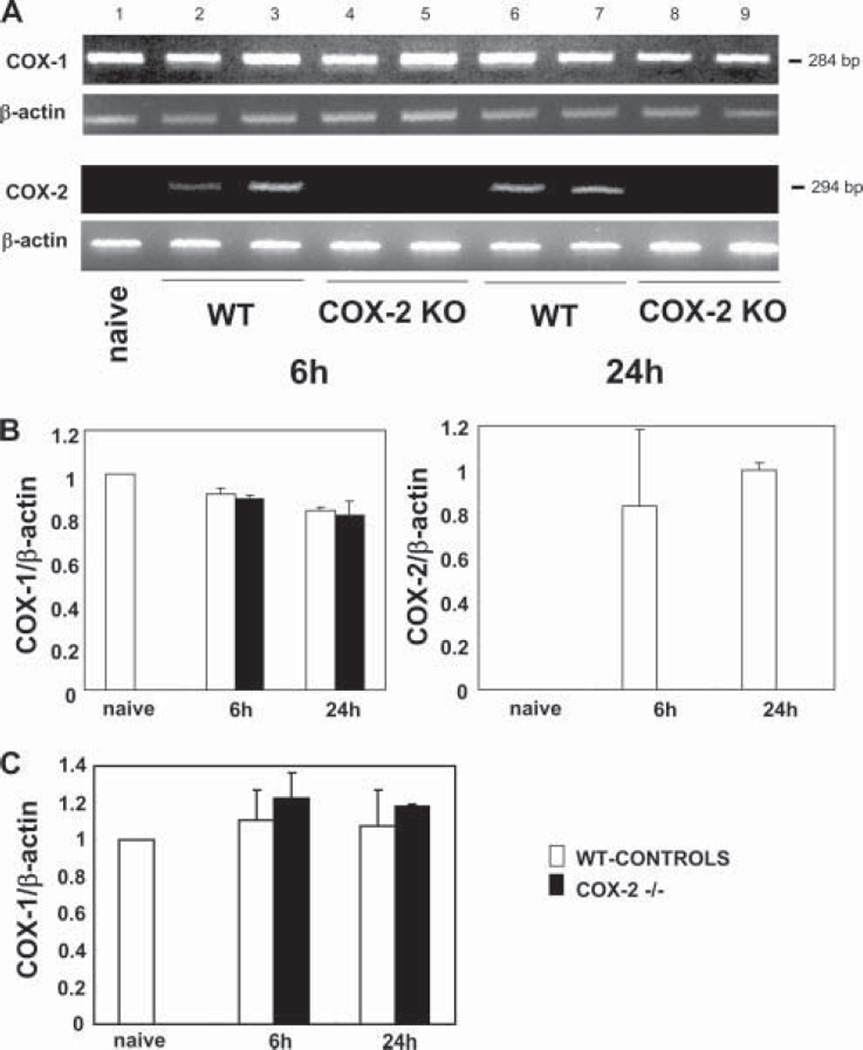
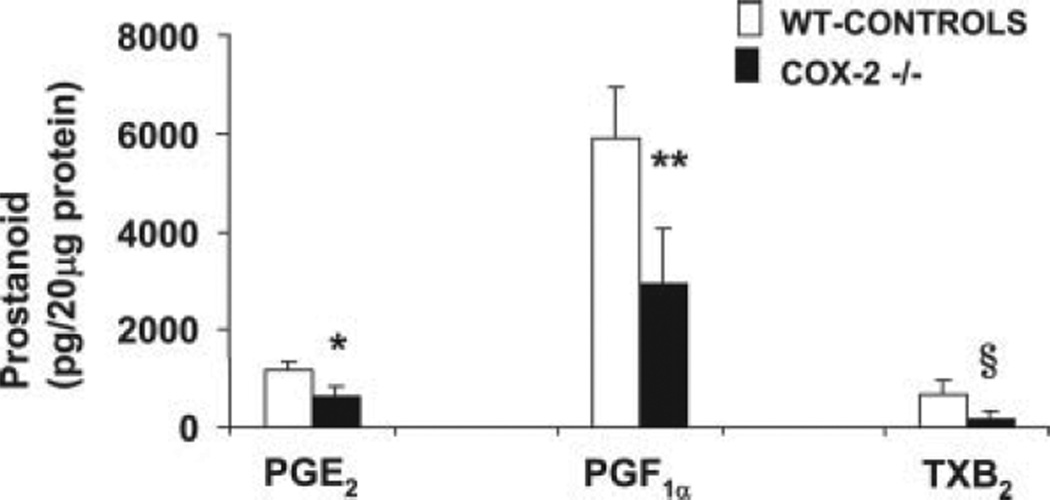
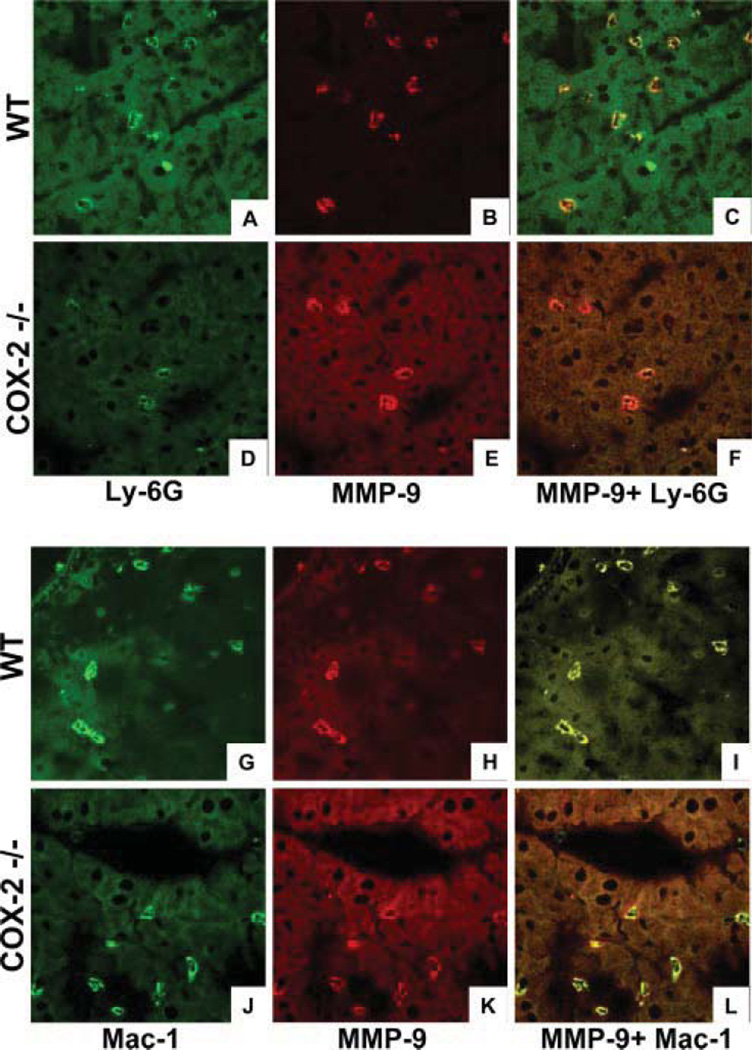
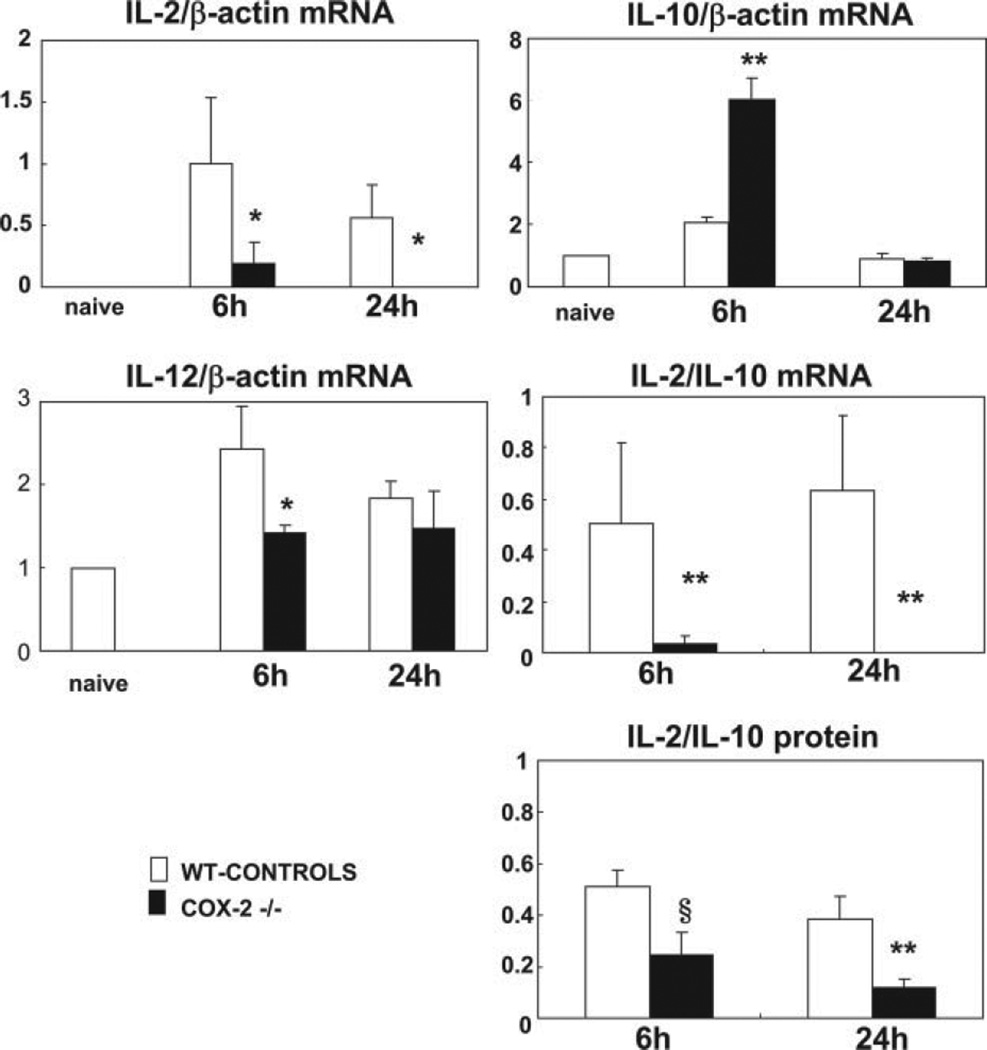
Cyclooxygenase-2 (COX-2) is a prostanoid-synthesizing enzyme that is critically implicated in a variety of pathophysiological processes. Using a COX-2-deficient mouse model, we present data that suggest that COX-2 has an active role in liver ischemia/reperfusion (I/R) injury. We demonstrate that COX-2-deficient mice had a significant reduction in liver damage after I/R insult. The inability of COX-2(-/-) to elaborate COX-2 products favored a Th2-type response in these mice. COX-2(-/-) livers after I/R injury showed significantly decreased levels of IL-2, as well as IL-12, a cytokine known to have a central role in Th1 effector cell differentiation. Moreover, such livers expressed enhanced levels of the anti-inflammatory cytokine IL-10, shifting the balance in favor of a Th2 response in COX-2-deficient mice. The lack of COX-2 expression resulted in decreased levels of CXCL2, a neutrophil-activating chemokine, reduced infiltration of MMP-9-positive neutrophils, and impaired late macrophage activation in livers after I/R injury. Additionally, Bcl-2 and Bcl-x(L) were normally expressed in COX-2(-/-) livers after injury, whereas respective wild-type controls were almost depleted of these two inhibitors of cell death. In contrast, caspase-3 activation and TUNEL-positive cells were depressed in COX-2(-/-) livers. Therefore, our data support the concept that COX-2 is involved in the pathogenic events occurring in liver I/R injury. The data also suggest that potential valuable therapeutic approaches in liver I/R injury may result from further studies aimed at identifying specific COX-2-derived prostanoid pathways.
环氧化酶-2(COX-2)是一种前列腺素合成酶,在多种病理生理过程中起着关键作用。利用COX-2基因缺陷小鼠模型,我们提供的数据表明COX-2在肝脏缺血/再灌注(I/R)损伤中发挥着积极作用。我们证明,COX-2基因缺陷小鼠在遭受I/R损伤后肝脏损伤显著减轻。COX-2(-/-)小鼠无法合成COX-2产物,这有利于这些小鼠产生Th2型反应。I/R损伤后的COX-2(-/-)肝脏中,白细胞介素-2(IL-2)以及白细胞介素-12(IL-12)水平显著降低,IL-12是一种已知在Th1效应细胞分化中起核心作用的细胞因子。此外,此类肝脏中抗炎细胞因子IL-10的表达水平升高,使得COX-2基因缺陷小鼠体内的平衡向Th2反应倾斜。COX-2表达缺失导致中性粒细胞激活趋化因子CXCL2水平降低,MMP-9阳性中性粒细胞浸润减少,以及I/R损伤后肝脏中晚期巨噬细胞激活受损。此外,损伤后COX-2(-/-)肝脏中Bcl-2和Bcl-x(L)正常表达,而相应的野生型对照中这两种细胞死亡抑制剂几乎耗尽。相反,COX-2(-/-)肝脏中的半胱天冬酶-3激活和TUNEL阳性细胞减少。因此,我们的数据支持COX-2参与肝脏I/R损伤中发生的致病事件这一概念。这些数据还表明,针对肝脏I/R损伤的潜在有价值的治疗方法可能来自于进一步研究以确定特定的COX-2衍生前列腺素途径。