Matsui Yutaka, Kyoi Shiori, Takagi Hiromitsu, Hsu Chiao-Po, Hariharan Nirmala, Ago Tetsuro, Vatner Stephen F, Sadoshima Junichi
Cardiovascular Research Institute, Department of Cell Biology and Molecular Medicine, University of Medicine and Dentistry of New Jersey, New Jersey Medical School, Newark, New Jersey 07103, USA.
Autophagy. 2008 May;4(4):409-15. doi: 10.4161/auto.5638. Epub 2008 Jan 24.
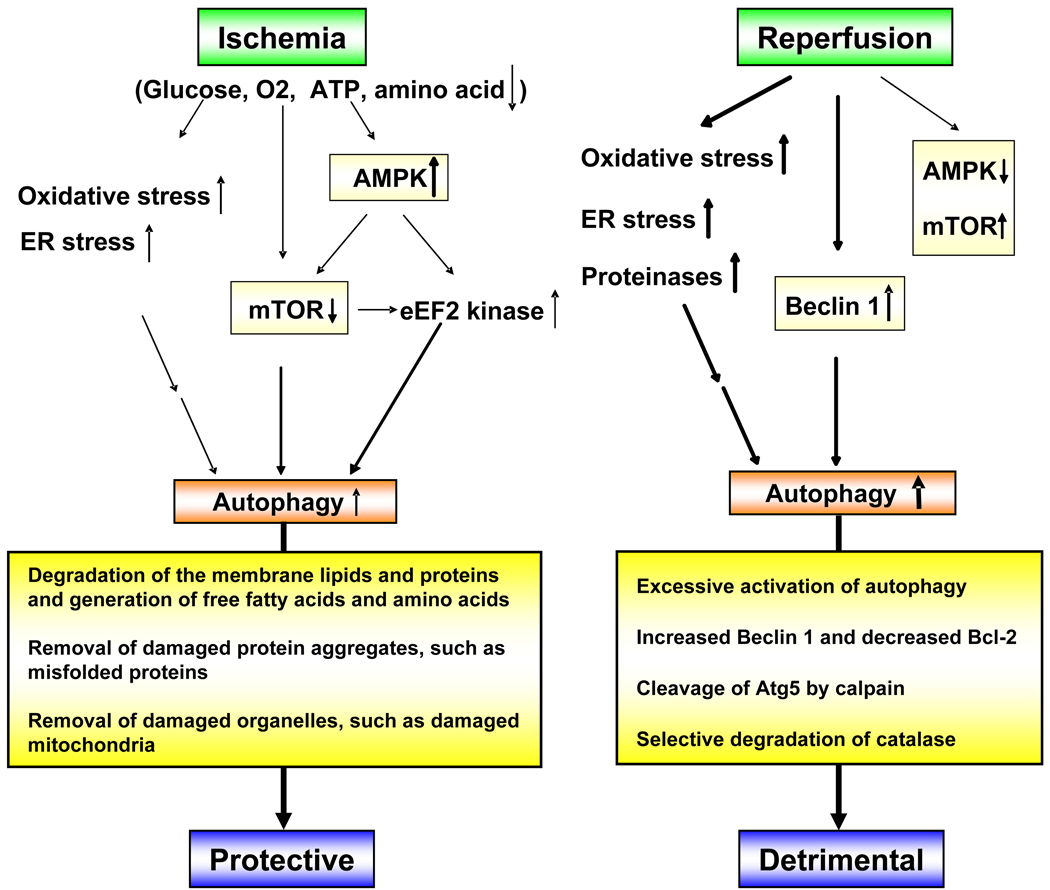
Autophagy is an intracellular bulk degradation process whereby cytoplasmic proteins and organelles are degraded and recycled through lysosomes. In the heart, autophagy plays a homeostatic role at basal levels, and the absence of autophagy causes cardiac dysfunction and the development of cardiomyopathy. Autophagy is induced during myocardial ischemia and further enhanced by reperfusion. Although induction of autophagy during the ischemic phase is protective, further enhancement of autophagy during the reperfusion phase may induce cell death and appears to be detrimental. In this review we discuss the functional significance of autophagy and the underlying signaling mechanism in the heart during ischemia/reperfusion.
自噬是一种细胞内的大量降解过程,通过该过程,细胞质蛋白和细胞器被降解并通过溶酶体进行再循环。在心脏中,自噬在基础水平发挥稳态作用,自噬缺失会导致心脏功能障碍和心肌病的发展。自噬在心肌缺血期间被诱导,并在再灌注时进一步增强。虽然缺血期自噬的诱导具有保护作用,但再灌注期自噬的进一步增强可能会诱导细胞死亡,似乎是有害的。在本综述中,我们讨论了缺血/再灌注期间心脏中自噬的功能意义及潜在的信号传导机制。