Shadeo Ashleen, Chari Raj, Lonergan Kim M, Pusic Andrea, Miller Dianne, Ehlen Tom, Van Niekerk Dirk, Matisic Jasenka, Richards-Kortum Rebecca, Follen Michele, Guillaud Martial, Lam Wan L, MacAulay Calum
Cancer Genetics & Developmental Biology, British Columbia Cancer Research Centre, Vancouver, BC, Canada.
BMC Genomics. 2008 Feb 4;9:64. doi: 10.1186/1471-2164-9-64.
The highest rates of cervical cancer are found in developing countries. Frontline monitoring has reduced these rates in developed countries and present day screening programs primarily identify precancerous lesions termed cervical intraepithelial neoplasias (CIN). CIN lesions described as mild dysplasia (CIN I) are likely to spontaneously regress while CIN III lesions (severe dysplasia) are likely to progress if untreated. Thoughtful consideration of gene expression changes paralleling the progressive pre invasive neoplastic development will yield insight into the key casual events involved in cervical cancer development.
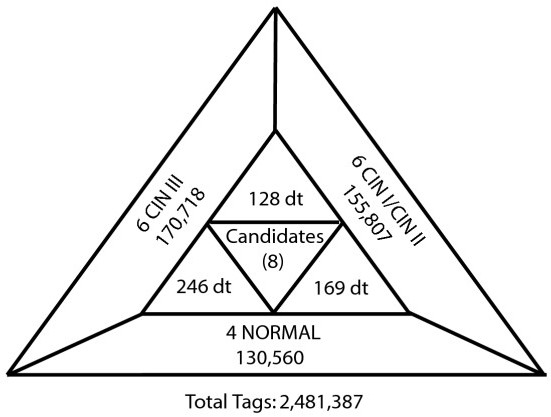
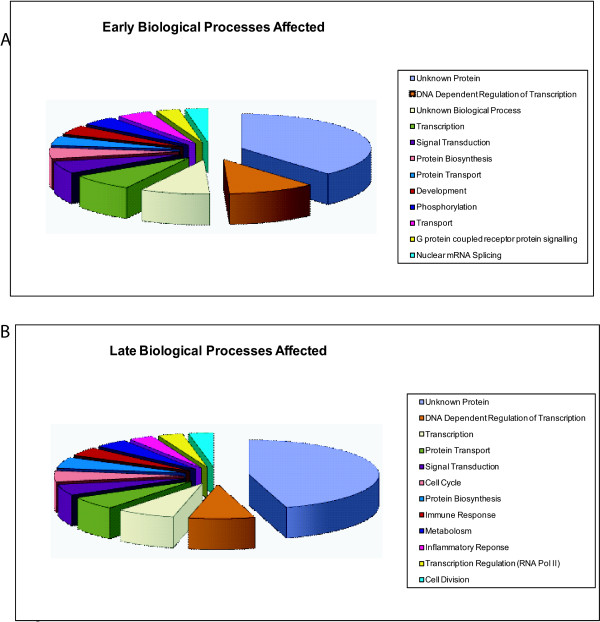
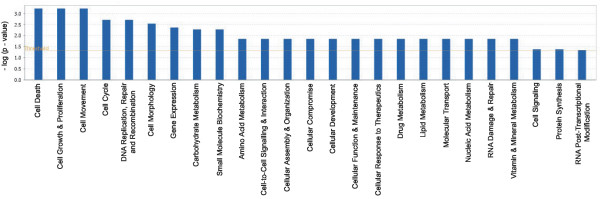
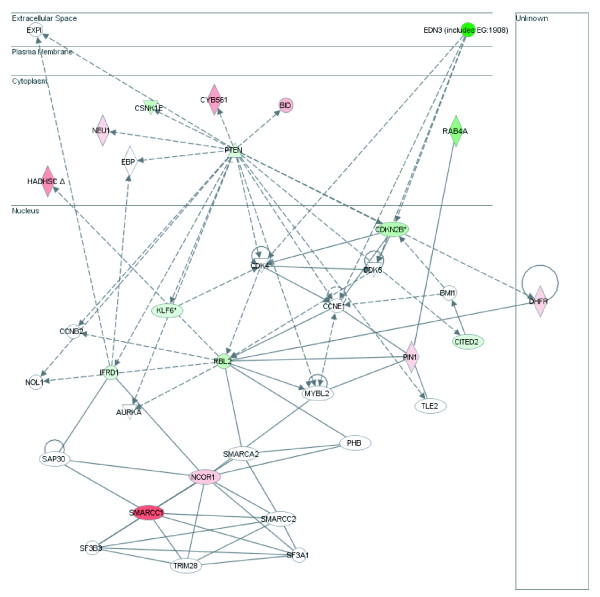
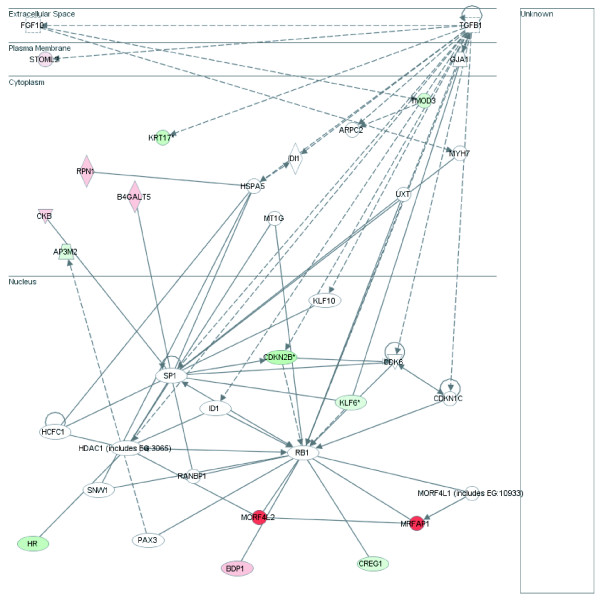
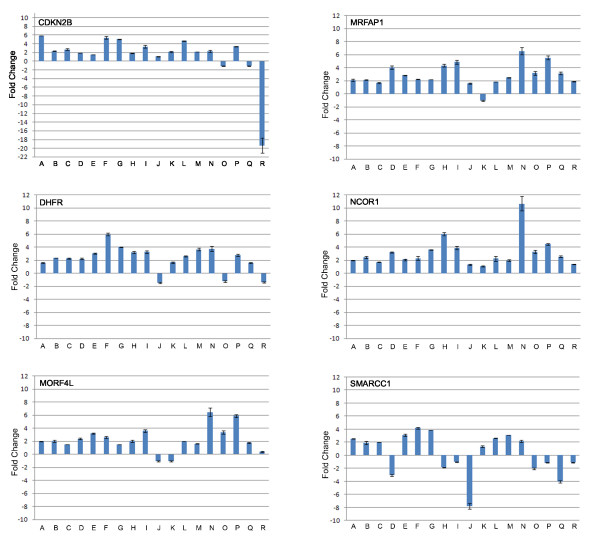
In this study, we have identified gene expression changes across 16 cervical cases (CIN I, CIN II, CIN III and normal cervical epithelium) using the unbiased long serial analysis of gene expression (L-SAGE) method. The 16 L-SAGE libraries were sequenced to the level of 2,481,387 tags, creating the largest SAGE data collection for cervical tissue worldwide. We have identified 222 genes differentially expressed between normal cervical tissue and CIN III. Many of these genes influence biological functions characteristic of cancer, such as cell death, cell growth/proliferation and cellular movement. Evaluation of these genes through network interactions identified multiple candidates that influence regulation of cellular transcription through chromatin remodelling (SMARCC1, NCOR1, MRFAP1 and MORF4L2). Further, these expression events are focused at the critical junction in disease development of moderate dysplasia (CIN II) indicating a role for chromatin remodelling as part of cervical cancer development.
We have created a valuable publically available resource for the study of gene expression in precancerous cervical lesions. Our results indicate deregulation of the chromatin remodelling complex components and its influencing factors occur in the development of CIN lesions. The increase in SWI/SNF stabilizing molecule SMARCC1 and other novel genes has not been previously illustrated as events in the early stages of dysplasia development and thus not only provides novel candidate markers for screening but a biological function for targeting treatment.
宫颈癌发病率最高的地区是发展中国家。在发达国家,一线监测已降低了宫颈癌发病率,如今的筛查项目主要用于识别称为宫颈上皮内瘤变(CIN)的癌前病变。被描述为轻度发育异常(CIN I)的CIN病变可能会自发消退,而CIN III病变(重度发育异常)若不治疗则可能会进展。深入思考与侵袭前肿瘤进展相关的基因表达变化,将有助于深入了解宫颈癌发生过程中的关键偶然事件。
在本研究中,我们使用无偏倚的基因表达长序列分析(L-SAGE)方法,确定了16例宫颈病例(CIN I、CIN II、CIN III和正常宫颈上皮)中的基因表达变化。对16个L-SAGE文库进行测序,获得了2481387个标签水平的数据,创建了全球最大的宫颈组织SAGE数据集。我们确定了222个在正常宫颈组织和CIN III之间差异表达的基因。其中许多基因影响癌症的生物学功能特征,如细胞死亡、细胞生长/增殖和细胞运动。通过网络相互作用对这些基因进行评估,确定了多个通过染色质重塑影响细胞转录调控的候选基因(SMARCC1、NCOR1、MRFAP1和MORF4L2)。此外,这些表达事件集中在中度发育异常(CIN II)疾病发展的关键节点,表明染色质重塑在宫颈癌发展过程中发挥作用。
我们创建了一个有价值的公开资源,用于研究癌前宫颈病变中的基因表达。我们的结果表明,染色质重塑复合体成分及其影响因素在CIN病变发展过程中发生失调。SWI/SNF稳定分子SMARCC1和其他新基因的增加,此前未被证明是发育异常早期阶段的事件,因此不仅为筛查提供了新的候选标志物,也为靶向治疗提供了生物学功能。