Sharp Andrew J, Mefford Heather C, Li Kelly, Baker Carl, Skinner Cindy, Stevenson Roger E, Schroer Richard J, Novara Francesca, De Gregori Manuela, Ciccone Roberto, Broomer Adam, Casuga Iris, Wang Yu, Xiao Chunlin, Barbacioru Catalin, Gimelli Giorgio, Bernardina Bernardo Dalla, Torniero Claudia, Giorda Roberto, Regan Regina, Murday Victoria, Mansour Sahar, Fichera Marco, Castiglia Lucia, Failla Pinella, Ventura Mario, Jiang Zhaoshi, Cooper Gregory M, Knight Samantha J L, Romano Corrado, Zuffardi Orsetta, Chen Caifu, Schwartz Charles E, Eichler Evan E
Department of Genome Sciences, University of Washington School of Medicine, 1705 NE Pacific St., Seattle, Washington 98195, USA.
Nat Genet. 2008 Mar;40(3):322-8. doi: 10.1038/ng.93. Epub 2008 Feb 17.
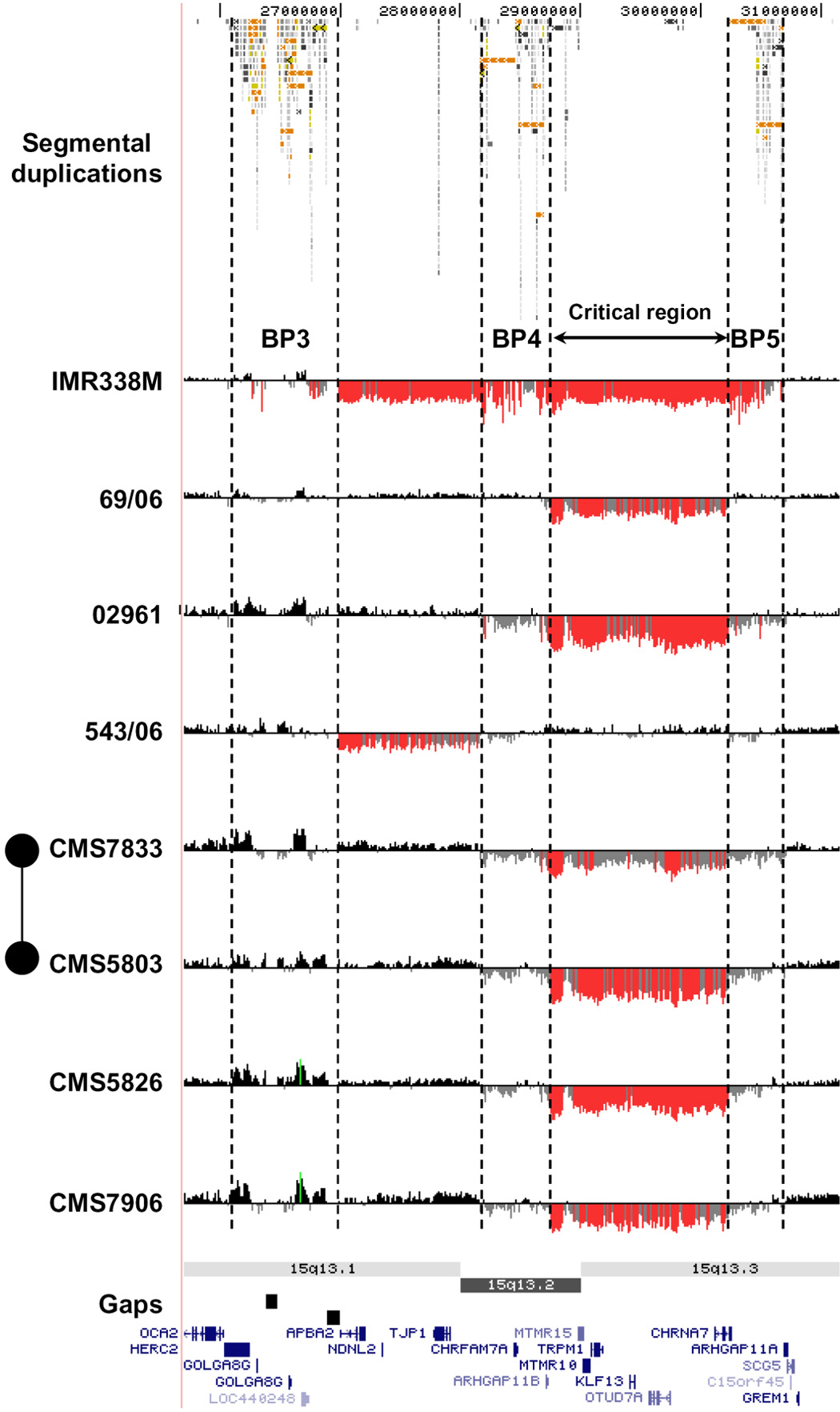
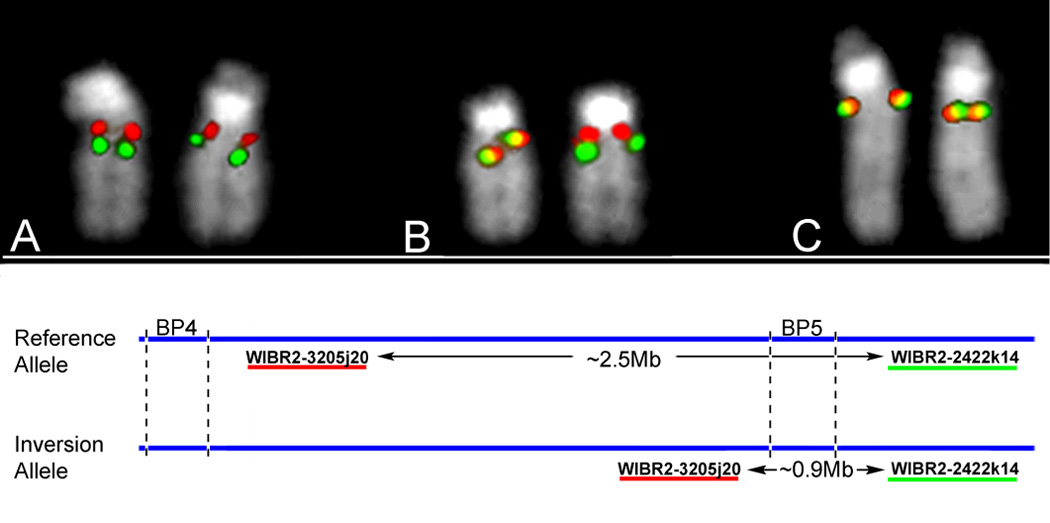
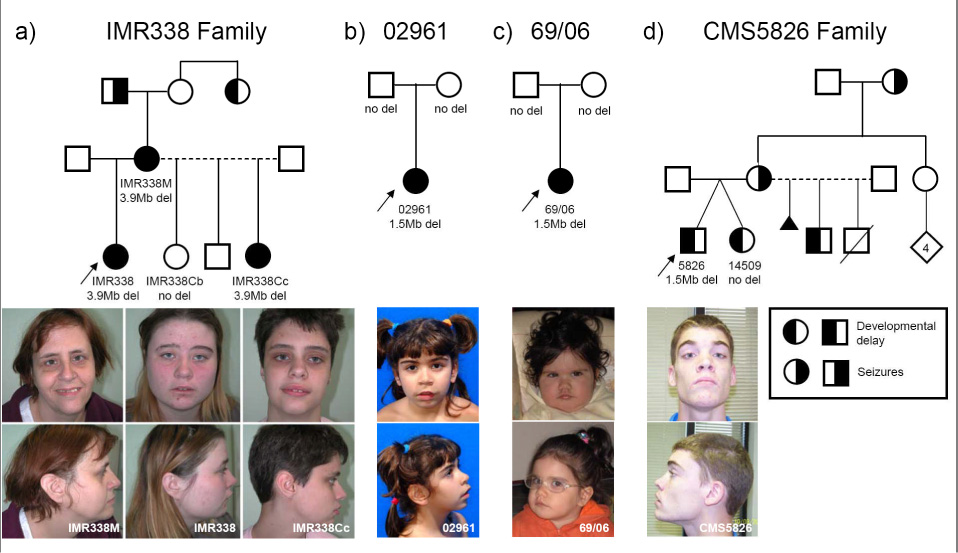
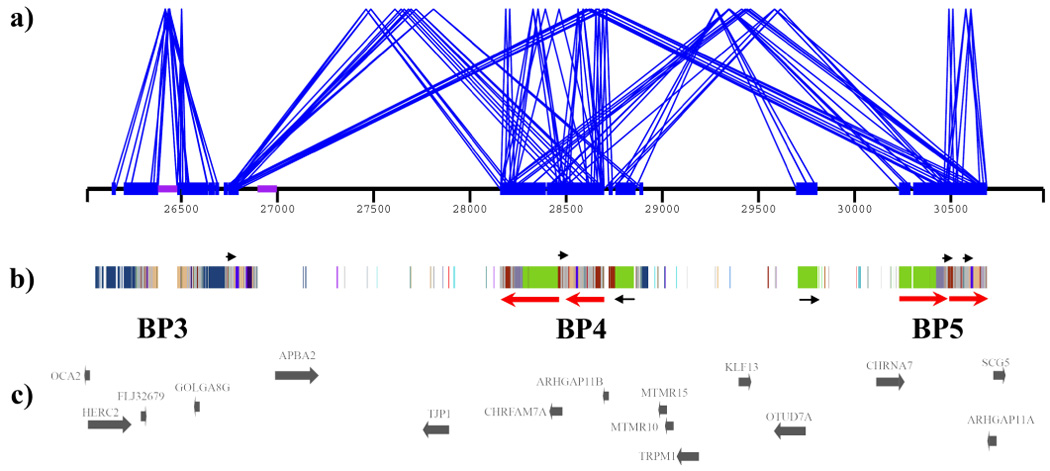
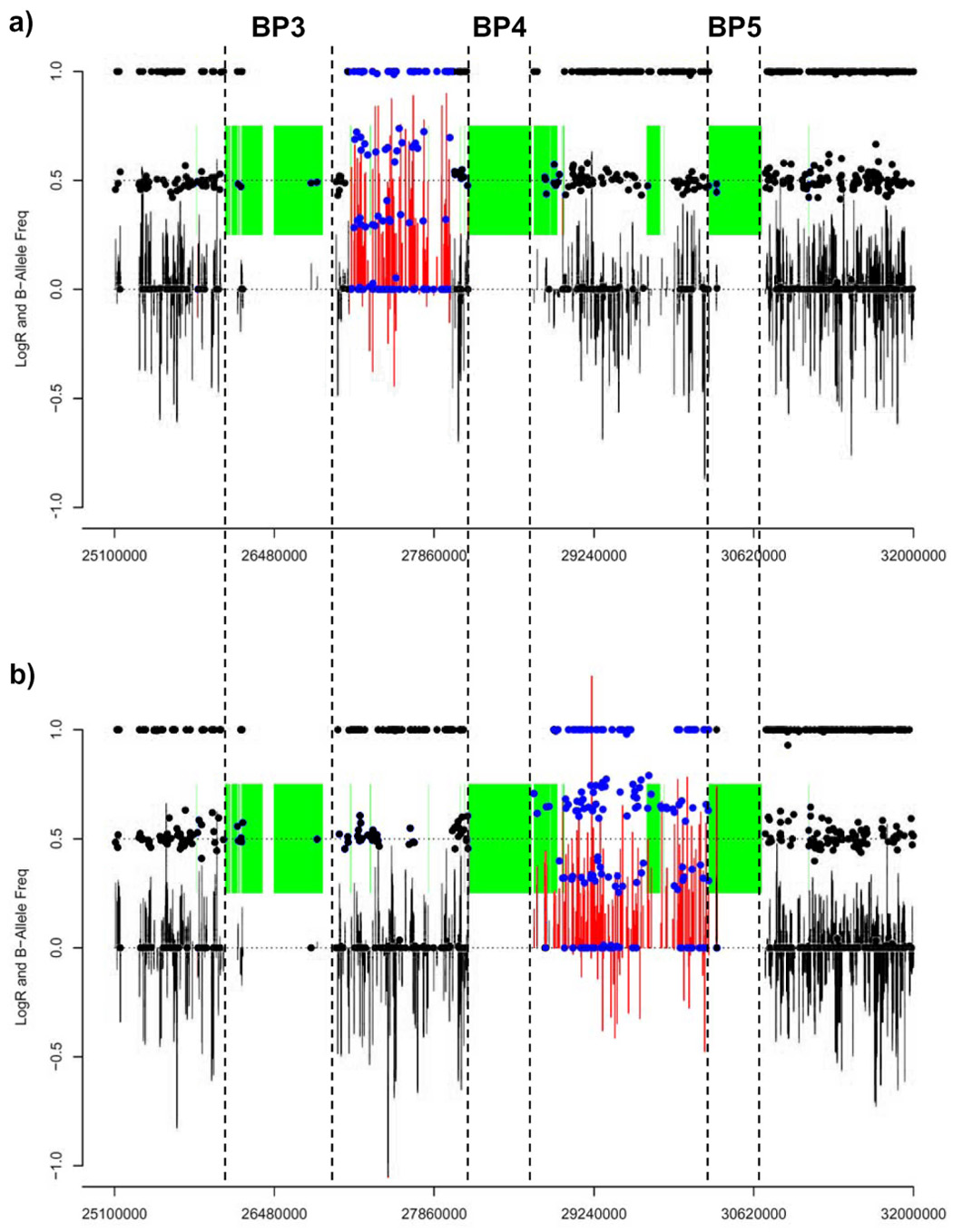
We report a recurrent microdeletion syndrome causing mental retardation, epilepsy and variable facial and digital dysmorphisms. We describe nine affected individuals, including six probands: two with de novo deletions, two who inherited the deletion from an affected parent and two with unknown inheritance. The proximal breakpoint of the largest deletion is contiguous with breakpoint 3 (BP3) of the Prader-Willi and Angelman syndrome region, extending 3.95 Mb distally to BP5. A smaller 1.5-Mb deletion has a proximal breakpoint within the larger deletion (BP4) and shares the same distal BP5. This recurrent 1.5-Mb deletion contains six genes, including a candidate gene for epilepsy (CHRNA7) that is probably responsible for the observed seizure phenotype. The BP4-BP5 region undergoes frequent inversion, suggesting a possible link between this inversion polymorphism and recurrent deletion. The frequency of these microdeletions in mental retardation cases is approximately 0.3% (6/2,082 tested), a prevalence comparable to that of Williams, Angelman and Prader-Willi syndromes.
我们报告了一种复发性微缺失综合征,其可导致智力迟钝、癫痫以及面部和手部的各种畸形。我们描述了9名受影响个体,包括6名先证者:2名新发缺失者,2名从患病父母处遗传缺失者,以及2名遗传情况不明者。最大缺失的近端断点与普拉德-威利综合征和安吉尔曼综合征区域的断点3(BP3)相邻,向远端延伸3.95 Mb至BP5。一个较小的1.5 Mb缺失在较大缺失内有一个近端断点(BP4),并与相同的远端BP5共享。这种复发性1.5 Mb缺失包含6个基因,其中包括一个癫痫候选基因(CHRNA7),可能是观察到的癫痫表型的原因。BP4 - BP5区域经常发生倒位,提示这种倒位多态性与复发性缺失之间可能存在联系。这些微缺失在智力迟钝病例中的频率约为0.3%(2082例检测中有6例),患病率与威廉姆斯综合征、安吉尔曼综合征和普拉德-威利综合征相当。