Frederiksen Klaus Stensgaard, Lundsgaard Dorthe, Freeman Jeremy A, Hughes Steven D, Holm Thomas L, Skrumsager Birte K, Petri Andreas, Hansen Lasse T, McArthur Grant A, Davis Ian D, Skak Kresten
Novo Nordisk A/S, Novo Nordisk Park, Maalov, Denmark.
Cancer Immunol Immunother. 2008 Oct;57(10):1439-49. doi: 10.1007/s00262-008-0479-4. Epub 2008 Feb 20.
Human interleukin-21 (IL-21) is a class I cytokine previously reported in clinical studies on immune responsive cancers. Here we report the effects of systemic IL-21 therapy on the immune system in two phase 1 trials with this novel cytokine.
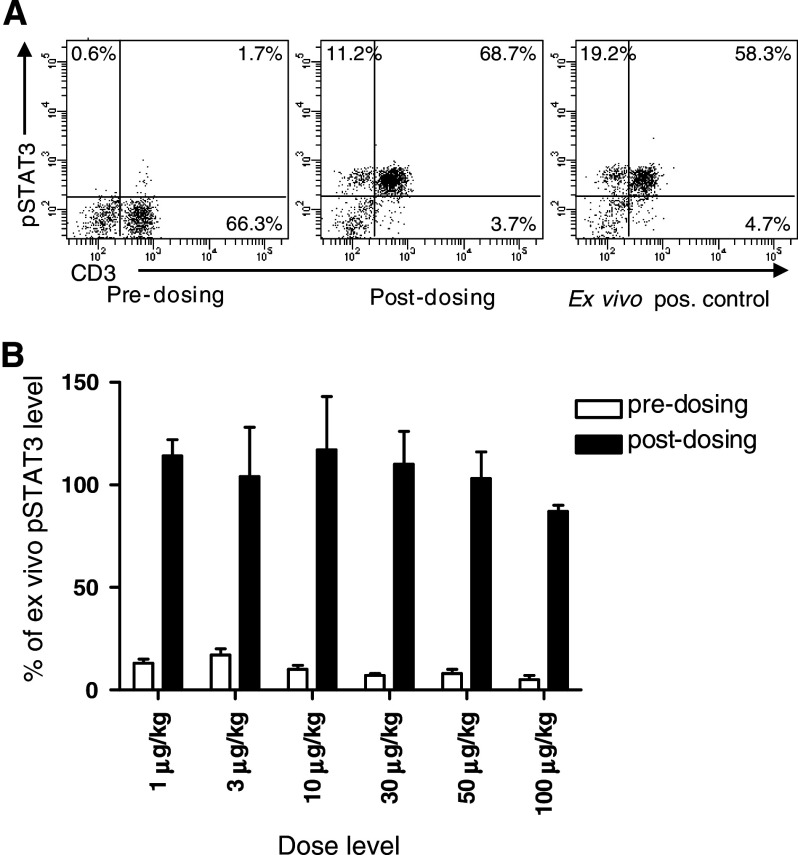
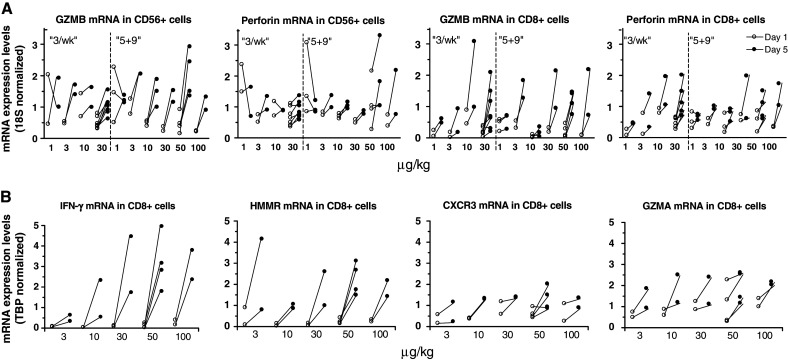
Recombinant IL-21 was administered by intravenous bolus injection at dose levels from 1 to 100 microg/kg using two planned treatment regimens: thrice weekly for 6 weeks (3/week); or once daily for five consecutive days followed by nine dose-free days (5 + 9). The following biomarkers were studied in peripheral blood mononuclear cells (PBMC) during treatment: phosphorylation of STAT3, alterations in the composition of leukocyte subsets, ex vivo cytotoxicity, expression of effector molecules in enriched CD8(+) T cells and CD56(+) NK cells by quantitative RT-PCR, and gene array profiling of CD8(+) T cells.
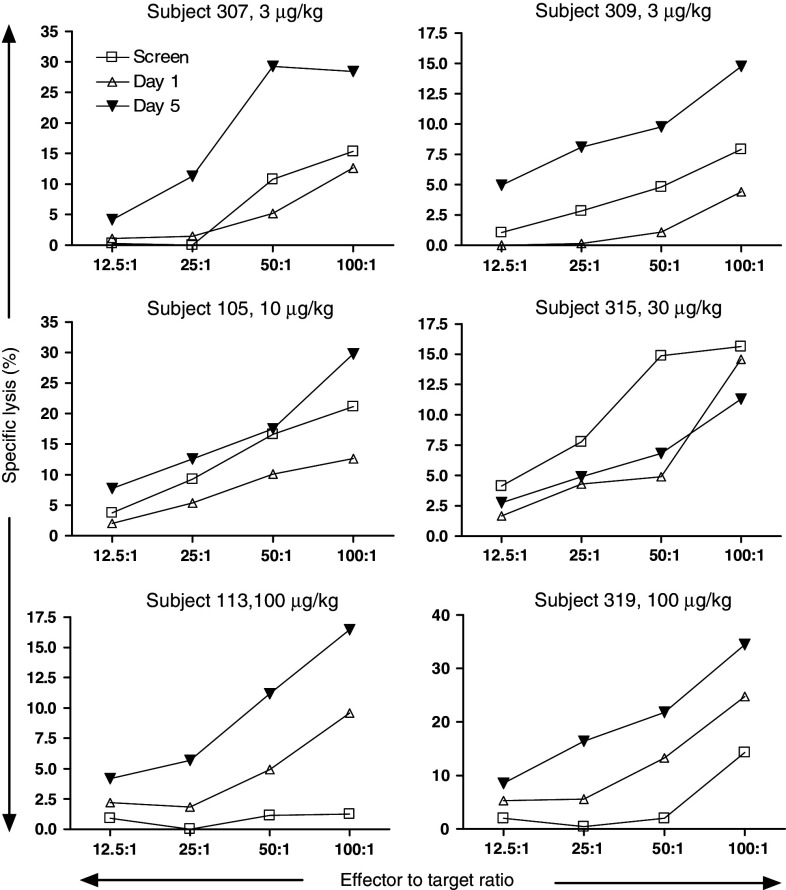
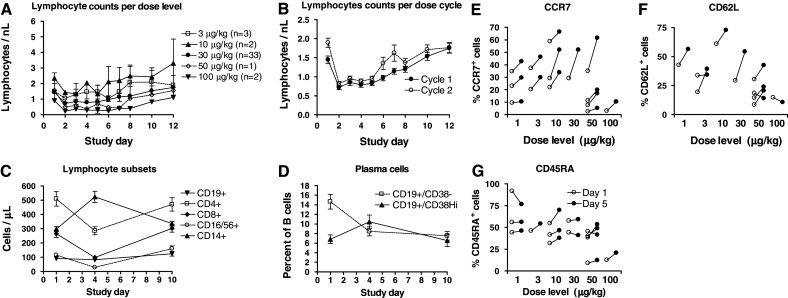
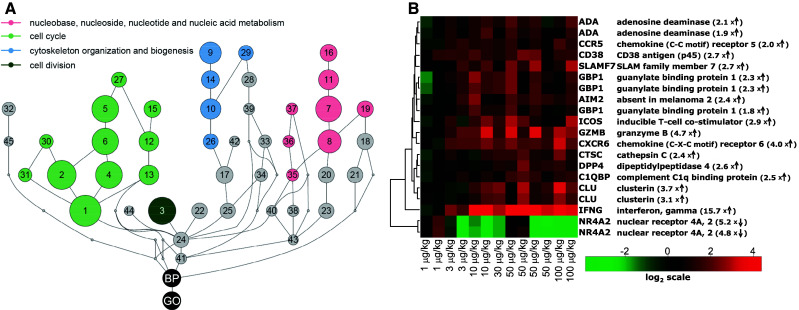
Effects of IL-21 were observed at all dose levels. In the 5 + 9 regimen IL-21 induced a dose dependent decrease in circulating NK cells and T cells followed by a return to baseline in resting periods. In both CD8(+) T cells and CD56(+) NK cells we found up-regulation of perforin and granzyme B mRNA. In addition, full transcriptome analysis of CD8(+) T cells displayed changes in several transcripts associated with increased cell cycle progression, cellular motility, and immune activation. Finally, cytotoxicity assays showed that IL-21 enhanced the ability of NK cells to kill sensitive targets ex vivo.
IL-21 was biologically active at all dose levels administered with evidence of in vivo NK cell and CD8(+) T cell activation.
人白细胞介素-21(IL-21)是一种I类细胞因子,先前在免疫反应性癌症的临床研究中有报道。在此,我们报告了在两项关于这种新型细胞因子的1期试验中,全身性IL-21治疗对免疫系统的影响。
使用两种计划的治疗方案,通过静脉推注以1至100μg/kg的剂量水平给予重组IL-21:每周三次,共6周(3/周);或连续五天每天一次,随后九天无剂量(5 + 9)。在治疗期间,对外周血单个核细胞(PBMC)中的以下生物标志物进行了研究:STAT3的磷酸化、白细胞亚群组成的改变、体外细胞毒性、通过定量RT-PCR检测富集的CD8(+) T细胞和CD56(+) NK细胞中效应分子的表达,以及CD8(+) T细胞的基因阵列分析。
在所有剂量水平均观察到IL-21的作用。在5 + 9方案中,IL-21诱导循环NK细胞和T细胞呈剂量依赖性减少,随后在休息期恢复到基线水平。在CD8(+) T细胞和CD56(+) NK细胞中,我们均发现穿孔素和颗粒酶B mRNA上调。此外,CD8(+) T细胞的全转录组分析显示,与细胞周期进程增加、细胞运动性和免疫激活相关的几种转录本发生了变化。最后,细胞毒性试验表明,IL-21增强了NK细胞在体外杀伤敏感靶标的能力。
在所有给药剂量水平下,IL-21均具有生物学活性,有体内NK细胞和CD8(+) T细胞激活的证据。