Ginsberg Myron D
Department of Neurology (D4-5), University of Miami Miller School of Medicine, Miami, FL 33101, USA.
Neuropharmacology. 2008 Sep;55(3):363-89. doi: 10.1016/j.neuropharm.2007.12.007. Epub 2008 Mar 4.
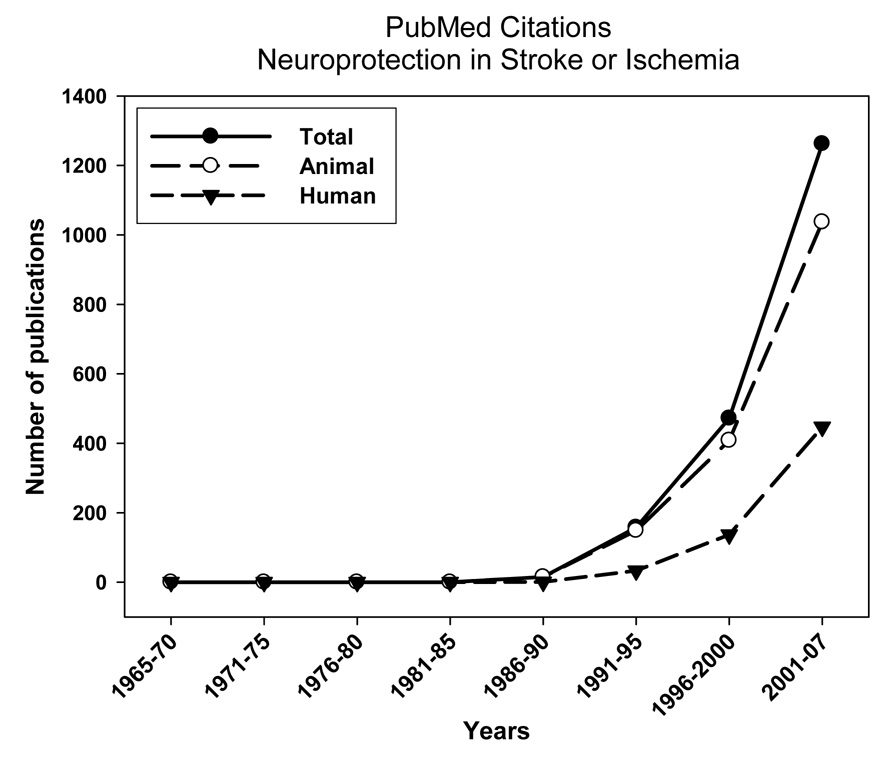
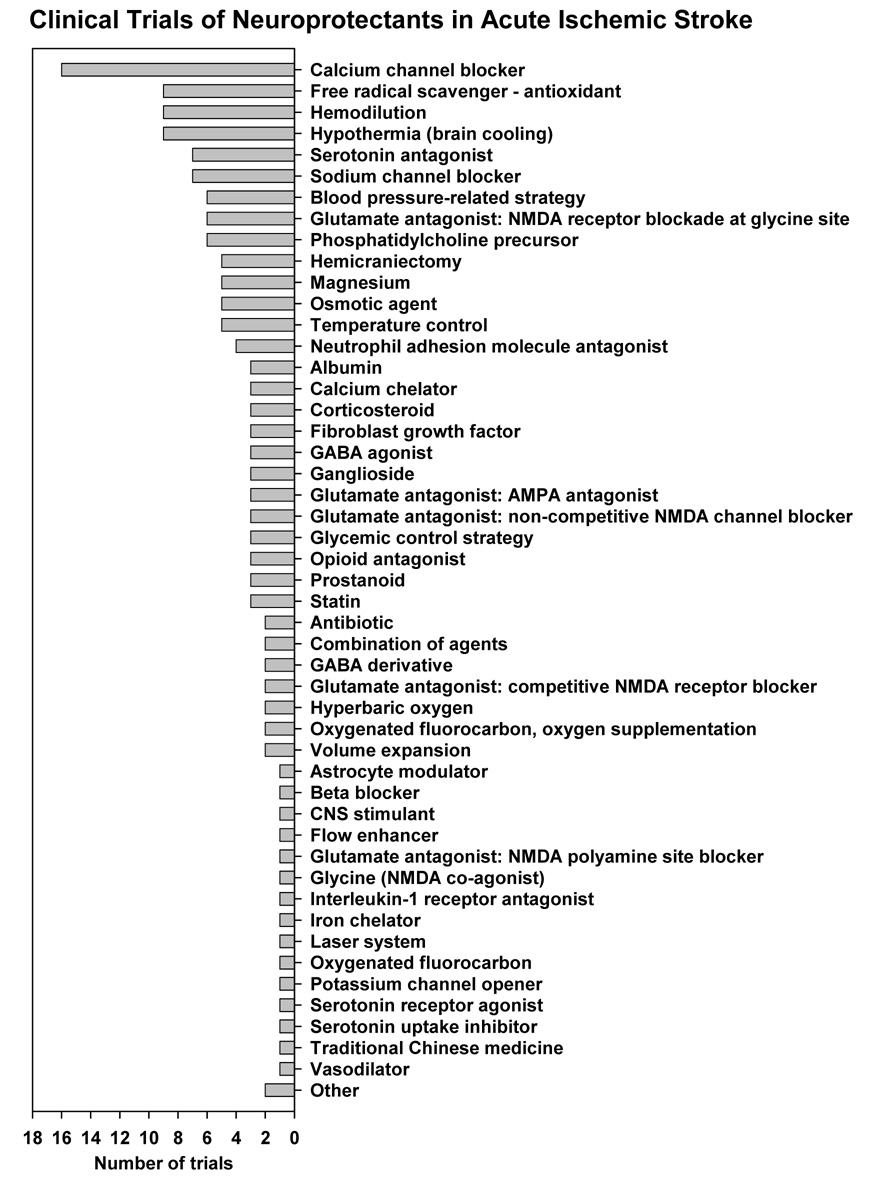
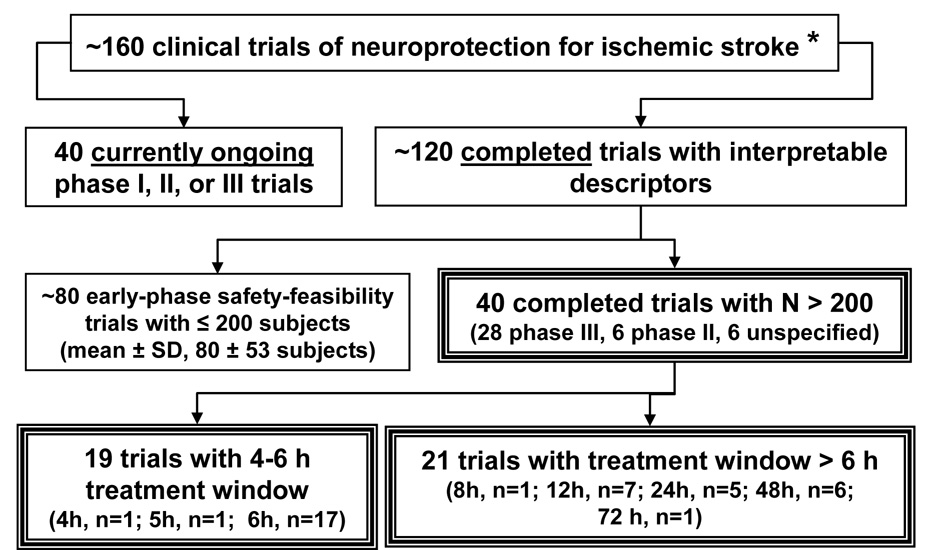
Neuroprotection for ischemic stroke refers to strategies, applied singly or in combination, that antagonize the injurious biochemical and molecular events that eventuate in irreversible ischemic injury. There has been a recent explosion of interest in this field, with over 1000 experimental papers and over 400 clinical articles appearing within the past 6 years. These studies, in turn, are the outgrowth of three decades of investigative work to define the multiple mechanisms and mediators of ischemic brain injury, which constitute potential targets of neuroprotection. Rigorously conducted experimental studies in animal models of brain ischemia provide incontrovertible proof-of-principle that high-grade protection of the ischemic brain is an achievable goal. Nonetheless, many agents have been brought to clinical trial without a sufficiently compelling evidence-based pre-clinical foundation. At this writing, around 160 clinical trials of neuroprotection for ischemic stroke have been initiated. Of the approximately 120 completed trials, two-thirds were smaller early-phase safety-feasibility studies. The remaining one-third were typically larger (>200 subjects) phase II or III trials, but, disappointingly, only fewer than one-half of these administered neuroprotective therapy within the 4-6h therapeutic window within which efficacious neuroprotection is considered to be achievable. This fact alone helps to account for the abundance of "failed" trials. This review presents a close survey of the most extensively evaluated neuroprotective agents and classes and considers both the strengths and weakness of the pre-clinical evidence as well as the results and shortcomings of the clinical trials themselves. Among the agent-classes considered are calcium channel blockers; glutamate antagonists; GABA agonists; antioxidants/radical scavengers; phospholipid precursor; nitric oxide signal-transduction down-regulator; leukocyte inhibitors; hemodilution; and a miscellany of other agents. Among promising ongoing efforts, therapeutic hypothermia, high-dose human albumin therapy, and hyperacute magnesium therapy are considered in detail. The potential of combination therapies is highlighted. Issues of clinical-trial funding, the need for improved translational strategies and clinical-trial design, and "thinking outside the box" are emphasized.
缺血性中风的神经保护是指单独或联合应用的策略,这些策略可对抗导致不可逆缺血性损伤的有害生化和分子事件。最近该领域的研究兴趣激增,在过去6年中出现了1000多篇实验论文和400多篇临床文章。这些研究又是三十年来调查工作的成果,旨在确定缺血性脑损伤的多种机制和介质,这些机制和介质构成了神经保护的潜在靶点。在脑缺血动物模型中进行的严格实验研究提供了无可争议的原理证明,即对缺血性脑进行高级保护是一个可以实现的目标。尽管如此,许多药物在没有足够令人信服的循证临床前基础的情况下就进入了临床试验。在撰写本文时,已经启动了约160项针对缺血性中风的神经保护临床试验。在大约120项已完成的试验中,三分之二是规模较小的早期安全性-可行性研究。其余三分之一通常是规模较大(>200名受试者)的II期或III期试验,但令人失望的是,其中只有不到一半在被认为可实现有效神经保护的4-6小时治疗窗内给予神经保护治疗。仅这一事实就有助于解释大量“失败”试验的原因。本综述对评估最广泛的神经保护药物和类别进行了详细考察,并考虑了临床前证据的优缺点以及临床试验本身的结果和不足。所考虑的药物类别包括钙通道阻滞剂;谷氨酸拮抗剂;GABA激动剂;抗氧化剂/自由基清除剂;磷脂前体;一氧化氮信号转导下调剂;白细胞抑制剂;血液稀释;以及其他各种药物。在正在进行的有前景的研究中,详细讨论了治疗性低温、高剂量人白蛋白治疗和超急性镁治疗。强调了联合治疗的潜力。强调了临床试验资金问题、改进转化策略和临床试验设计的必要性以及“跳出框框思考”。