Rizki Aylin, Weaver Valerie M, Lee Sun-Young, Rozenberg Gabriela I, Chin Koei, Myers Connie A, Bascom Jamie L, Mott Joni D, Semeiks Jeremy R, Grate Leslie R, Mian I Saira, Borowsky Alexander D, Jensen Roy A, Idowu Michael O, Chen Fanqing, Chen David J, Petersen Ole W, Gray Joe W, Bissell Mina J
Life Sciences Division, Ernest Orlando Lawrence Berkeley National Laboratory, Berkeley, CA 94720, USA.
Cancer Res. 2008 Mar 1;68(5):1378-87. doi: 10.1158/0008-5472.CAN-07-2225.
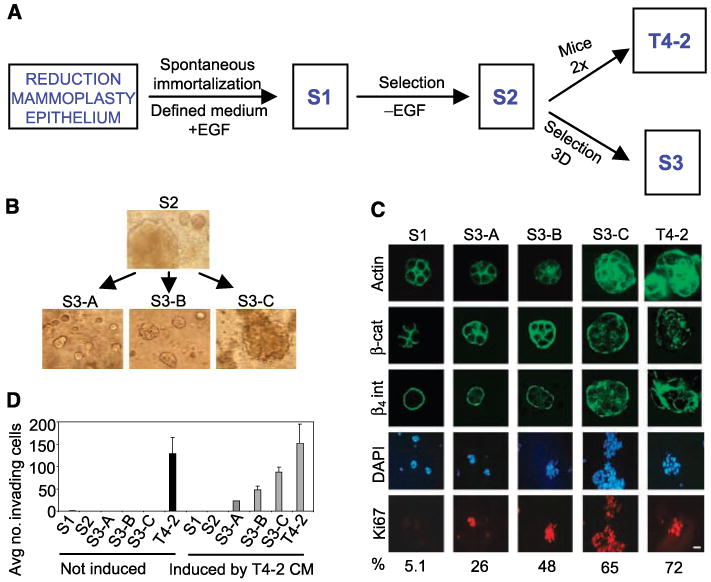
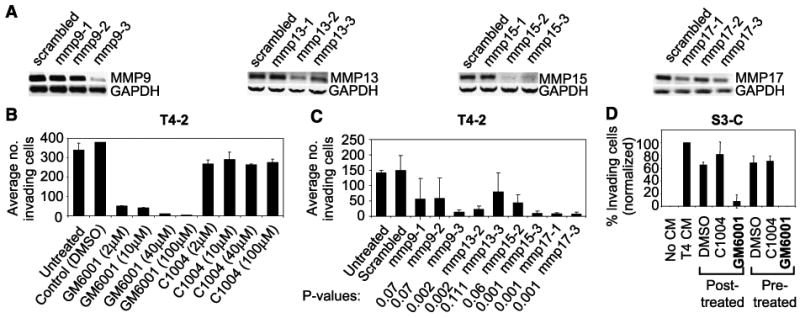
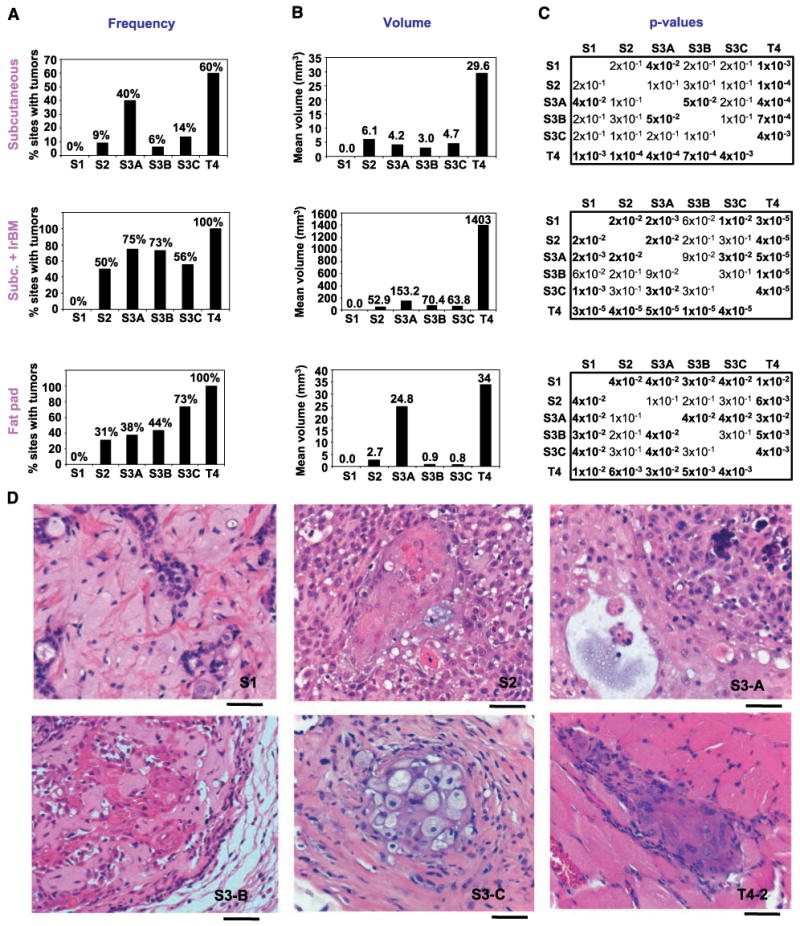
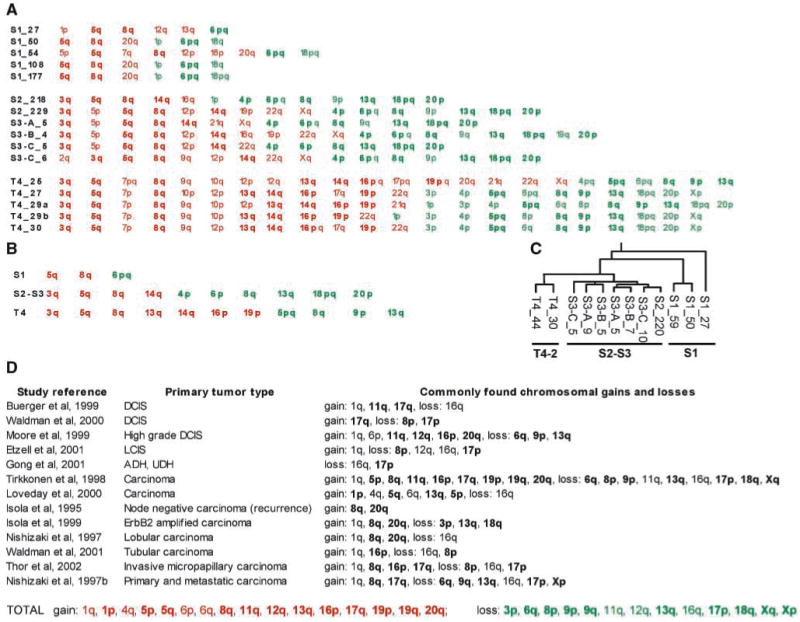
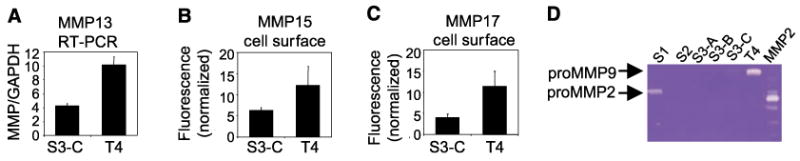
A crucial step in human breast cancer progression is the acquisition of invasiveness. There is a distinct lack of human cell culture models to study the transition from preinvasive to invasive phenotype as it may occur "spontaneously" in vivo. To delineate molecular alterations important for this transition, we isolated human breast epithelial cell lines that showed partial loss of tissue polarity in three-dimensional reconstituted basement membrane cultures. These cells remained noninvasive; however, unlike their nonmalignant counterparts, they exhibited a high propensity to acquire invasiveness through basement membrane in culture. The genomic aberrations and gene expression profiles of the cells in this model showed a high degree of similarity to primary breast tumor profiles. The xenograft tumors formed by the cell lines in three different microenvironments in nude mice displayed metaplastic phenotypes, including squamous and basal characteristics, with invasive cells exhibiting features of higher-grade tumors. To find functionally significant changes in transition from preinvasive to invasive phenotype, we performed attribute profile clustering analysis on the list of genes differentially expressed between preinvasive and invasive cells. We found integral membrane proteins, transcription factors, kinases, transport molecules, and chemokines to be highly represented. In addition, expression of matrix metalloproteinases MMP9, MMP13, MMP15, and MMP17 was up-regulated in the invasive cells. Using small interfering RNA-based approaches, we found these MMPs to be required for the invasive phenotype. This model provides a new tool for dissection of mechanisms by which preinvasive breast cells could acquire invasiveness in a metaplastic context.
人类乳腺癌进展中的一个关键步骤是获得侵袭性。目前明显缺乏用于研究从非侵袭性表型向侵袭性表型转变的人类细胞培养模型,因为这种转变可能在体内“自发”发生。为了阐明对这种转变至关重要的分子改变,我们分离了在三维重组基底膜培养中显示出部分组织极性丧失的人类乳腺上皮细胞系。这些细胞仍然没有侵袭性;然而,与它们的非恶性对应物不同,它们在培养中表现出通过基底膜获得侵袭性的高倾向。该模型中细胞的基因组畸变和基因表达谱与原发性乳腺肿瘤谱高度相似。这些细胞系在裸鼠的三种不同微环境中形成的异种移植肿瘤表现出化生表型,包括鳞状和基底特征,侵袭性细胞表现出高级别肿瘤的特征。为了找到从非侵袭性向侵袭性表型转变中功能上显著的变化,我们对非侵袭性和侵袭性细胞之间差异表达的基因列表进行了属性谱聚类分析。我们发现整合膜蛋白、转录因子、激酶、转运分子和趋化因子高度富集。此外侵袭性细胞中基质金属蛋白酶MMP9、MMP13、MMP15和MMP17的表达上调。使用基于小干扰RNA的方法,我们发现这些基质金属蛋白酶是侵袭性表型所必需的。该模型为剖析非侵袭性乳腺细胞在化生背景下获得侵袭性的机制提供了一种新工具。