• 文献检索
  • 文档翻译
  • 深度研究
  • 学术资讯
  • Suppr Zotero 插件Zotero 插件
  • 邀请有礼
  • 套餐&价格
  • 历史记录
应用&插件
Suppr Zotero 插件Zotero 插件浏览器插件Mac 客户端Windows 客户端微信小程序
定价
高级版会员购买积分包购买API积分包
服务
文献检索文档翻译深度研究API 文档MCP 服务
关于我们
关于 Suppr公司介绍联系我们用户协议隐私条款
关注我们

Suppr 超能文献

核心技术专利:CN118964589B侵权必究
粤ICP备2023148730 号-1Suppr @ 2026

文献检索

告别复杂PubMed语法,用中文像聊天一样搜索,搜遍4000万医学文献。AI智能推荐,让科研检索更轻松。

立即免费搜索

文件翻译

保留排版,准确专业,支持PDF/Word/PPT等文件格式,支持 12+语言互译。

免费翻译文档

深度研究

AI帮你快速写综述,25分钟生成高质量综述,智能提取关键信息,辅助科研写作。

立即免费体验

眼周给药后循环对20纳米纳米颗粒的处置及眼组织分布的影响。

Effect of circulation on the disposition and ocular tissue distribution of 20 nm nanoparticles after periocular administration.

作者信息

Amrite Aniruddha C, Edelhauser Henry F, Singh Swita R, Kompella Uday B

机构信息

Department of Pharmaceutical Sciences, University of Nebraska Medical Center, Omaha, NE 68198-5840, USA.

出版信息

Mol Vis. 2008 Jan 29;14:150-60.

PMID:18334929
原文链接:https://pmc.ncbi.nlm.nih.gov/articles/PMC2254958/
Abstract

PURPOSE

Our previous studies indicated that while 20 nm particles are rapidly cleared from the periocular space of the rat following posterior subconjunctival injection, 200 nm particles persisted for at least two months. To understand faster clearance of 20 nm particles, the purpose of this study was to determine transscleral permeability and in vivo disposition in the presence and absence of circulation. Further, it was the purpose of this study to simulate sustained retinal drug delivery after periocular administration of rapidly cleared and slowly cleared nanoparticles.

METHODS

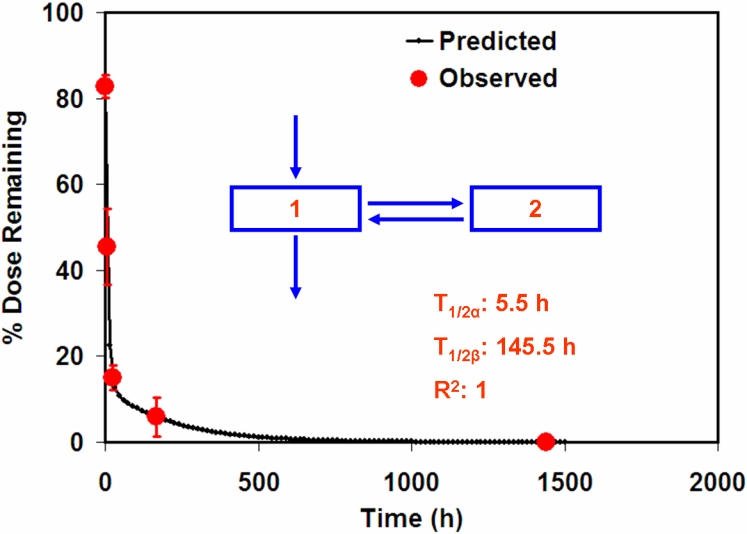
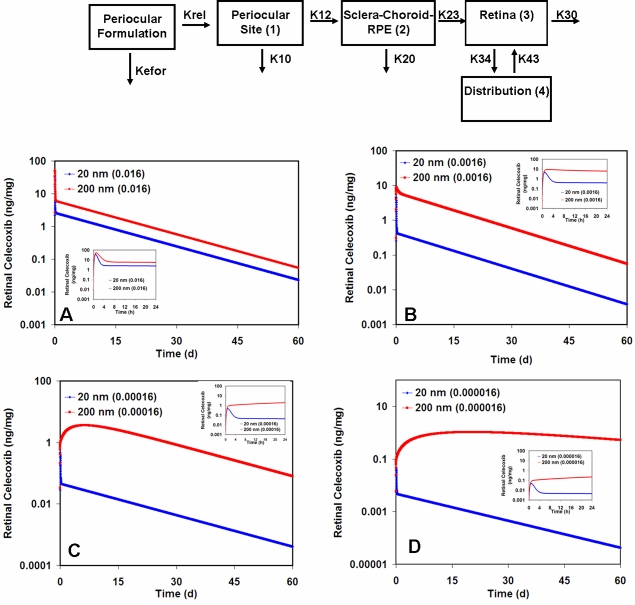
The permeability of 20 and 200 nm particles over 24 h was examined across isolated bovine sclera and sclera-choroid-RPE with or without a surfactant (Tween 20, 0.1% w/v) added to the preparation. The in vivo disposition of nanoparticles was performed using Sprague Dawley rats. The rats, either dead or alive, were administered with 400 microg of the nanoparticles in the periocular space, and the particle disposition in the eye tissues was assessed 6 h later. To evaluate the role of the reticulo-endothelial system and lymphatic circulation, isolated liver, spleen, and cervical, axillary, and mesenteric lymph nodes were analyzed using confocal microscopy. Mathematical simulations with Berkeley Madonna were used to evaluate the effect of nanoparticle size on retinal drug levels following periocular administration. Celecoxib was used as the model drug and the finalized pharmacokinetic model from a previous study was used with some modifications for the simulation.

RESULTS

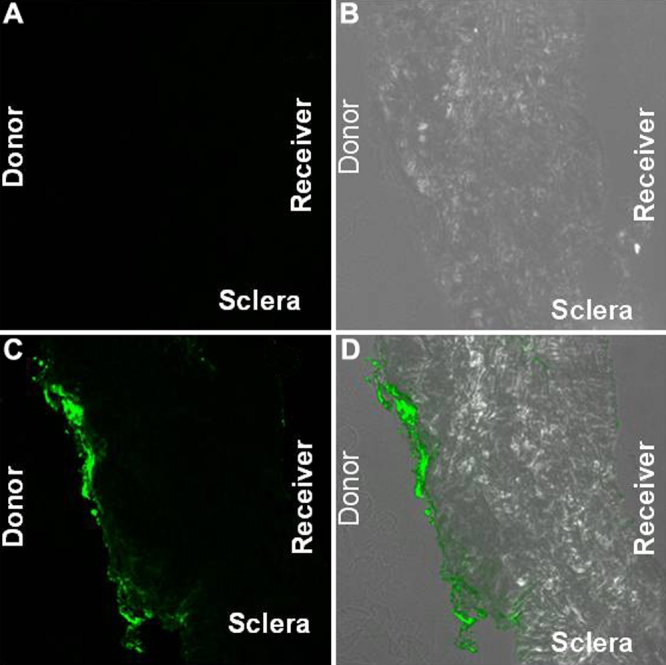
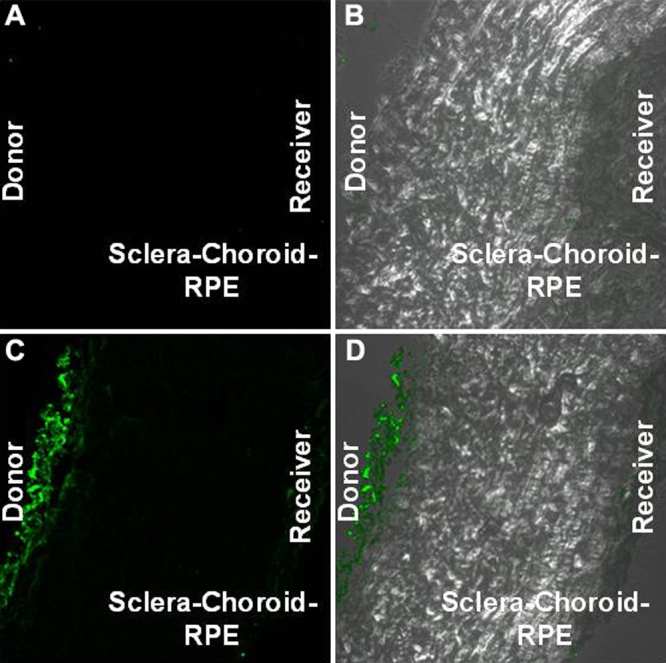
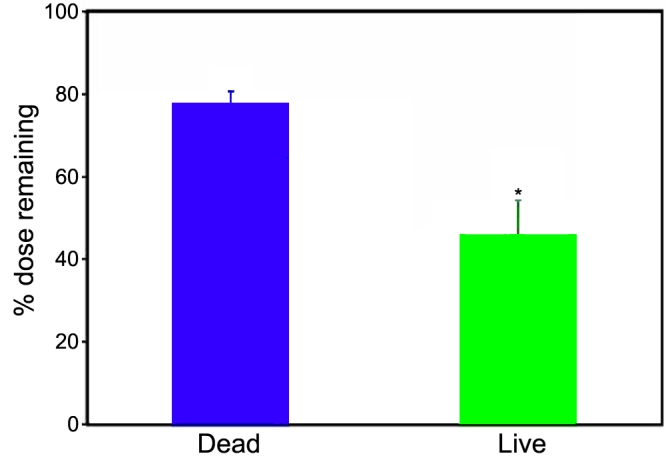
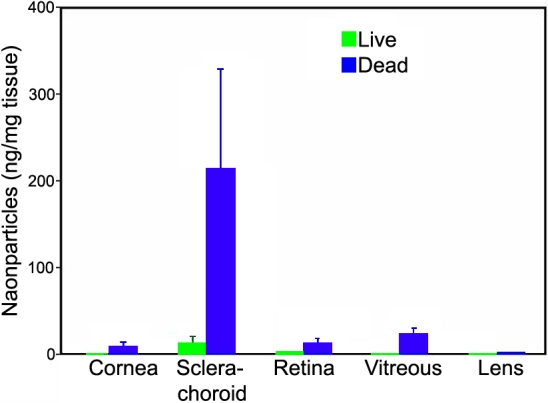
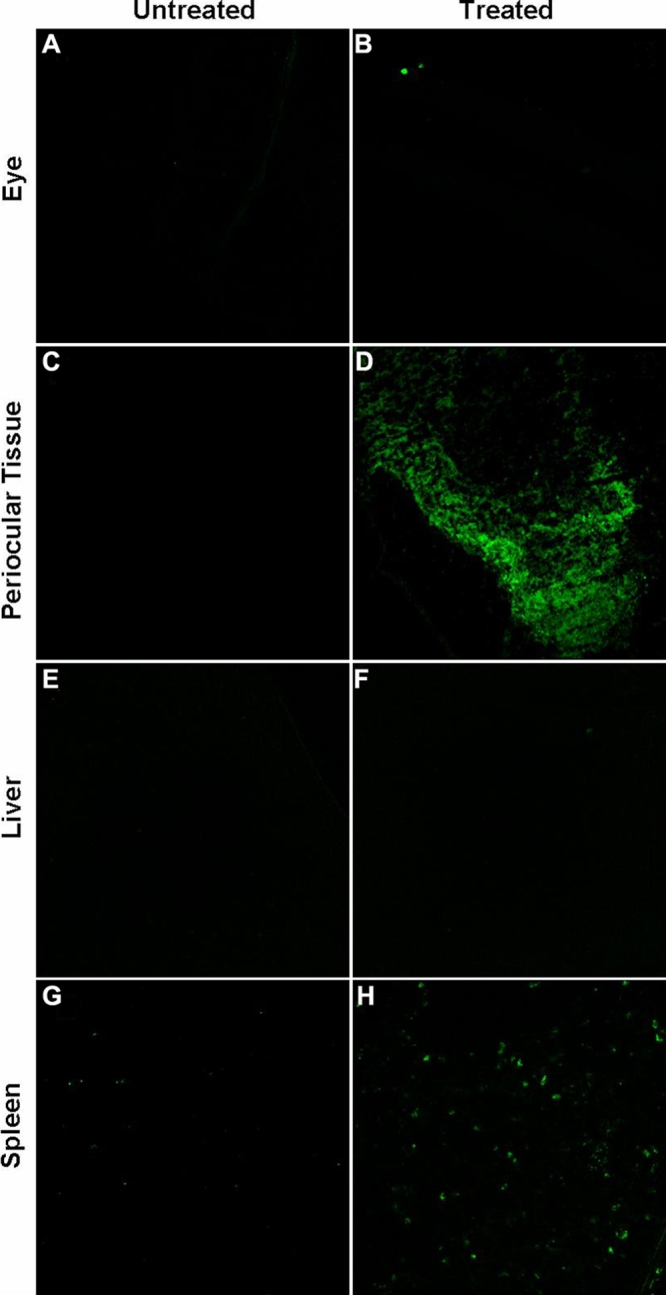
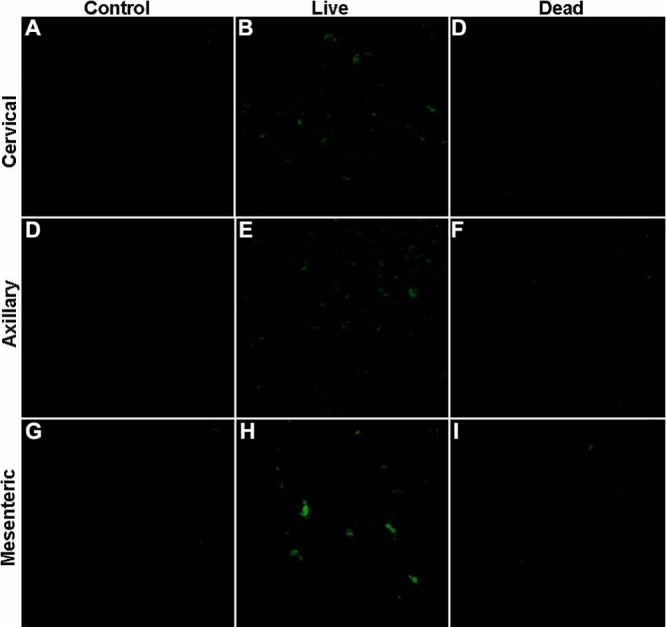
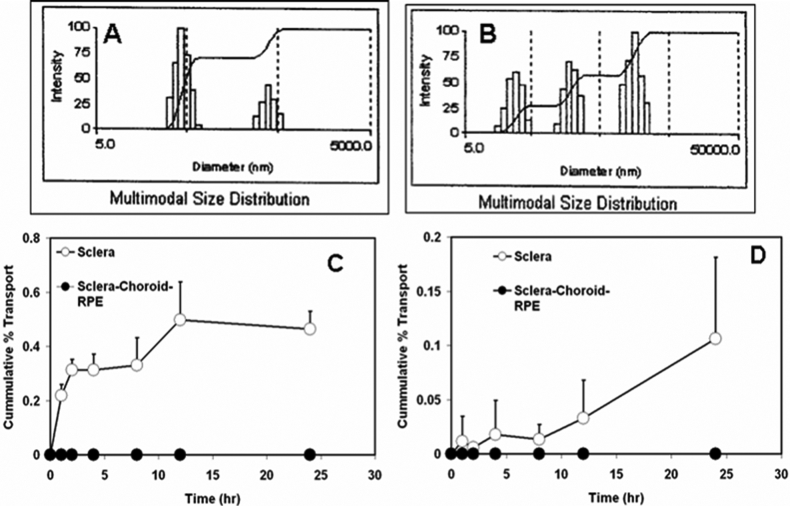
Transport of 20 nm particles across sclera in the presence and absence of the surfactant were 0.1%+/-0.07% and 0.46%+/-0.06%, respectively. These particles did not permeate across the sclera-choroid-RPE in 24 h. There was no quantifiable transport for 200 nm particles across the sclera or the sclera-choroid-RPE. In live animals, the 20 nm particles were undetectable in any of the ocular tissues except in the sclera-choroid following periocular administration; however, in dead animals, the particle concentrations in the sclera-choroid were 19 fold higher than those in live animals, and particles were detectable in the retina as well as vitreous. The retention of 20 nm particles at the site of administration was two fold higher in the dead animals. In live animals, the particles were clearly detectable in the spleen and to a very low extent in the liver as well. The particles were also detected in the cervical, axillary, and mesenteric lymph nodes of the live animals. Simulations with two particles (20 nm and 200 nm) with different clearance rates demonstrated that the retinal drug levels were affected by particle clearance. Larger nanoparticles sustained retinal drug delivery better than smaller nanoparticles. With an increase in drug release rate from the particles, these differences diminish.

CONCLUSIONS

The 20 nm particles are transported across the sclera to a minor degree; however, there is no significant transport across the sclera-choroid-RPE. Periocular circulation (blood and lymphatic) plays an important role in the clearance of the 20 nm particles. The higher particle levels in the ocular tissues in the post-mortem studies indicate a dynamic physiologic barrier to the entry of particles into the ocular tissues after periocular administration. The particle size of the delivery system can play an important role in the observed retinal drug levels after periocular administration. Slow release nanoparticles with low clearance by blood and lymphatic circulations are suitable for prolonged transscleral drug delivery to the back of the eye.
https://cdn.ncbi.nlm.nih.gov/pmc/blobs/60f5/2254958/c18eb994392b/mv-v14-150-f9.jpg
https://cdn.ncbi.nlm.nih.gov/pmc/blobs/60f5/2254958/a9e470350ea6/mv-v14-150-f1.jpg
https://cdn.ncbi.nlm.nih.gov/pmc/blobs/60f5/2254958/ae2c7ffdd064/mv-v14-150-f2.jpg
https://cdn.ncbi.nlm.nih.gov/pmc/blobs/60f5/2254958/07355b35699e/mv-v14-150-f3.jpg
https://cdn.ncbi.nlm.nih.gov/pmc/blobs/60f5/2254958/0f7f0239de24/mv-v14-150-f4.jpg
https://cdn.ncbi.nlm.nih.gov/pmc/blobs/60f5/2254958/a7a861166e67/mv-v14-150-f5.jpg
https://cdn.ncbi.nlm.nih.gov/pmc/blobs/60f5/2254958/ee6645990f5e/mv-v14-150-f6.jpg
https://cdn.ncbi.nlm.nih.gov/pmc/blobs/60f5/2254958/3f7855395f0d/mv-v14-150-f7.jpg
https://cdn.ncbi.nlm.nih.gov/pmc/blobs/60f5/2254958/1c971ed33723/mv-v14-150-f8.jpg
https://cdn.ncbi.nlm.nih.gov/pmc/blobs/60f5/2254958/c18eb994392b/mv-v14-150-f9.jpg
https://cdn.ncbi.nlm.nih.gov/pmc/blobs/60f5/2254958/a9e470350ea6/mv-v14-150-f1.jpg
https://cdn.ncbi.nlm.nih.gov/pmc/blobs/60f5/2254958/ae2c7ffdd064/mv-v14-150-f2.jpg
https://cdn.ncbi.nlm.nih.gov/pmc/blobs/60f5/2254958/07355b35699e/mv-v14-150-f3.jpg
https://cdn.ncbi.nlm.nih.gov/pmc/blobs/60f5/2254958/0f7f0239de24/mv-v14-150-f4.jpg
https://cdn.ncbi.nlm.nih.gov/pmc/blobs/60f5/2254958/a7a861166e67/mv-v14-150-f5.jpg
https://cdn.ncbi.nlm.nih.gov/pmc/blobs/60f5/2254958/ee6645990f5e/mv-v14-150-f6.jpg
https://cdn.ncbi.nlm.nih.gov/pmc/blobs/60f5/2254958/3f7855395f0d/mv-v14-150-f7.jpg
https://cdn.ncbi.nlm.nih.gov/pmc/blobs/60f5/2254958/1c971ed33723/mv-v14-150-f8.jpg
https://cdn.ncbi.nlm.nih.gov/pmc/blobs/60f5/2254958/c18eb994392b/mv-v14-150-f9.jpg
摘要

目的

我们之前的研究表明,结膜下注射后,20纳米颗粒能迅速从大鼠眼周间隙清除,而200纳米颗粒至少能持续存在两个月。为了解20纳米颗粒更快清除的原因,本研究旨在确定在有循环和无循环情况下的经巩膜通透性及体内分布。此外,本研究的目的是模拟眼周给药后快速清除和缓慢清除的纳米颗粒的持续视网膜药物递送。

方法

在有或无表面活性剂(吐温20,0.1% w/v)添加到制剂的情况下,检测20纳米和200纳米颗粒在24小时内穿过分离的牛巩膜和巩膜-脉络膜-视网膜色素上皮(RPE)的通透性。使用Sprague Dawley大鼠进行纳米颗粒的体内分布研究。对处死或存活的大鼠在眼周间隙给予400微克纳米颗粒,6小时后评估颗粒在眼组织中的分布。为评估网状内皮系统和淋巴循环的作用,使用共聚焦显微镜分析分离的肝脏、脾脏以及颈部、腋窝和肠系膜淋巴结。使用伯克利 Madonna软件进行数学模拟,以评估纳米颗粒大小对眼周给药后视网膜药物水平的影响。使用塞来昔布作为模型药物,并对先前研究中最终确定的药代动力学模型进行一些修改用于模拟。

结果

在有和无表面活性剂的情况下,20纳米颗粒穿过巩膜的转运率分别为0.1%±0.07%和0.46%±0.06%。这些颗粒在24小时内未穿过巩膜-脉络膜-RPE。200纳米颗粒穿过巩膜或巩膜-脉络膜-RPE无可量化的转运。在活体动物中,眼周给药后,除巩膜-脉络膜外,在任何眼组织中均未检测到20纳米颗粒;然而,在处死的动物中,巩膜-脉络膜中的颗粒浓度比活体动物高19倍,且在视网膜和玻璃体中也可检测到颗粒。处死动物中给药部位20纳米颗粒的滞留量高出两倍。在活体动物中,在脾脏中可清楚检测到颗粒,在肝脏中也能检测到但程度非常低。在活体动物的颈部、腋窝和肠系膜淋巴结中也检测到了颗粒。对两种清除率不同的颗粒(20纳米和200纳米)进行模拟表明,视网膜药物水平受颗粒清除的影响。较大的纳米颗粒比较小的纳米颗粒能更好地维持视网膜药物递送。随着颗粒药物释放速率的增加,这些差异减小。

结论

20纳米颗粒仅少量穿过巩膜;然而,穿过巩膜-脉络膜-RPE无明显转运。眼周循环(血液和淋巴)在20纳米颗粒的清除中起重要作用。死后研究中眼组织中较高的颗粒水平表明眼周给药后颗粒进入眼组织存在动态生理屏障。给药系统的颗粒大小对眼周给药后观察到的视网膜药物水平可起重要作用。通过血液和淋巴循环清除率低的缓释纳米颗粒适合经巩膜向眼后部进行长期药物递送。

相似文献

1
Effect of circulation on the disposition and ocular tissue distribution of 20 nm nanoparticles after periocular administration.眼周给药后循环对20纳米纳米颗粒的处置及眼组织分布的影响。
Mol Vis. 2008 Jan 29;14:150-60.
2
Effect of eye pigmentation on transscleral drug delivery.眼色素沉着对经巩膜给药的影响。
Invest Ophthalmol Vis Sci. 2008 Jan;49(1):333-41. doi: 10.1167/iovs.07-0214.
3
Modeling of corneal and retinal pharmacokinetics after periocular drug administration.眼周给药后角膜和视网膜药代动力学的建模
Invest Ophthalmol Vis Sci. 2008 Jan;49(1):320-32. doi: 10.1167/iovs.07-0593.
4
RETRACTED: Influence of choroidal neovascularization and biodegradable polymeric particle size on transscleral sustained delivery of triamcinolone acetonide.撤回:脉络膜新生血管和可生物降解聚合物粒径对曲安奈德经巩膜缓释输送的影响。
Int J Pharm. 2012 Sep 15;434(1-2):140-7. doi: 10.1016/j.ijpharm.2012.05.025. Epub 2012 May 23.
5
Influence of drug solubility and lipophilicity on transscleral retinal delivery of six corticosteroids.药物溶解度和脂溶性对 6 种皮质类固醇经巩膜视网膜递药的影响。
Drug Metab Dispos. 2011 May;39(5):771-81. doi: 10.1124/dmd.110.037408. Epub 2011 Feb 23.
6
Single periocular injection of celecoxib-PLGA microparticles inhibits diabetes-induced elevations in retinal PGE2, VEGF, and vascular leakage.单次眼周注射塞来昔布 - 聚乳酸 - 羟基乙酸共聚物(PLGA)微粒可抑制糖尿病引起的视网膜前列腺素E2(PGE2)、血管内皮生长因子(VEGF)升高以及血管渗漏。
Invest Ophthalmol Vis Sci. 2006 Mar;47(3):1149-60. doi: 10.1167/iovs.05-0531.
7
Bovine and porcine transscleral solute transport: influence of lipophilicity and the Choroid-Bruch's layer.牛和猪的经巩膜溶质转运:亲脂性及脉络膜-布鲁赫膜的影响
Invest Ophthalmol Vis Sci. 2006 Oct;47(10):4513-22. doi: 10.1167/iovs.06-0404.
8
Size-dependent disposition of nanoparticles and microparticles following subconjunctival administration.结膜下给药后纳米颗粒和微粒的尺寸依赖性处置
J Pharm Pharmacol. 2005 Dec;57(12):1555-63. doi: 10.1211/jpp.57.12.0005.
9
Hydrophilic prodrug approach for reduced pigment binding and enhanced transscleral retinal delivery of celecoxib.水敏前药策略降低色淀形成并增强塞来昔布经巩膜视网膜递药。
Mol Pharm. 2012 Mar 5;9(3):605-14. doi: 10.1021/mp2005164. Epub 2012 Feb 8.
10
Noninvasive Monitoring of Choroid-Retina Autofluorescence and Intravitreal Nanoparticle Disposition in Royal College of Surgeon Rats of Different Ages and Retinal Thinning.不同年龄皇家外科学院大鼠的脉络膜-视网膜自发荧光的无创监测和眼内纳米颗粒分布及视网膜变薄。
J Ocul Pharmacol Ther. 2020 Jul/Aug;36(6):458-466. doi: 10.1089/jop.2020.0028. Epub 2020 Jun 18.

引用本文的文献

1
Nanomedicine in Ophthalmology: From Bench to Bedside.眼科纳米医学:从实验台到病床边
J Clin Med. 2024 Dec 16;13(24):7651. doi: 10.3390/jcm13247651.
2
Multifunctional nano-in-micro delivery systems for targeted therapy in fundus neovascularization diseases.多功能纳米微纳递药系统用于眼底新生血管疾病的靶向治疗。
J Nanobiotechnology. 2024 Jun 20;22(1):354. doi: 10.1186/s12951-024-02614-1.
3
Potential in exosome-based targeted nano-drugs and delivery vehicles for posterior ocular disease treatment: from barriers to therapeutic application.

本文引用的文献

1
Effect of eye pigmentation on transscleral drug delivery.眼色素沉着对经巩膜给药的影响。
Invest Ophthalmol Vis Sci. 2008 Jan;49(1):333-41. doi: 10.1167/iovs.07-0214.
2
Modeling of corneal and retinal pharmacokinetics after periocular drug administration.眼周给药后角膜和视网膜药代动力学的建模
Invest Ophthalmol Vis Sci. 2008 Jan;49(1):320-32. doi: 10.1167/iovs.07-0593.
3
Transport barriers in transscleral drug delivery for retinal diseases.用于视网膜疾病的经巩膜给药中的转运屏障
基于外泌体的靶向纳米药物和递药系统治疗后眼部疾病的潜力:从障碍到治疗应用。
Mol Cell Biochem. 2024 Jun;479(6):1319-1333. doi: 10.1007/s11010-023-04798-w. Epub 2023 Jul 4.
4
Recent Progress of Solid Lipid Nanoparticles and Nanostructured Lipid Carriers as Ocular Drug Delivery Platforms.固体脂质纳米粒和纳米结构脂质载体作为眼部药物递送平台的研究进展
Pharmaceuticals (Basel). 2023 Mar 22;16(3):474. doi: 10.3390/ph16030474.
5
Delivery of Hydrophobic Drugs to the Posterior Ocular Region by Gel-in-Water Nanoemulsion.水包油纳米乳液向眼后区传递疏水性药物。
Transl Vis Sci Technol. 2022 May 2;11(5):16. doi: 10.1167/tvst.11.5.16.
6
Design of Nanotechnological Carriers for Ocular Delivery of Mangiferin: Preformulation Study.芒果苷眼用纳米载药系统的设计:制剂前研究。
Molecules. 2022 Feb 16;27(4):1328. doi: 10.3390/molecules27041328.
7
Vortex Vein Imaging: What Can It Tell Us?涡静脉成像:它能告诉我们什么?
Clin Ophthalmol. 2021 Aug 10;15:3321-3331. doi: 10.2147/OPTH.S324245. eCollection 2021.
8
Lipid Nanoparticles Traverse Non-Corneal Path to Reach the Posterior Eye Segment: In Vivo Evidence.脂质纳米颗粒经非角膜途径穿透到达后眼部:体内证据。
Molecules. 2021 Aug 2;26(15):4673. doi: 10.3390/molecules26154673.
9
Non-Ionic Surfactants for Stabilization of Polymeric Nanoparticles for Biomedical Uses.用于生物医学用途的聚合物纳米颗粒稳定化的非离子表面活性剂。
Materials (Basel). 2021 Jun 10;14(12):3197. doi: 10.3390/ma14123197.
10
Lipid-Based Nanocarriers for Ophthalmic Administration: Towards Experimental Design Implementation.用于眼部给药的脂质基纳米载体:迈向实验设计的实施
Pharmaceutics. 2021 Mar 26;13(4):447. doi: 10.3390/pharmaceutics13040447.
Ophthalmic Res. 2007;39(5):244-54. doi: 10.1159/000108117. Epub 2007 Sep 12.
4
microPET-based biodistribution of quantum dots in living mice.基于微型正电子发射断层扫描的量子点在活体小鼠体内的生物分布。
J Nucl Med. 2007 Sep;48(9):1511-8. doi: 10.2967/jnumed.107.040071. Epub 2007 Aug 17.
5
Biodistribution of intravenously administered amphiphilic beta-cyclodextrin nanospheres.静脉注射两亲性β-环糊精纳米球的生物分布
Int J Pharm. 2007 Nov 1;344(1-2):135-42. doi: 10.1016/j.ijpharm.2007.06.050. Epub 2007 Jul 5.
6
Biodegradable nanoparticles for cytosolic delivery of therapeutics.用于治疗药物胞质递送的可生物降解纳米颗粒。
Adv Drug Deliv Rev. 2007 Aug 10;59(8):718-28. doi: 10.1016/j.addr.2007.06.003. Epub 2007 Jun 26.
7
Luteinizing hormone-releasing hormone agonist and transferrin functionalizations enhance nanoparticle delivery in a novel bovine ex vivo eye model.促黄体生成素释放激素激动剂和转铁蛋白功能化增强了新型牛离体眼模型中的纳米颗粒递送。
Mol Vis. 2006 Oct 17;12:1185-98.
8
Bovine and porcine transscleral solute transport: influence of lipophilicity and the Choroid-Bruch's layer.牛和猪的经巩膜溶质转运:亲脂性及脉络膜-布鲁赫膜的影响
Invest Ophthalmol Vis Sci. 2006 Oct;47(10):4513-22. doi: 10.1167/iovs.06-0404.
9
Anecortave acetate for treating or preventing choroidal neovascularization.醋酸阿奈可他用于治疗或预防脉络膜新生血管形成。
Ophthalmol Clin North Am. 2006 Sep;19(3):373-80. doi: 10.1016/j.ohc.2006.05.006.
10
Single periocular injection of celecoxib-PLGA microparticles inhibits diabetes-induced elevations in retinal PGE2, VEGF, and vascular leakage.单次眼周注射塞来昔布 - 聚乳酸 - 羟基乙酸共聚物(PLGA)微粒可抑制糖尿病引起的视网膜前列腺素E2(PGE2)、血管内皮生长因子(VEGF)升高以及血管渗漏。
Invest Ophthalmol Vis Sci. 2006 Mar;47(3):1149-60. doi: 10.1167/iovs.05-0531.