Jhawer Minaxi, Goel Sanjay, Wilson Andrew J, Montagna Cristina, Ling Yi-He, Byun Do-Sun, Nasser Shannon, Arango Diego, Shin Joongho, Klampfer Lidija, Augenlicht Leonard H, Perez-Soler Roman, Mariadason John M
Department of Oncology, Montefiore Medical Center, Albert Einstein Cancer Center, Bronx, NY 10467, USA.
Cancer Res. 2008 Mar 15;68(6):1953-61. doi: 10.1158/0008-5472.CAN-07-5659.
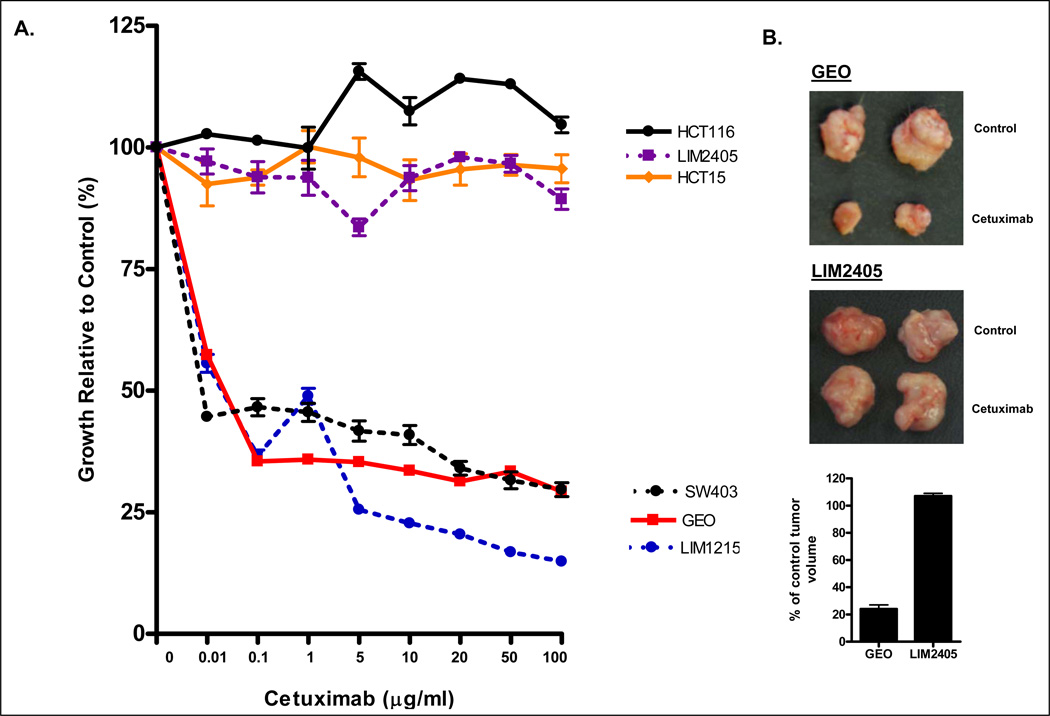
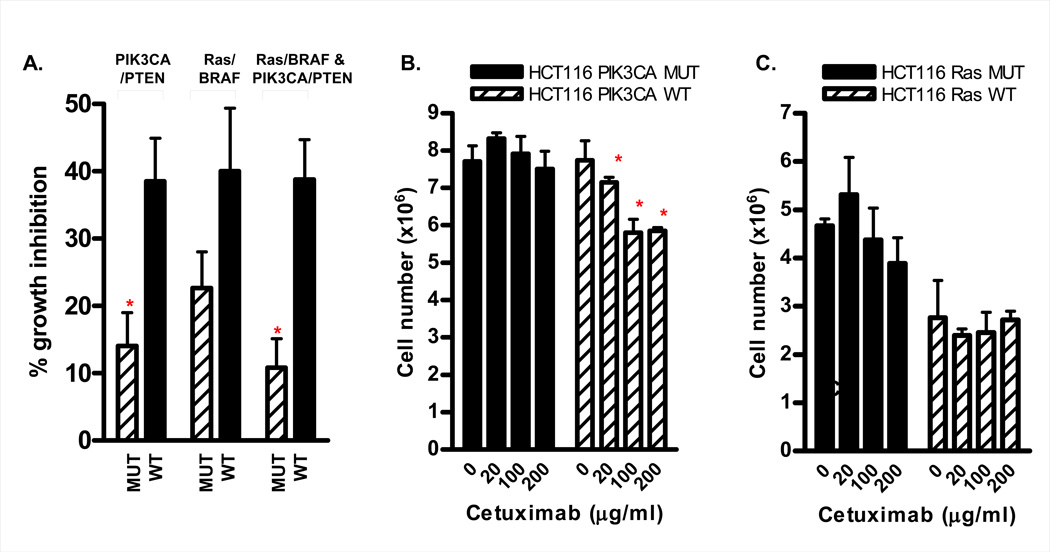
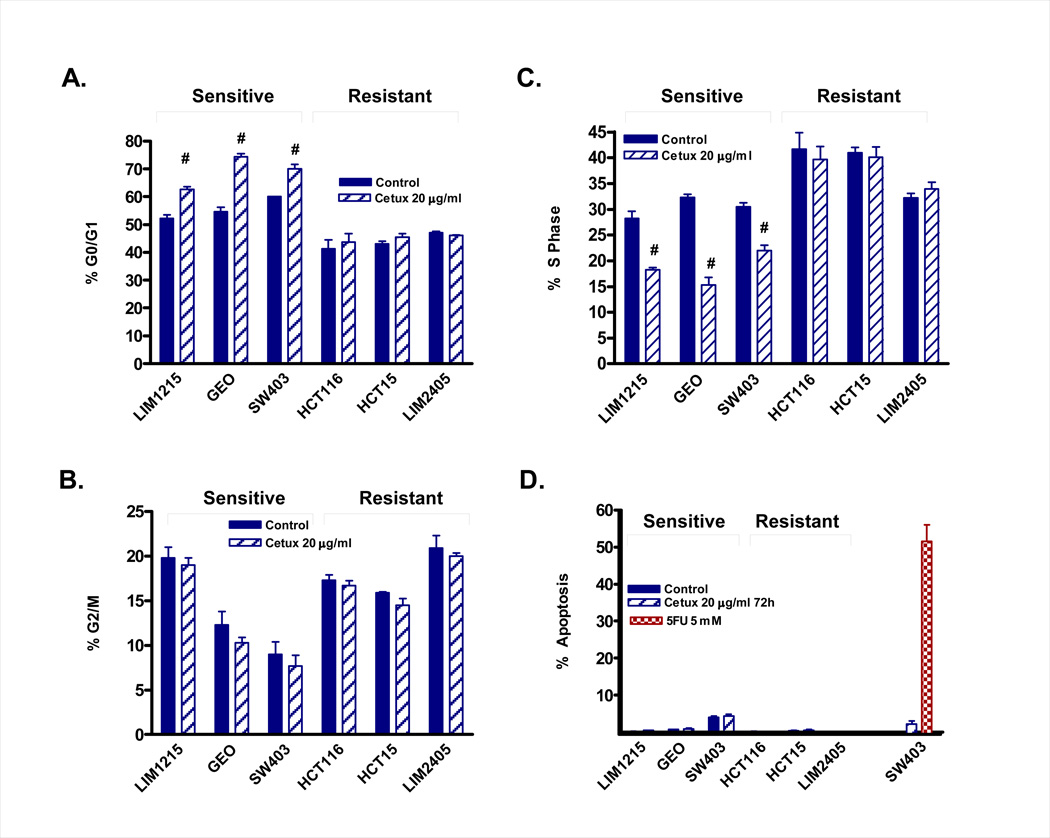
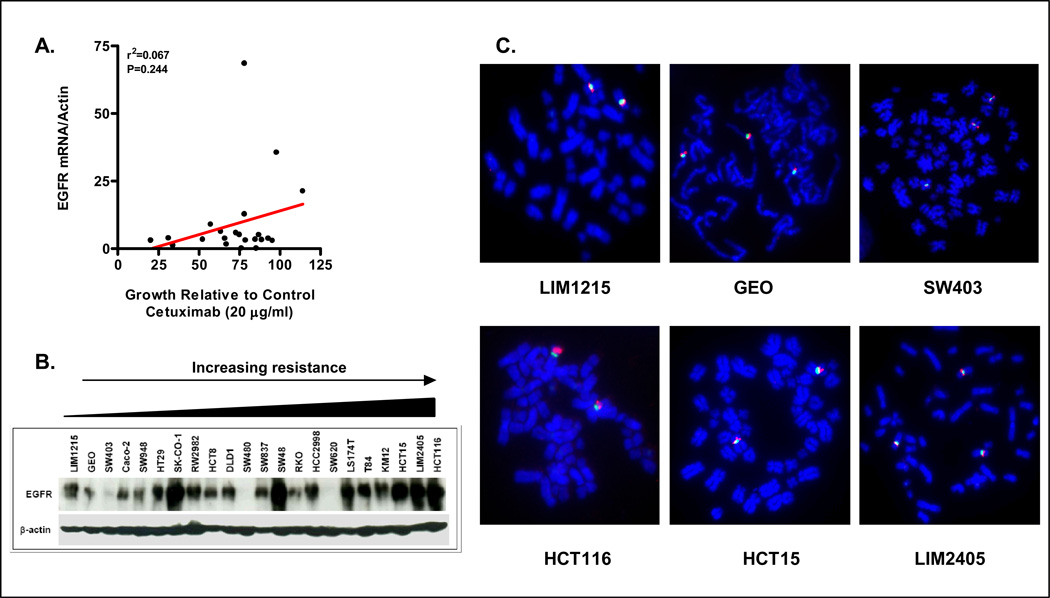
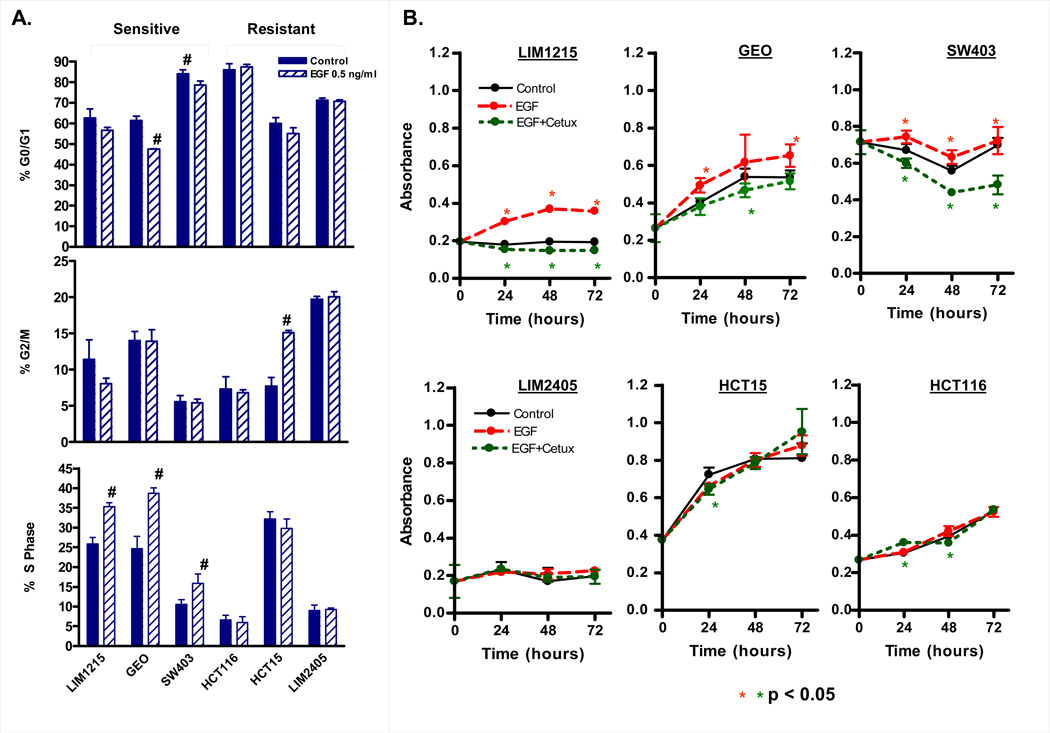
Cetuximab is a monoclonal antibody that targets the human epidermal growth factor receptor (EGFR). Although approved for use in EGFR-overexpressing advanced colorectal cancer, recent studies have shown a lack of association between EGFR overexpression and cetuximab response, requiring the identification of novel biomarkers predictive of response to this agent. To do so, 22 colon cancer cell lines were screened for cetuximab response in vitro and sensitive and resistant lines were identified. In sensitive cell lines, cetuximab induced a G(0)-G(1) arrest without inducing apoptosis. Notably, cetuximab-sensitive but not cetuximab-resistant cell lines were preferentially responsive to EGF-stimulated growth. Whereas neither EGFR protein/mRNA expression nor gene copy number correlated with cetuximab response, examination of the mutation status of signaling components downstream of EGFR showed that cell lines with activating PIK3CA mutations or loss of PTEN expression (PTEN null) were more resistant to cetuximab than PIK3CA wild type (WT)/PTEN-expressing cell lines (14 +/- 5.0% versus 38.5 +/- 6.4% growth inhibition, mean +/- SE; P = 0.008). Consistently, PIK3CA mutant isogenic HCT116 cells showed increased resistance to cetuximab compared with PIK3CA WT controls. Furthermore, cell lines that were PIK3CA mutant/PTEN null and Ras/BRAF mutant were highly resistant to cetuximab compared with those without dual mutations/PTEN loss (10.8 +/- 4.3% versus 38.8 +/- 5.9% growth inhibition, respectively; P = 0.002), indicating that constitutive and simultaneous activation of the Ras and PIK3CA pathways confers maximal resistance to this agent. A priori screening of colon tumors for PTEN expression status and PIK3CA and Ras/BRAF mutation status could help stratify patients likely to benefit from this therapy.
西妥昔单抗是一种靶向人表皮生长因子受体(EGFR)的单克隆抗体。尽管已被批准用于EGFR过表达的晚期结直肠癌,但最近的研究表明,EGFR过表达与西妥昔单抗疗效之间缺乏相关性,因此需要鉴定预测该药物疗效的新型生物标志物。为此,对22种结肠癌细胞系进行了体外西妥昔单抗疗效筛选,并鉴定出敏感和耐药细胞系。在敏感细胞系中,西妥昔单抗诱导G(0)-G(1)期阻滞但不诱导凋亡。值得注意的是,西妥昔单抗敏感而非耐药的细胞系对EGF刺激的生长有优先反应。虽然EGFR蛋白/ mRNA表达和基因拷贝数均与西妥昔单抗疗效无关,但对EGFR下游信号成分的突变状态进行检测发现,具有PIK3CA激活突变或PTEN表达缺失(PTEN缺失)的细胞系比PIK3CA野生型(WT)/ PTEN表达的细胞系对西妥昔单抗更耐药(生长抑制率分别为14±5.0%和38.5±6.4%,平均值±标准误;P = 0.008)。同样,与PIK3CA WT对照相比,PIK3CA突变的同基因HCT116细胞对西妥昔单抗的耐药性增加。此外,与无双重突变/ PTEN缺失的细胞系相比,PIK3CA突变/ PTEN缺失且Ras / BRAF突变的细胞系对西妥昔单抗高度耐药(生长抑制率分别为10.8±4.3%和38.8±5.9%;P = 0.002),这表明Ras和PIK3CA途径的组成性和同时激活赋予了对该药物的最大耐药性。对结肠肿瘤进行PTEN表达状态以及PIK3CA和Ras / BRAF突变状态的预先筛选,可能有助于对可能从该治疗中获益的患者进行分层。