Winiarska Magdalena, Bil Jacek, Wilczek Ewa, Wilczynski Grzegorz M, Lekka Malgorzata, Engelberts Patrick J, Mackus Wendy J M, Gorska Elzbieta, Bojarski Lukasz, Stoklosa Tomasz, Nowis Dominika, Kurzaj Zuzanna, Makowski Marcin, Glodkowska Eliza, Issat Tadeusz, Mrowka Piotr, Lasek Witold, Dabrowska-Iwanicka Anna, Basak Grzegorz W, Wasik Maria, Warzocha Krzysztof, Sinski Maciej, Gaciong Zbigniew, Jakobisiak Marek, Parren Paul W H I, Golab Jakub
Department of Immunology, Center of Biostructure Research, the Medical University of Warsaw, Warsaw, Poland.
PLoS Med. 2008 Mar 25;5(3):e64. doi: 10.1371/journal.pmed.0050064.
Rituximab is used in the treatment of CD20+ B cell lymphomas and other B cell lymphoproliferative disorders. Its clinical efficacy might be further improved by combinations with other drugs such as statins that inhibit cholesterol synthesis and show promising antilymphoma effects. The objective of this study was to evaluate the influence of statins on rituximab-induced killing of B cell lymphomas.
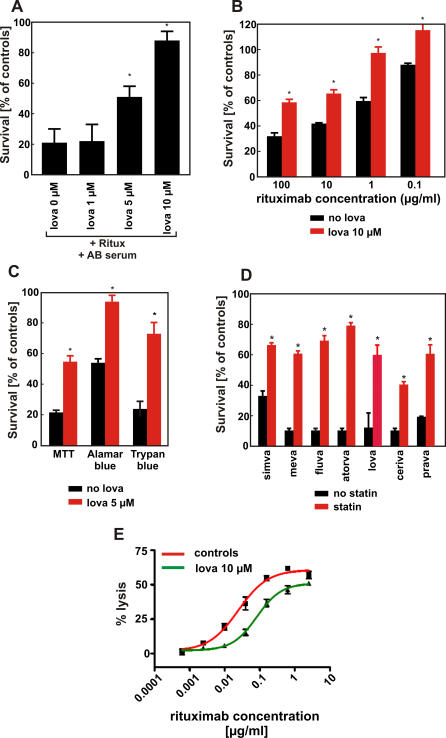
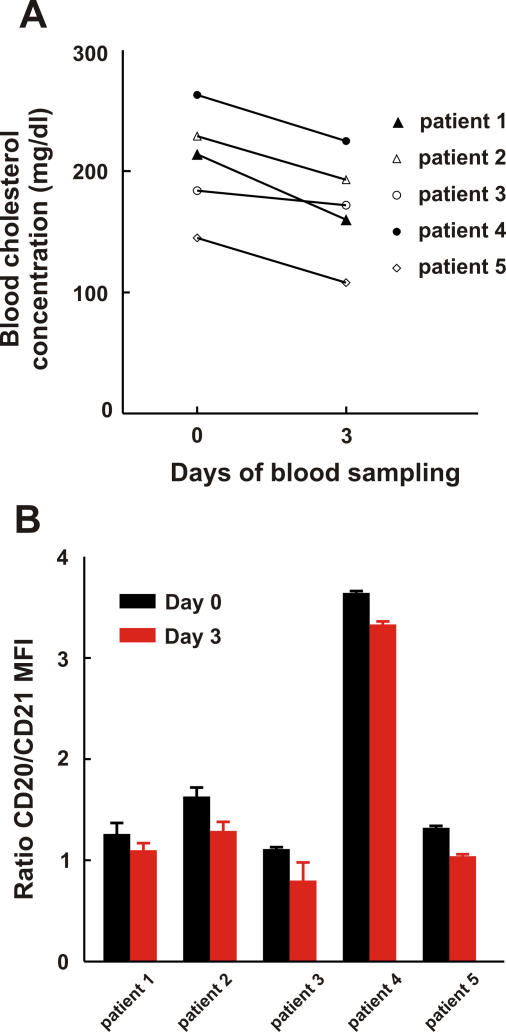
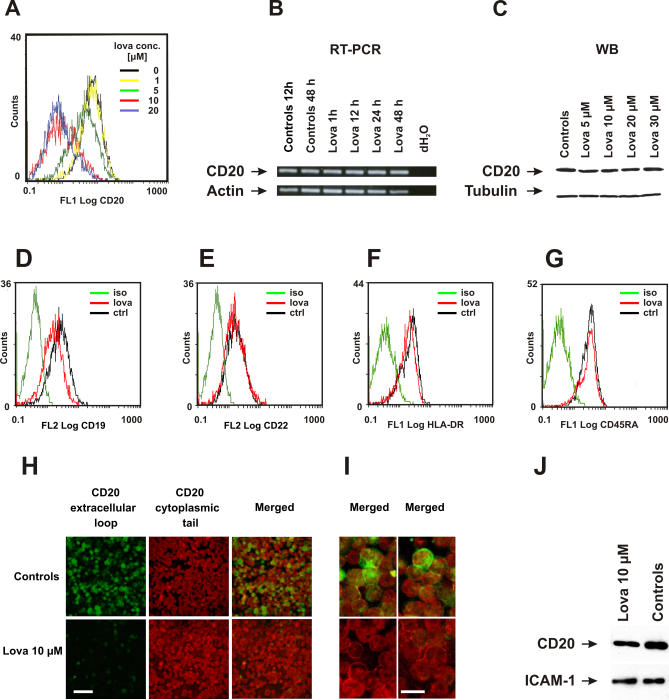
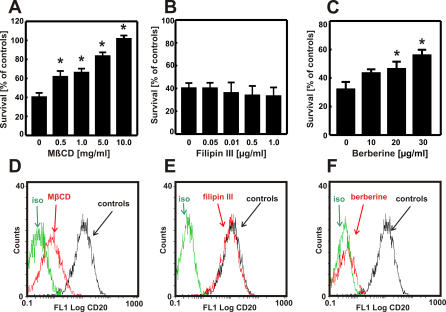
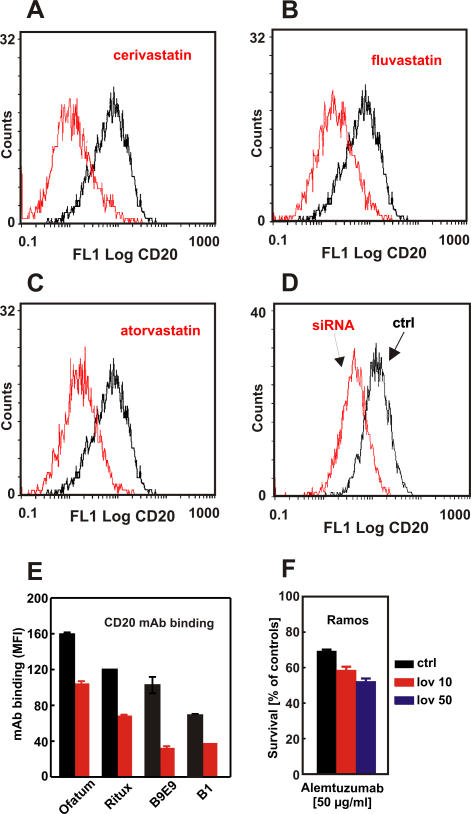
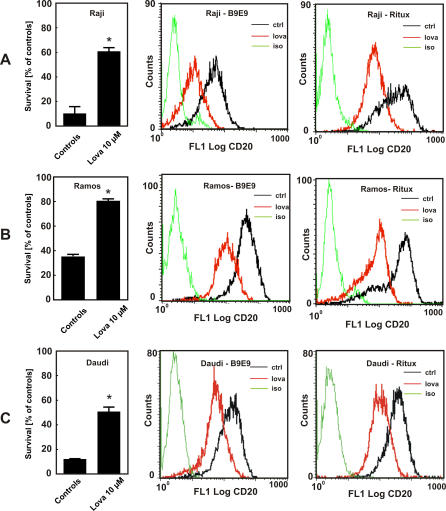
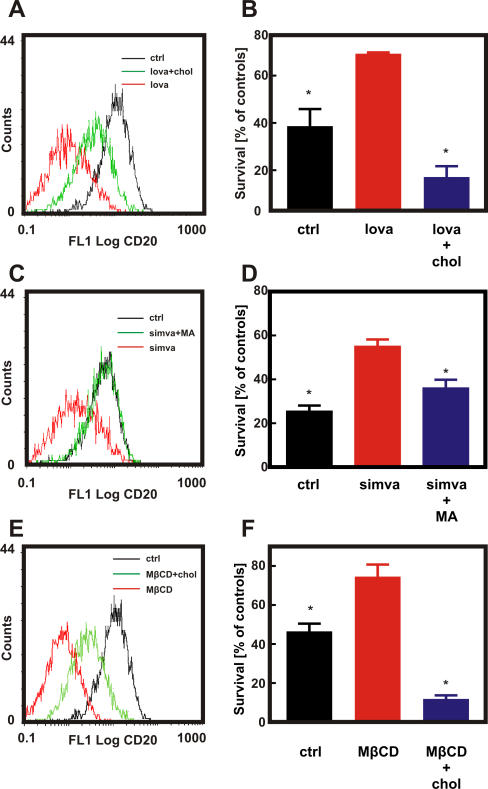
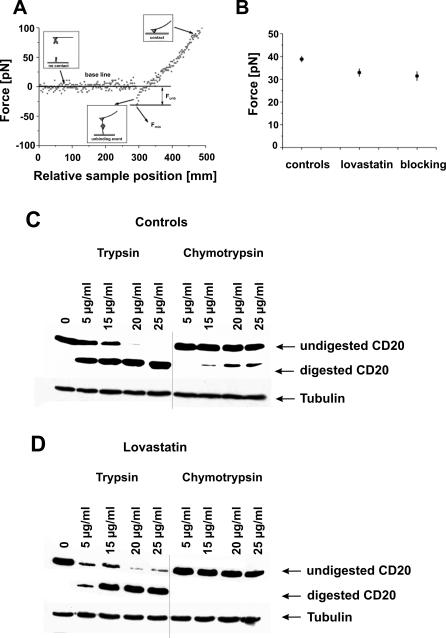
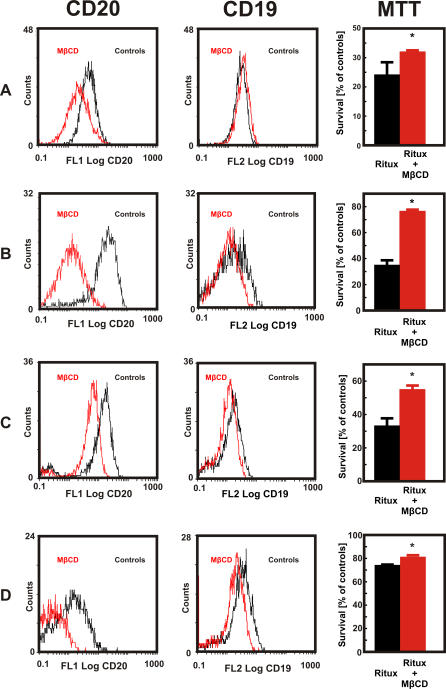
Complement-dependent cytotoxicity (CDC) was assessed by MTT and Alamar blue assays as well as trypan blue staining, and antibody-dependent cellular cytotoxicity (ADCC) was assessed by a 51Cr release assay. Statins were found to significantly decrease rituximab-mediated CDC and ADCC of B cell lymphoma cells. Incubation of B cell lymphoma cells with statins decreased CD20 immunostaining in flow cytometry studies but did not affect total cellular levels of CD20 as measured with RT-PCR and Western blotting. Similar effects are exerted by other cholesterol-depleting agents (methyl-beta-cyclodextrin and berberine), but not filipin III, indicating that the presence of plasma membrane cholesterol and not lipid rafts is required for rituximab-mediated CDC. Immunofluorescence microscopy using double staining with monoclonal antibodies (mAbs) directed against a conformational epitope and a linear cytoplasmic epitope revealed that CD20 is present in the plasma membrane in comparable amounts in control and statin-treated cells. Atomic force microscopy and limited proteolysis indicated that statins, through cholesterol depletion, induce conformational changes in CD20 that result in impaired binding of anti-CD20 mAb. An in vivo reduction of cholesterol induced by short-term treatment of five patients with hypercholesterolemia with atorvastatin resulted in reduced anti-CD20 binding to freshly isolated B cells.
Statins were shown to interfere with both detection of CD20 and antilymphoma activity of rituximab. These studies have significant clinical implications, as impaired binding of mAbs to conformational epitopes of CD20 elicited by statins could delay diagnosis, postpone effective treatment, or impair anti-lymphoma activity of rituximab.
利妥昔单抗用于治疗CD20+B细胞淋巴瘤及其他B细胞淋巴增殖性疾病。将其与其他药物如抑制胆固醇合成且显示出有前景的抗淋巴瘤作用的他汀类药物联合使用,其临床疗效可能会进一步提高。本研究的目的是评估他汀类药物对利妥昔单抗诱导的B细胞淋巴瘤杀伤作用的影响。
通过MTT法、阿拉玛蓝法以及台盼蓝染色评估补体依赖的细胞毒性(CDC),通过51Cr释放试验评估抗体依赖的细胞毒性(ADCC)。发现他汀类药物可显著降低利妥昔单抗介导的B细胞淋巴瘤细胞的CDC和ADCC。在流式细胞术研究中,用他汀类药物孵育B细胞淋巴瘤细胞可降低CD20免疫染色,但用RT-PCR和蛋白质印迹法检测时,不影响CD20的总细胞水平。其他胆固醇耗竭剂(甲基-β-环糊精和小檗碱)也有类似作用,但菲律宾菌素III没有,这表明利妥昔单抗介导的CDC需要质膜胆固醇而非脂筏的存在。使用针对构象表位和线性胞质表位的单克隆抗体(mAb)进行双重染色的免疫荧光显微镜检查显示,在对照细胞和他汀类药物处理的细胞中,CD20在质膜中的含量相当。原子力显微镜和有限蛋白酶解表明,他汀类药物通过消耗胆固醇,诱导CD20的构象变化,导致抗CD20 mAb的结合受损。对5例高胆固醇血症患者短期使用阿托伐他汀诱导体内胆固醇降低,导致抗CD20与新鲜分离的B细胞的结合减少。
已证明他汀类药物会干扰CD20的检测以及利妥昔单抗的抗淋巴瘤活性。这些研究具有重要的临床意义,因为他汀类药物引起的mAb与CD20构象表位结合受损可能会延迟诊断、推迟有效治疗或损害利妥昔单抗的抗淋巴瘤活性。