Pelosi Ettore, Skanjeti Andrea, Cistaro Angelina, Arena Vincenzo
IRMET PET Center, Via Onorato Vigliani, Turin, Italy.
J Med Case Rep. 2008 Apr 3;2:99. doi: 10.1186/1752-1947-2-99.
Castleman's disease is a rare lymphatic polyclonal disorder that is characterised by unicentric or multicentric lymph node hyperplasia and non-specific symptoms and signs including fever, asthenia, weight loss, enlarged liver and abnormally high blood levels of antibodies.
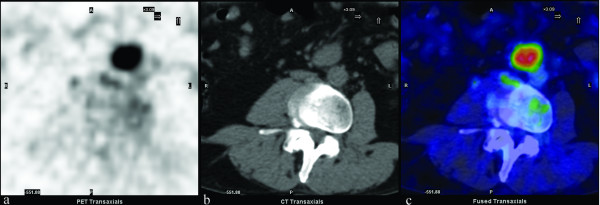
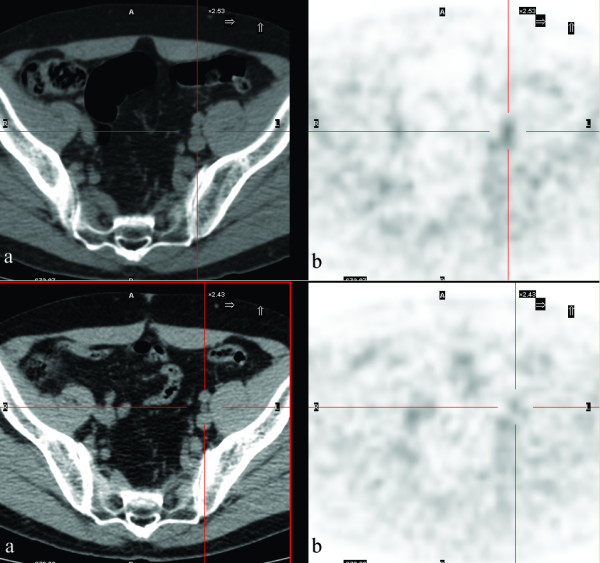
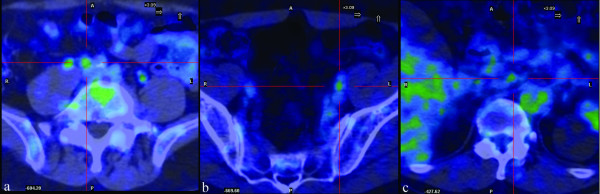
We present the case of a 74-year-old man with Castleman's disease. The disease was detected with a contrast-enhanced computed tomography (CT) scan and a fluorodeoxyglucose (FDG)-positron emission tomography (PET)/CT study; diagnosis was made with histopathology. After treatment with surgical excision followed by chemotherapy, the disease response was evaluated using both diagnostic techniques. However, only the PET study was able to identify the spread of the disease to the abdominal lymph nodes, which were both enlarged and normal size, and, after treatment, to evaluate the disease response.
Based on the results of previous case reports and on those of the present study, it seems that Castleman's disease has a high glucose metabolic activity. Therefore, the use of PET can be considered appropriate in order to stage or restage the disease and to evaluate the response of the disease to treatment.
卡斯尔曼病是一种罕见的淋巴系统多克隆性疾病,其特征为单中心或多中心淋巴结增生以及包括发热、乏力、体重减轻、肝脏肿大和抗体水平异常升高等非特异性症状和体征。
我们报告一例74岁患有卡斯尔曼病的男性患者。通过增强计算机断层扫描(CT)和氟脱氧葡萄糖(FDG)正电子发射断层扫描(PET)/CT检查发现该疾病;经组织病理学确诊。在手术切除并随后进行化疗后,使用这两种诊断技术评估疾病反应。然而,只有PET检查能够识别疾病扩散至腹部淋巴结,这些淋巴结既有肿大的也有正常大小的,并且在治疗后能够评估疾病反应。
基于先前病例报告的结果以及本研究的结果,卡斯尔曼病似乎具有较高的葡萄糖代谢活性。因此,考虑使用PET来对疾病进行分期或重新分期,并评估疾病对治疗的反应是合适的。