Liu Luzheng, Chavan Rahul, Feinberg Mark B
Harvard Skin Disease Research Center, Department of Dermatology, Harvard Medical School, Brigham and Women's Hospital, Boston, MA 02115, USA.
BMC Immunol. 2008 Apr 15;9:15. doi: 10.1186/1471-2172-9-15.
Modified Vaccinia Ankara (MVA) is a highly attenuated strain of vaccinia virus (VV) that has lost approximately 15% of the VV genome, along with the ability to replicate in most mammalian cells. It has demonstrated impressive safety and immunogenicity profile in both preclinical and clinical studies, and is being actively explored as a promising vaccine vector for a number of infectious diseases and malignancies. However, little is known about how MVA interacts with the host immune system constituents, especially dendritic cells (DCs), to induce strong immune responses despite its inability to replicate in vivo. Using in vitro and in vivo murine models, we systematically investigated the susceptibility of murine DCs to MVA infection, and the immunological consequences of the infection.
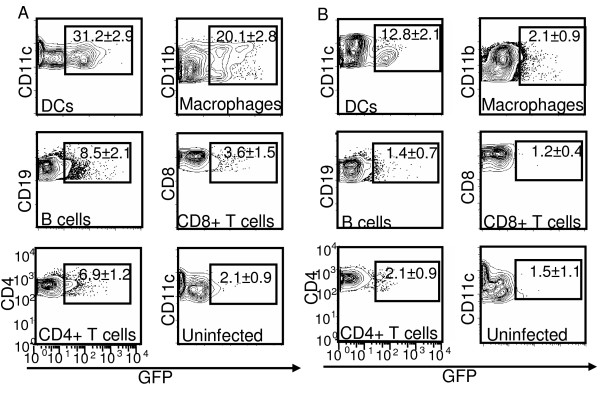
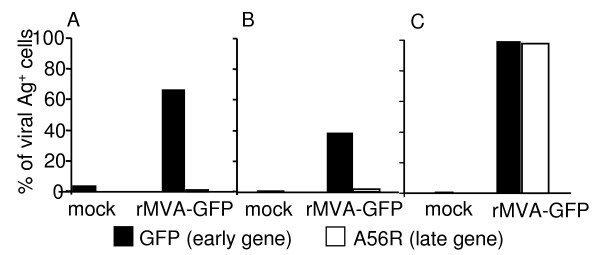
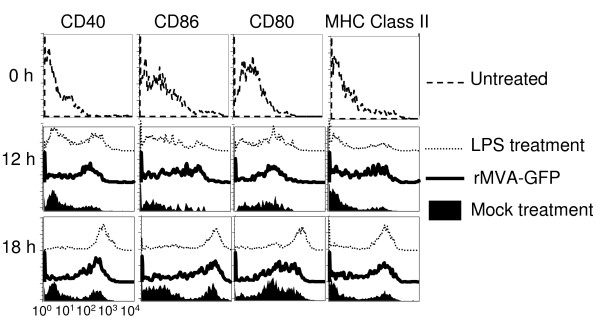
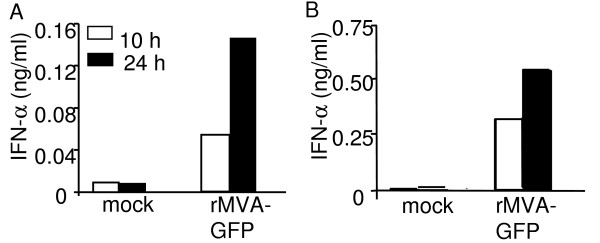
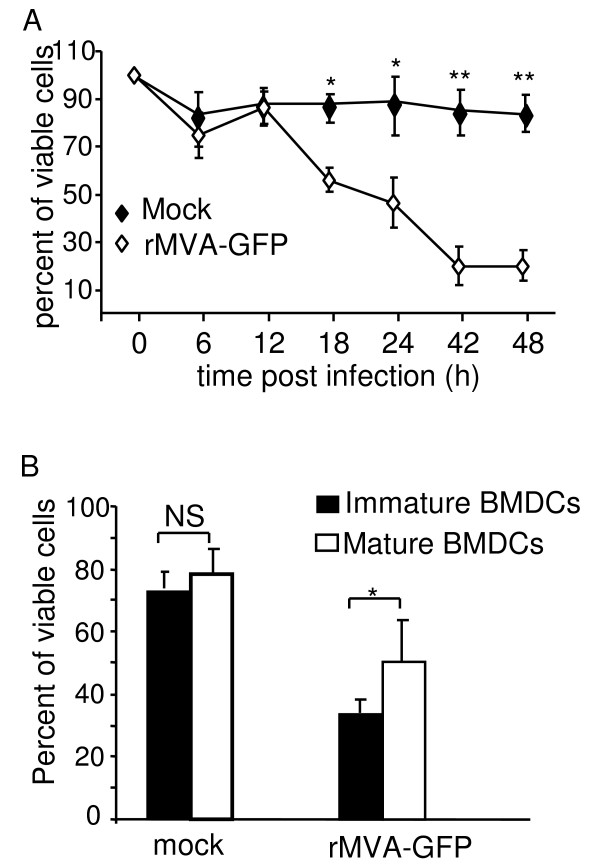
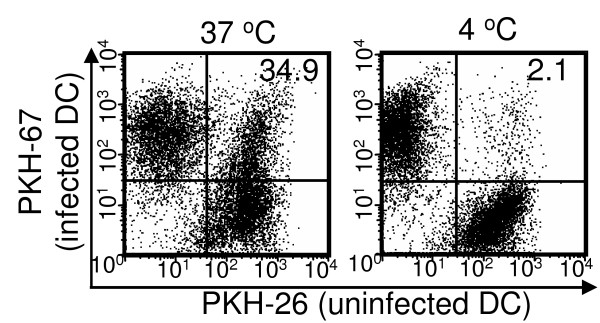
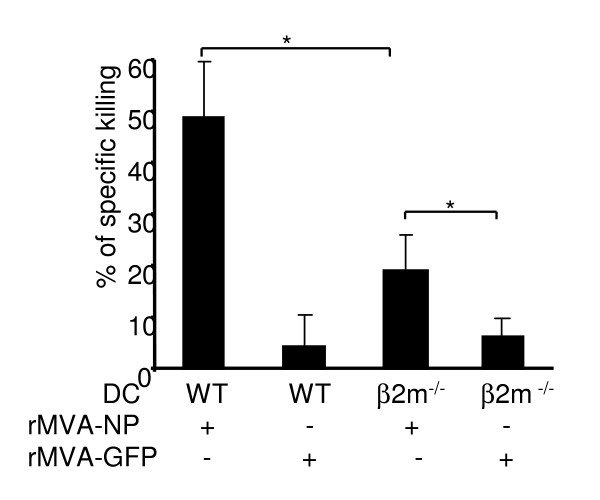
Our data demonstrate that MVA preferentially infects professional antigen presenting cells, especially DCs, among all the subsets of hematolymphoid cells. In contrast to the reported blockage of DC maturation and function upon VV infection, DCs infected by MVA undergo phenotypic maturation and produce innate cytokine IFN-alpha within 18 h of infection. Substantial apoptosis of MVA-infected DCs occurs after 12 h following infection and the apoptotic DCs are readily phagocytosed by uninfected DCs. Using MHC class I - deficient mice, we showed that both direct and cross-presentation of viral Ags are likely to be involved in generating viral-specific CD8+ T cell responses. Finally, DC depletion abrogated the T cell activation in vivo.
We present the first in vivo evidence that among hematolymphoid cells, DCs are the most susceptible targets for MVA infection, and DC-mediated Ag presentation is required for the induction of MVA-specific immune responses. These results provide important information concerning the mechanisms by which strong immune responses are elicited to MVA-encoded antigens and may inform efforts to further improve the immunogenicity of this already promising vaccine vector.
安卡拉痘苗病毒(MVA)是痘苗病毒(VV)的一种高度减毒株,其基因组已缺失约15%,并且丧失了在大多数哺乳动物细胞中复制的能力。在临床前和临床研究中,它已展现出令人印象深刻的安全性和免疫原性,并且作为一种有前景的疫苗载体,正被积极探索用于多种传染病和恶性肿瘤。然而,尽管MVA无法在体内复制,但对于它如何与宿主免疫系统成分,尤其是树突状细胞(DC)相互作用以诱导强烈免疫反应,人们却知之甚少。利用体外和体内小鼠模型,我们系统地研究了小鼠DC对MVA感染的易感性以及感染的免疫学后果。
我们的数据表明,在所有造血淋巴细胞亚群中,MVA优先感染专职抗原呈递细胞,尤其是DC。与报道的VV感染会阻断DC成熟和功能不同,被MVA感染的DC在感染后18小时内经历表型成熟并产生天然细胞因子IFN-α。感染后12小时后,被MVA感染的DC会大量凋亡,并且凋亡的DC很容易被未感染的DC吞噬。利用MHC I类缺陷小鼠,我们表明病毒抗原的直接呈递和交叉呈递都可能参与产生病毒特异性CD8+ T细胞反应。最后,DC的耗竭消除了体内的T细胞激活。
我们首次提供了体内证据,表明在造血淋巴细胞中,DC是MVA感染最易感的靶标,并且DC介导的抗原呈递是诱导MVA特异性免疫反应所必需的。这些结果提供了有关对MVA编码抗原引发强烈免疫反应机制的重要信息,并可能为进一步提高这种已经很有前景的疫苗载体的免疫原性提供参考。