Cui Xiu-Yu, Dai Yi, Wang Sheng-Lan, Yamanaka Hiroki, Kobayashi Kimiko, Obata Koichi, Chen Jun, Noguchi Koichi
Department of Anatomy and Neuroscience, Hyogo College of Medicine, Nishinomiya, Hyogo 663-8501, Japan.
Mol Pain. 2008 Apr 30;4:17. doi: 10.1186/1744-8069-4-17.
Honeybee's sting on human skin can induce ongoing pain, hyperalgesia and inflammation. Injection of bee venom (BV) into the intraplantar surface of the rat hindpaw induces an early onset of spontaneous pain followed by a lasting thermal and mechanical hypersensitivity in the affected paw. The underlying mechanisms of BV-induced thermal and mechanical hypersensitivity are, however, poorly understood. In the present study, we investigated the role of mitogen-activated protein kinase (MAPK) in the generation of BV-induced pain hypersensitivity.
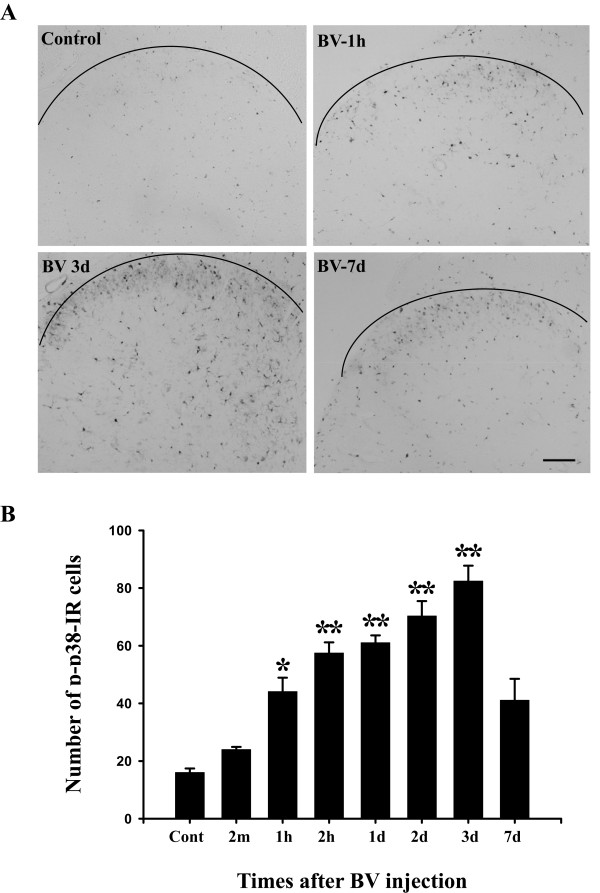
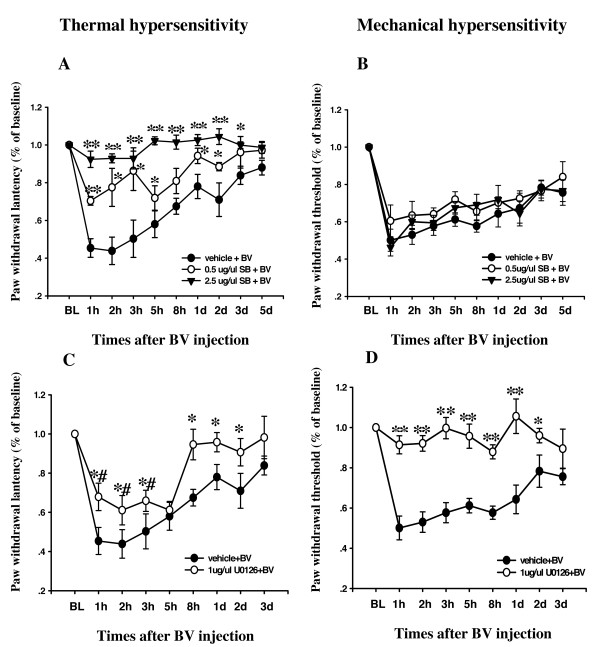
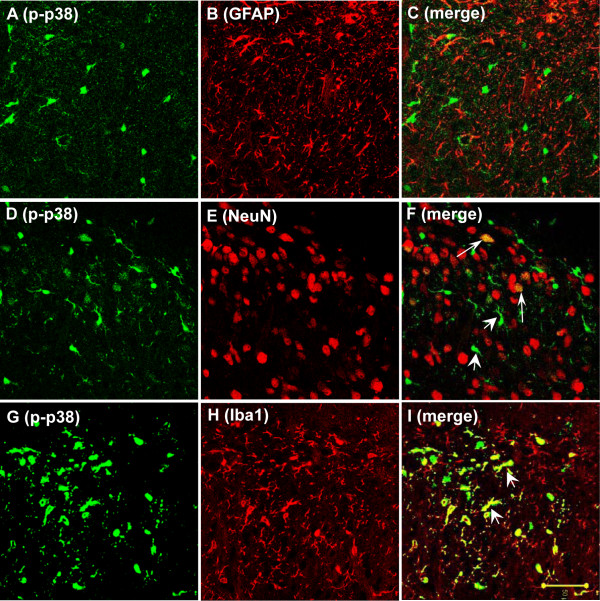
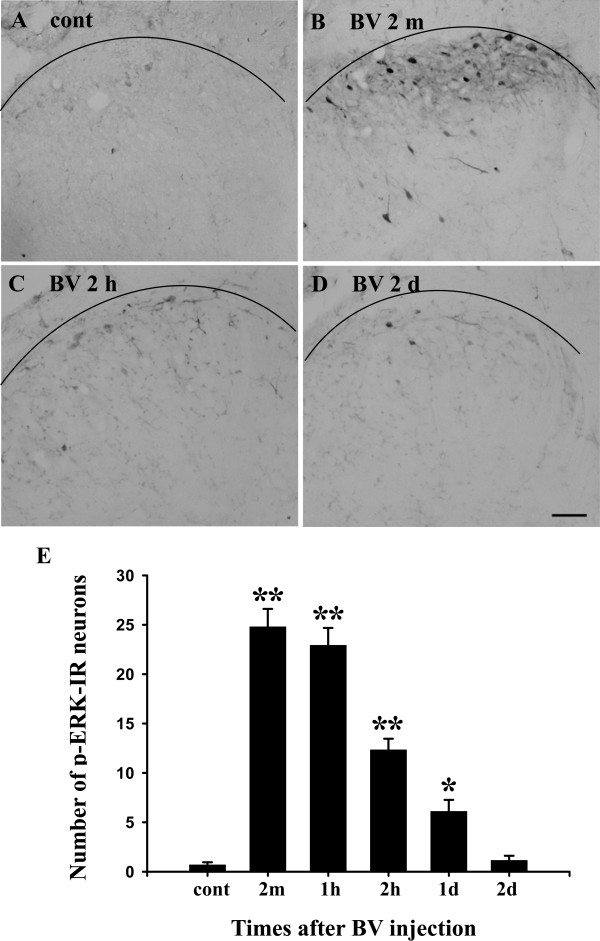
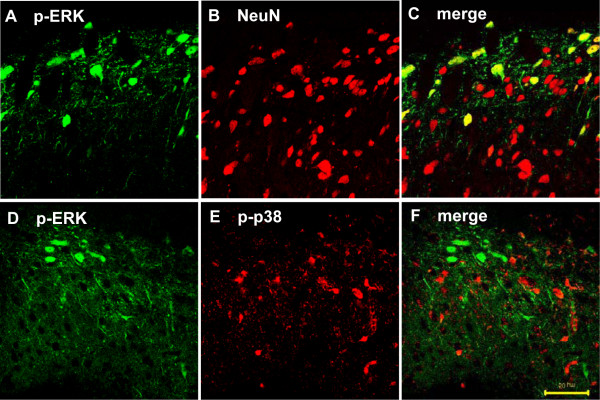
We found that BV injection resulted in a quick activation of p38, predominantly in the L4/L5 spinal dorsal horn ipsilateral to the inflammation from 1 hr to 7 d post-injection. Phosphorylated p38 (p-p38) was expressed in both neurons and microglia, but not in astrocytes. Intrathecal administration of the p38 inhibitor, SB203580, prevented BV-induced thermal hypersensitivity from 1 hr to 3 d, but had no effect on mechanical hypersensitivity. Activated ERK1/2 was observed exclusively in neurons in the L4/L5 dorsal horn from 2 min to 1 d, peaking at 2 min after BV injection. Intrathecal administration of the MEK inhibitor, U0126, prevented both mechanical and thermal hypersensitivity from 1 hr to 2 d. p-ERK1/2 and p-p38 were expressed in neurons in distinct regions of the L4/L5 dorsal horn; p-ERK1/2 was mainly in lamina I, while p-p38 was mainly in lamina II of the dorsal horn.
The results indicate that differential activation of p38 and ERK1/2 in the dorsal horn may contribute to the generation and development of BV-induced pain hypersensitivity by different mechanisms.
蜜蜂蛰刺人体皮肤可引发持续性疼痛、痛觉过敏和炎症。将蜂毒(BV)注射到大鼠后爪足底表面会引发早期自发性疼痛,随后受影响的爪子会出现持续的热和机械性超敏反应。然而,BV诱导的热和机械性超敏反应的潜在机制尚不清楚。在本研究中,我们调查了丝裂原活化蛋白激酶(MAPK)在BV诱导的疼痛超敏反应产生中的作用。
我们发现,注射BV后,p38迅速被激活,主要在注射后1小时至7天炎症同侧的L4/L5脊髓背角。磷酸化的p38(p-p38)在神经元和小胶质细胞中均有表达,但在星形胶质细胞中未表达。鞘内注射p38抑制剂SB203580可在1小时至3天内预防BV诱导的热超敏反应,但对机械性超敏反应无影响。从注射BV后2分钟至1天,仅在L4/L5背角的神经元中观察到激活的ERK1/2,在注射后2分钟达到峰值。鞘内注射MEK抑制剂U0126可在1小时至2天内预防机械性和热超敏反应。p-ERK1/2和p-p38在L4/L5背角的不同区域的神经元中表达;p-ERK1/2主要在I层,而p-p38主要在背角的II层。
结果表明,背角中p38和ERK1/2的不同激活可能通过不同机制促成BV诱导的疼痛超敏反应的产生和发展。