Zagouras P, Ruusala A, Rose J K
Department of Pathology, Yale University School of Medicine, New Haven, Connecticut 06510.
J Virol. 1991 Apr;65(4):1976-84. doi: 10.1128/JVI.65.4.1976-1984.1991.
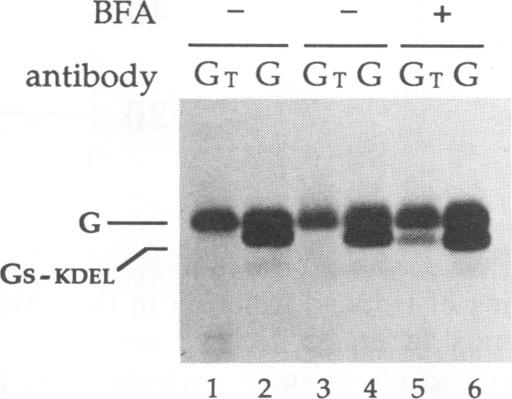
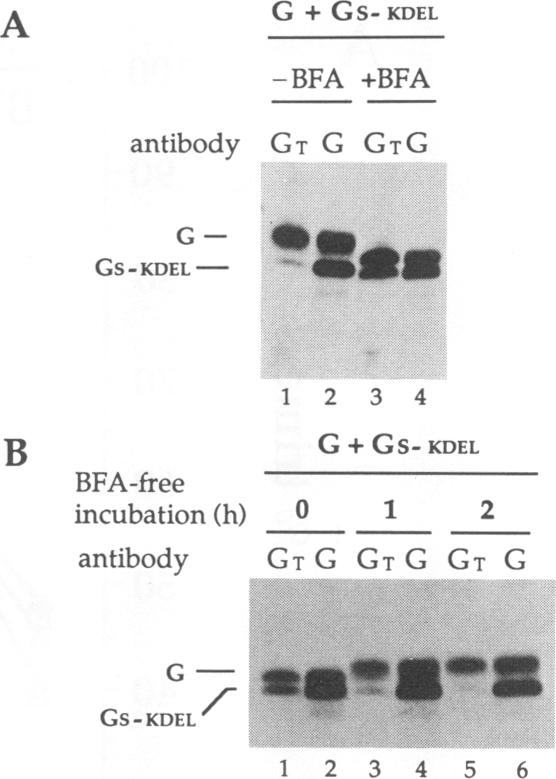
The vesicular stomatitis virus (VSV) glycoprotein (G) forms noncovalently linked trimers in the endoplasmic reticulum (ER) prior to transport to the cell surface. Here we examined the formation of heterotrimers between wild-type and mutant subunits that were retained in the ER by C-terminal retention signals. When G protein was coexpressed with mutant subunits that formed trimers at the wild-type rate and were transported from the ER at the wild-type rate, heterotrimers were readily detected. In contrast, when G protein was coexpressed with mutant subunits that formed trimers at the wild-type rate, but were retained in the ER, heterotrimers were not detected unless transport of the wild-type molecules from the ER was blocked. After removal of transport block, the heterotrimers then dissociated and reassorted to homotrimers of the mutant protein that were retained in the ER and wild-type trimers that were transported to the cell surface. These and other results presented here indicate that there is an equilibrium between G protein trimers and monomers in vivo, at least in the ER. This equilibrium may function to allow escape of wild-type subunits from aberrant retained subunits.
水泡性口炎病毒(VSV)糖蛋白(G)在转运至细胞表面之前,于内质网(ER)中形成非共价连接的三聚体。在此,我们研究了野生型和突变亚基之间异源三聚体的形成,这些亚基通过C末端滞留信号滞留在ER中。当G蛋白与以野生型速率形成三聚体并以野生型速率从ER转运的突变亚基共表达时,很容易检测到异源三聚体。相反,当G蛋白与以野生型速率形成三聚体但滞留在ER中的突变亚基共表达时,除非野生型分子从ER的转运被阻断,否则无法检测到异源三聚体。去除转运阻断后,异源三聚体随后解离并重新组合为滞留在ER中的突变蛋白的同源三聚体和转运至细胞表面的野生型三聚体。此处呈现的这些及其他结果表明,体内G蛋白三聚体和单体之间存在平衡,至少在内质网中如此。这种平衡可能起到使野生型亚基从异常滞留的亚基中逃逸的作用。