Bell Ming, Wang Hong, Chen Hui, McLenithan John C, Gong Da-Wei, Yang Rong-Zee, Yu Daozhan, Fried Susan K, Quon Michael J, Londos Constantine, Sztalryd Carole
Geriatric Research, Education and Clinical Center, Baltimore Veterans Affairs Health Care Center, Division of Gerontology, Department of Medicine, School of Medicine, University of Maryland, Baltimore, Maryland, USA.
Diabetes. 2008 Aug;57(8):2037-45. doi: 10.2337/db07-1383. Epub 2008 May 16.
Accumulation of intracellular lipid droplets (LDs) in non-adipose tissues is recognized as a strong prognostic factor for the development of insulin resistance in obesity. LDs are coated with perilipin, adipose differentiation-related protein, tail interacting protein of 47 kd (PAT) proteins that are thought to regulate LD turnover by modulating lipolysis. Our hypothesis is that PAT proteins modulate LD metabolism and therefore insulin resistance.
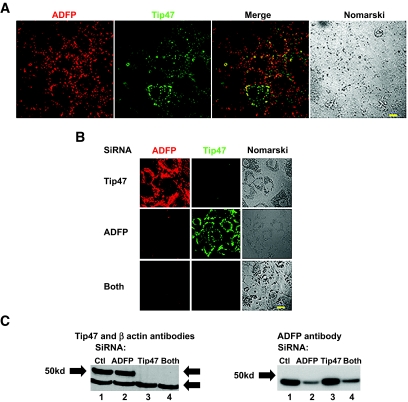
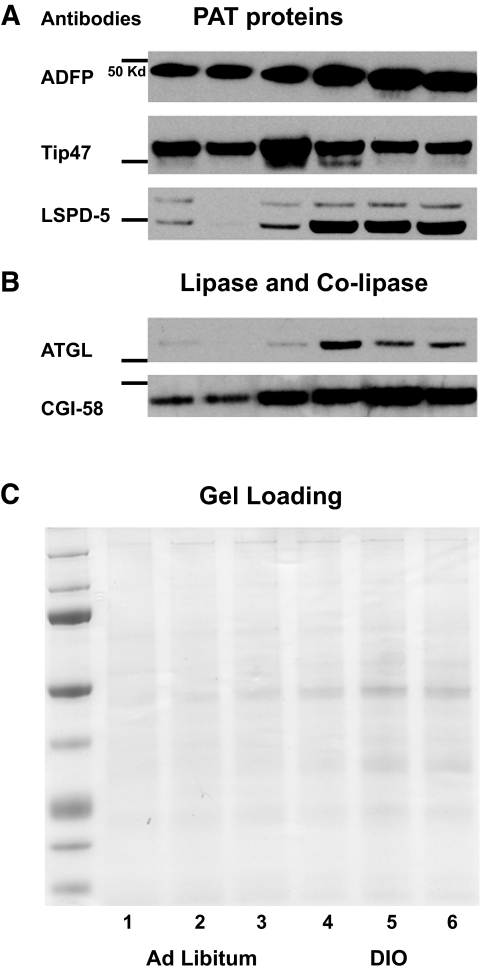
We used a cell culture model (murine AML12 loaded with oleic acid) and small interfering RNA to directly assess the impact of PAT proteins on LD accumulation, lipid metabolism, and insulin action. PAT proteins associated with excess fat deposited in livers of diet-induced obese (DIO) mice were also measured.
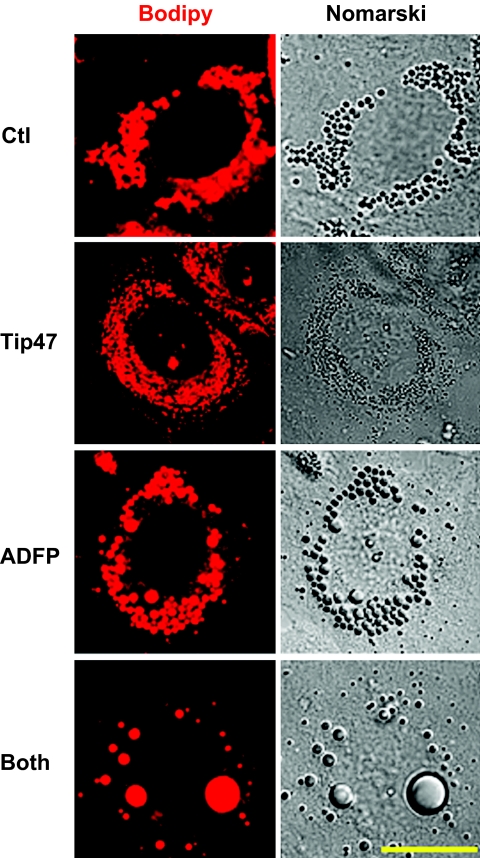
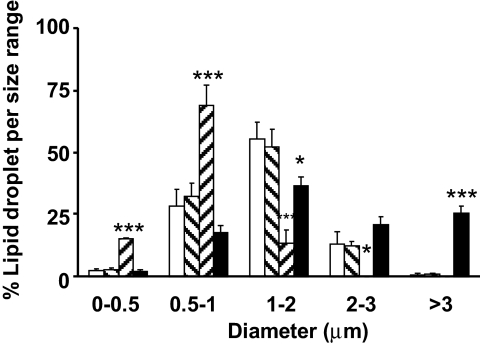
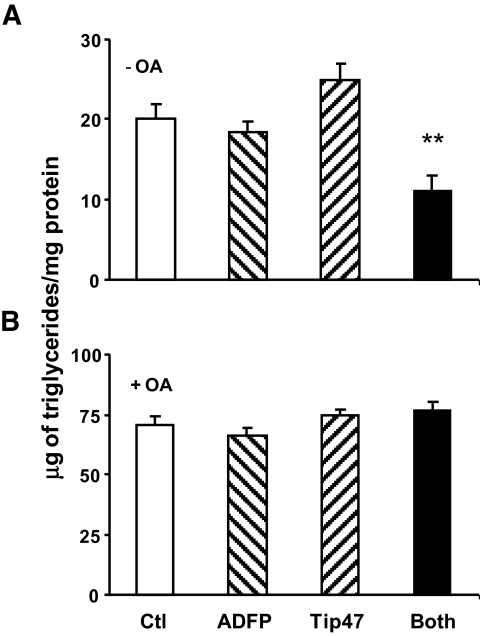
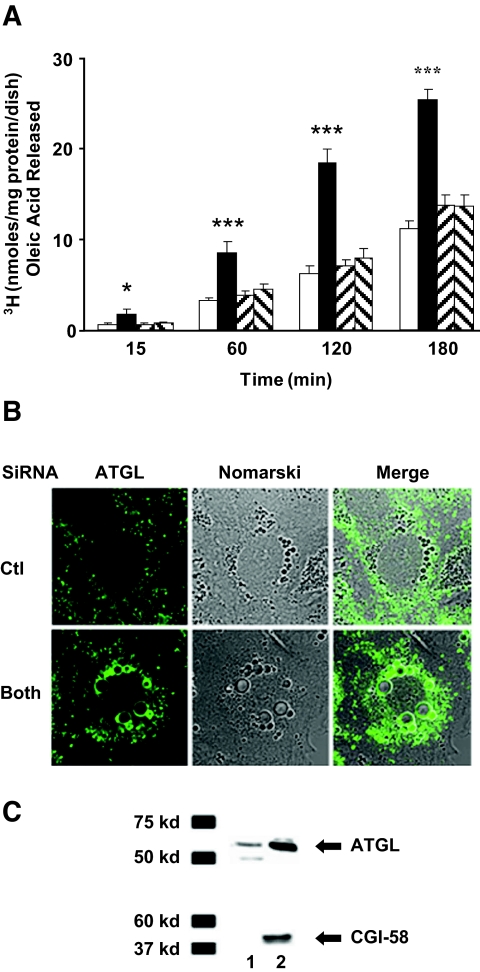
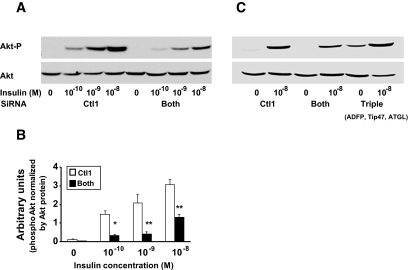
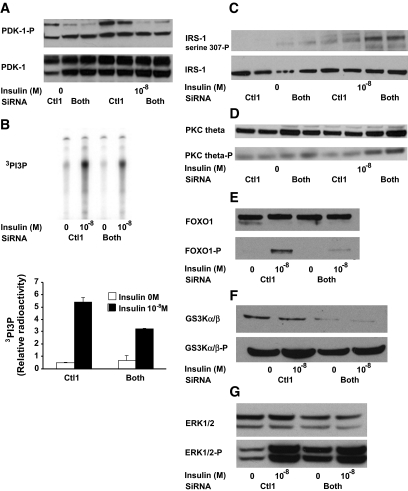
Cells lacking PAT proteins exhibited a dramatic increase in LD size and a decrease in LD number. Further, the lipolytic rate increased by approximately 2- to 2.5-fold in association with increased adipose triglyceride lipase (ATGL) at the LD surface. Downregulation of PAT proteins also produced insulin resistance, as indicated by decreased insulin stimulation of Akt phosphorylation (P < 0.001). Phosphoinositide-dependent kinase-1 and phosphoinositide 3-kinase decreased, and insulin receptor substrate-1 307 phosphorylation increased. Increased lipids in DIO mice livers were accompanied by changes in PAT composition but also increased ATGL, suggesting a relative PAT deficiency.
These data establish an important role for PAT proteins as surfactant at the LD surface, packaging lipids in smaller units and restricting access of lipases and thus preventing insulin resistance. We suggest that a deficiency of PAT proteins relative to the quantity of ectopic fat could contribute to cellular dysfunction in obesity and type 2 diabetes.
非脂肪组织中细胞内脂滴(LDs)的积累被认为是肥胖症中胰岛素抵抗发展的一个强有力的预后因素。脂滴由围脂滴蛋白、脂肪分化相关蛋白、47kd尾部相互作用蛋白(PAT)家族蛋白包被,这些蛋白被认为通过调节脂肪分解来调控脂滴周转。我们的假设是,PAT家族蛋白调节脂滴代谢,进而调节胰岛素抵抗。
我们使用细胞培养模型(用油酸处理的小鼠AML12细胞)和小干扰RNA来直接评估PAT家族蛋白对脂滴积累、脂质代谢和胰岛素作用的影响。我们还检测了饮食诱导肥胖(DIO)小鼠肝脏中与过量脂肪沉积相关的PAT家族蛋白。
缺乏PAT家族蛋白的细胞表现出脂滴尺寸显著增大和脂滴数量减少。此外,与脂滴表面脂肪甘油三酯脂肪酶(ATGL)增加相关,脂肪分解速率增加了约2至2.5倍。PAT家族蛋白的下调还导致了胰岛素抵抗,表现为胰岛素刺激的Akt磷酸化降低(P<0.001)。磷酸肌醇依赖性激酶-1和磷酸肌醇3激酶减少,胰岛素受体底物-1 307位磷酸化增加。DIO小鼠肝脏中脂质增加伴随着PAT组成的变化,但ATGL也增加,提示相对PAT缺乏。
这些数据证实了PAT家族蛋白作为脂滴表面表面活性剂的重要作用,将脂质包装成较小的单位并限制脂肪酶的作用,从而预防胰岛素抵抗。我们认为,相对于异位脂肪的数量,PAT家族蛋白的缺乏可能导致肥胖症和2型糖尿病中的细胞功能障碍。