Ros Vera I D, Breeuwer Johannes A J, Menken Steph B J
Evolutionary Biology, Institute for Biodiversity and Ecosystem Dynamics, University of Amsterdam, PO Box 94062, 1090 GB Amsterdam, The Netherlands.
BMC Evol Biol. 2008 May 19;8:153. doi: 10.1186/1471-2148-8-153.
Obligate asexual reproduction is rare in the animal kingdom. Generally, asexuals are considered evolutionary dead ends that are unable to radiate. The phytophagous mite genus Bryobia contains a large number of asexual species. In this study, we investigate the origin and evolution of asexuality using samples from 111 populations in Europe, South Africa and the United States, belonging to eleven Bryobia species. We also examine intraspecific clonal diversity for one species, B. kissophila, by genotyping individuals from 61 different populations. Knowledge on the origin of asexuality and on clonal diversity can contribute to our understanding of the paradox of sex.
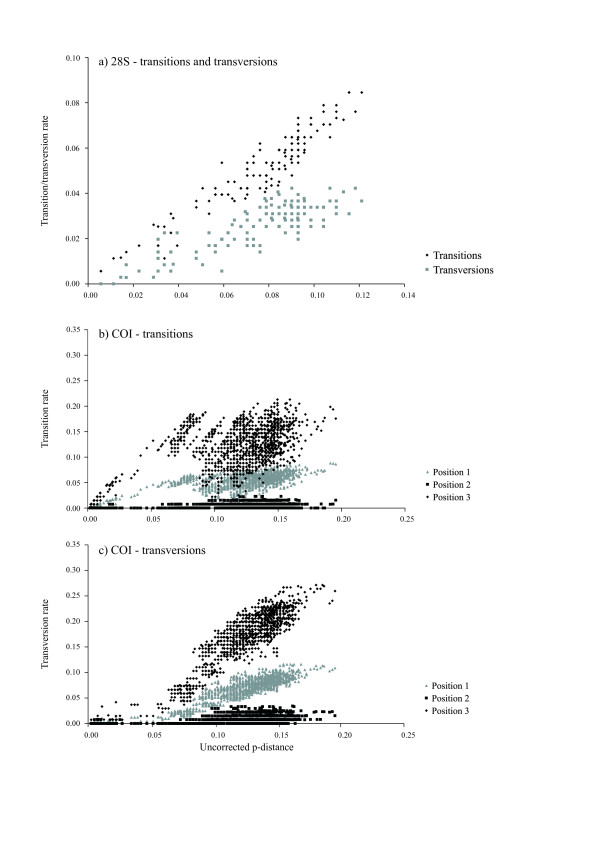
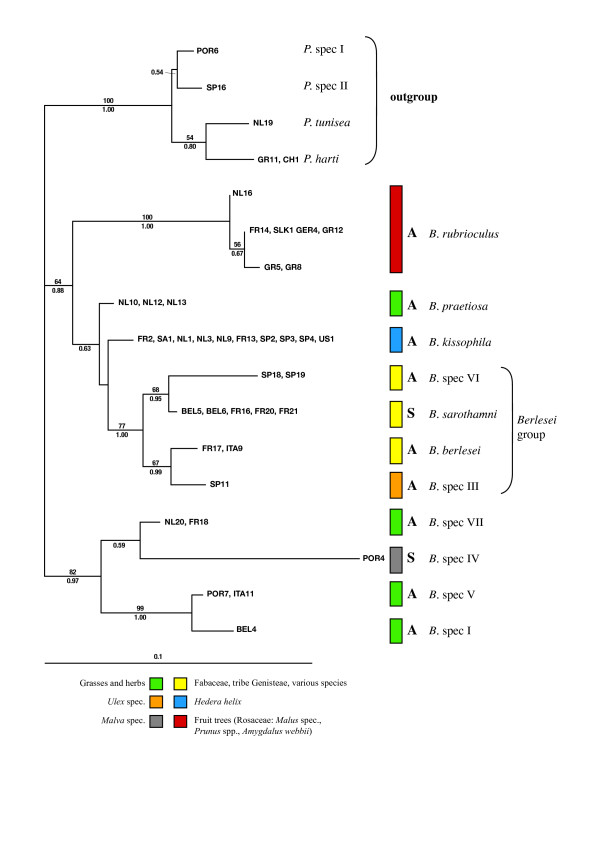
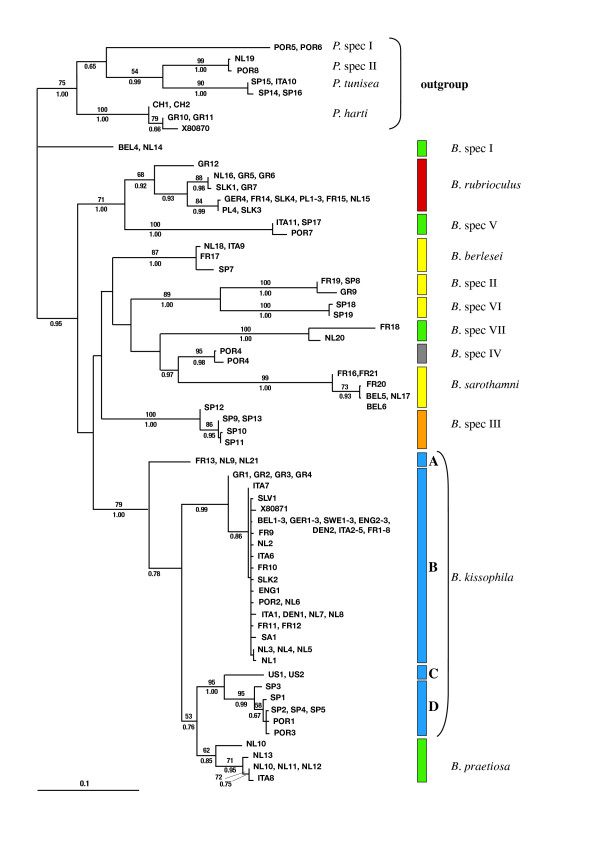
The majority (94%) of 111 sampled populations reproduces asexually. Analysis of part of nuclear 28S rDNA shows that these asexuals do not form a monophyletic clade. Analysis of the mitochondrial COI region shows that intraspecific variation is extensive (up to 8.8%). Within B. kissophila, distinct clades are found, which are absent at the nuclear 28S rDNA level. Moreover, paraphyletic patterns are found at the mitochondrial DNA.
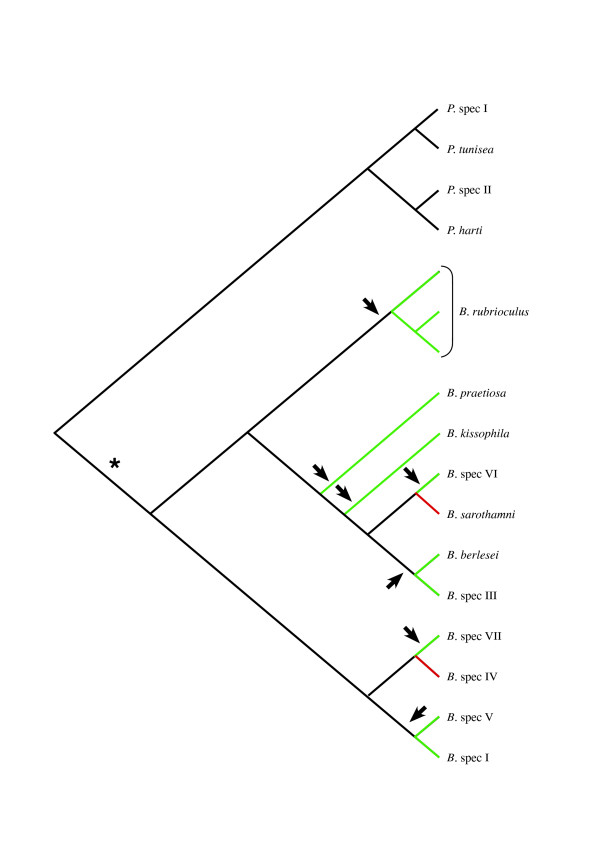
Asexuality is widespread in the genus Bryobia, signifying that some animal taxa do contain a high number of asexuals. We argue that asexuality originated multiple times within Bryobia. Wolbachia bacteria cause asexuality in at least two Bryobia species and may have infected different species independently. The high intraspecific clonal diversity and the patterns of paraphyly at the mitochondrial DNA in B. kissophila might be explained by a high mutation fixation rate and past hybridization events. Reproductive parasites like Wolbachia and Cardinium might influence these processes. We discuss the role these bacteria could play in the evolutionary success of asexual species.
专性无性繁殖在动物界较为罕见。一般来说,无性繁殖者被认为是进化的死胡同,无法实现辐射演化。植食性螨类Bryobia属包含大量无性繁殖物种。在本研究中,我们使用来自欧洲、南非和美国111个种群的样本,这些样本属于11种Bryobia螨类,来研究无性繁殖的起源和演化。我们还通过对61个不同种群的个体进行基因分型,来研究一种螨类——嗜吻Bryobia(Bryobia kissophila)的种内克隆多样性。关于无性繁殖的起源和克隆多样性的知识有助于我们理解性别的悖论。
111个抽样种群中的大多数(94%)进行无性繁殖。对部分核28S rDNA的分析表明,这些无性繁殖者并未形成一个单系类群。对线粒体COI区域的分析表明,种内变异广泛(高达8.8%)。在嗜吻Bryobia内,发现了不同的进化枝,而在核28S rDNA水平上则不存在。此外,在线粒体DNA中发现了并系模式。
无性繁殖在Bryobia属中很普遍,这表明一些动物类群确实包含大量无性繁殖者。我们认为无性繁殖在Bryobia属内多次起源。沃尔巴克氏体细菌至少在两种Bryobia螨类中导致无性繁殖,并且可能是独立感染了不同物种。嗜吻Bryobia种内的高克隆多样性以及线粒体DNA中的并系模式可能是由高突变固定率和过去的杂交事件所解释的。像沃尔巴克氏体和卡丁氏菌这样的生殖寄生虫可能会影响这些过程。我们讨论了这些细菌在无性繁殖物种进化成功中可能发挥的作用。