Keku Temitope O, Sandler Robert S, Simmons James G, Galanko Joseph, Woosley John T, Proffitt Michelle, Omofoye Oluwaseun, McDoom Maya, Lund Pauline K
Department of Medicine and Center for Gastrointestinal Biology & Disease, School of Medicine, University of North Carolina, Chapel Hill, North Carolina, USA.
BMC Cancer. 2008 May 22;8:143. doi: 10.1186/1471-2407-8-143.
IGF binding protein-3 (IGFBP-3) regulates the bioavailability of insulin-like growth factors I and II, and has both anti-proliferative and pro-apoptotic properties. Elevated plasma IGFBP-3 has been associated with reduced risk of colorectal cancer (CRC), but the role of tissue IGFBP-3 is not well defined. We evaluated the association between tissue or plasma IGFBP-3 and risk of colorectal adenomas or low apoptosis.
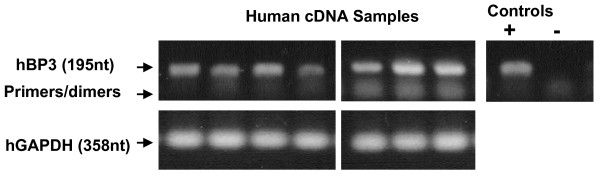
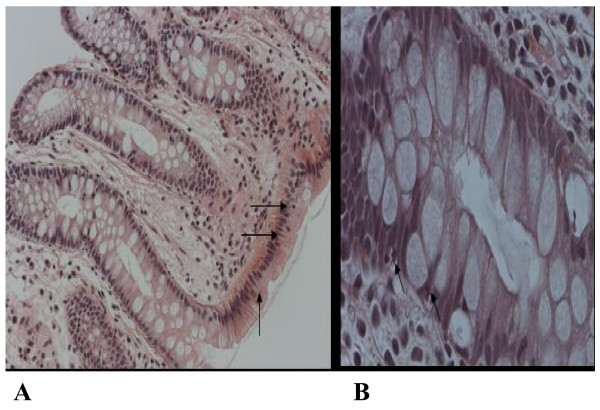
Subjects were consenting patients who underwent a clinically indicated colonoscopy at UNC Hospitals and provided information on diet and lifestyle. IGFBP-3 mRNA in normal colon was assessed by real time RT-PCR. Plasma IGFBP-3 was measured by ELISA and apoptosis was determined by morphology on H & E slides. Logistic regression was used to compute odds ratio (OR) and 95% confidence intervals.
We observed a modest correlation between plasma IGFBP-3 and tissue IGFBP-3 expression (p = 0.007). There was no significant association between plasma IGFBP-3 and adenomas or apoptosis. Tissue IGFBP-3 mRNA expression was significantly lower in cases than controls. Subjects in the lowest three quartiles of tissue IGFBP-3 gene expression were more likely to have adenomas. Consistent with previous reports, low apoptosis was significantly associated with increased risk of adenomas (p = 0.003). Surprisingly, local IGFBP-3 mRNA expression was inversely associated with apoptosis.
Low expression of IGFBP-3 mRNA in normal colonic mucosa predicts increased risk of adenomas. Our findings suggest that local IGFBP-3 in the colon may directly increase adenoma risk but IGFBP-3 may act through a pathway other than apoptosis to influence adenoma risk.
胰岛素样生长因子结合蛋白3(IGFBP - 3)调节胰岛素样生长因子I和II的生物利用度,具有抗增殖和促凋亡特性。血浆IGFBP - 3升高与结直肠癌(CRC)风险降低相关,但组织IGFBP - 3的作用尚不明确。我们评估了组织或血浆IGFBP - 3与结直肠腺瘤风险或低凋亡之间的关联。
研究对象为在北卡罗来纳大学医院接受临床指征结肠镜检查并提供饮食和生活方式信息的自愿患者。通过实时逆转录聚合酶链反应评估正常结肠中IGFBP - 3 mRNA。采用酶联免疫吸附测定法测量血浆IGFBP - 3,并通过苏木精和伊红染色切片上的形态学确定凋亡情况。使用逻辑回归计算比值比(OR)和95%置信区间。
我们观察到血浆IGFBP - 3与组织IGFBP - 3表达之间存在适度相关性(p = 0.007)。血浆IGFBP - 3与腺瘤或凋亡之间无显著关联。病例组组织IGFBP - 3 mRNA表达显著低于对照组。组织IGFBP - 3基因表达处于最低三个四分位数的受试者更易患腺瘤。与先前报道一致,低凋亡与腺瘤风险增加显著相关(p = 0.003)。令人惊讶的是,局部IGFBP - 3 mRNA表达与凋亡呈负相关。
正常结肠黏膜中IGFBP - 3 mRNA低表达预示腺瘤风险增加。我们的研究结果表明,结肠中的局部IGFBP - 3可能直接增加腺瘤风险,但IGFBP - 3可能通过凋亡以外的途径影响腺瘤风险。