Ansari Mubeen A, Roberts Kelly N, Scheff Stephen W
Sanders-Brown Center on Aging, University of Kentucky, Lexington, KY 40536, USA.
Free Radic Biol Med. 2008 Aug 15;45(4):443-52. doi: 10.1016/j.freeradbiomed.2008.04.038. Epub 2008 May 3.
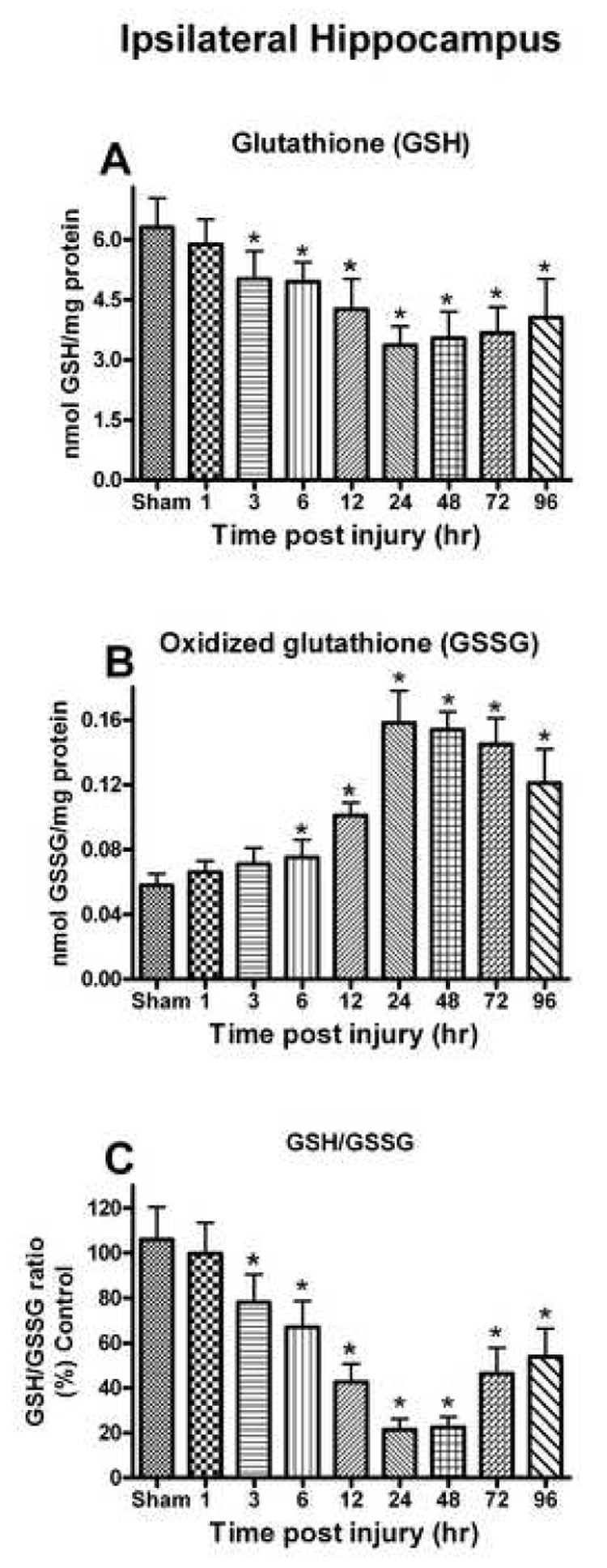
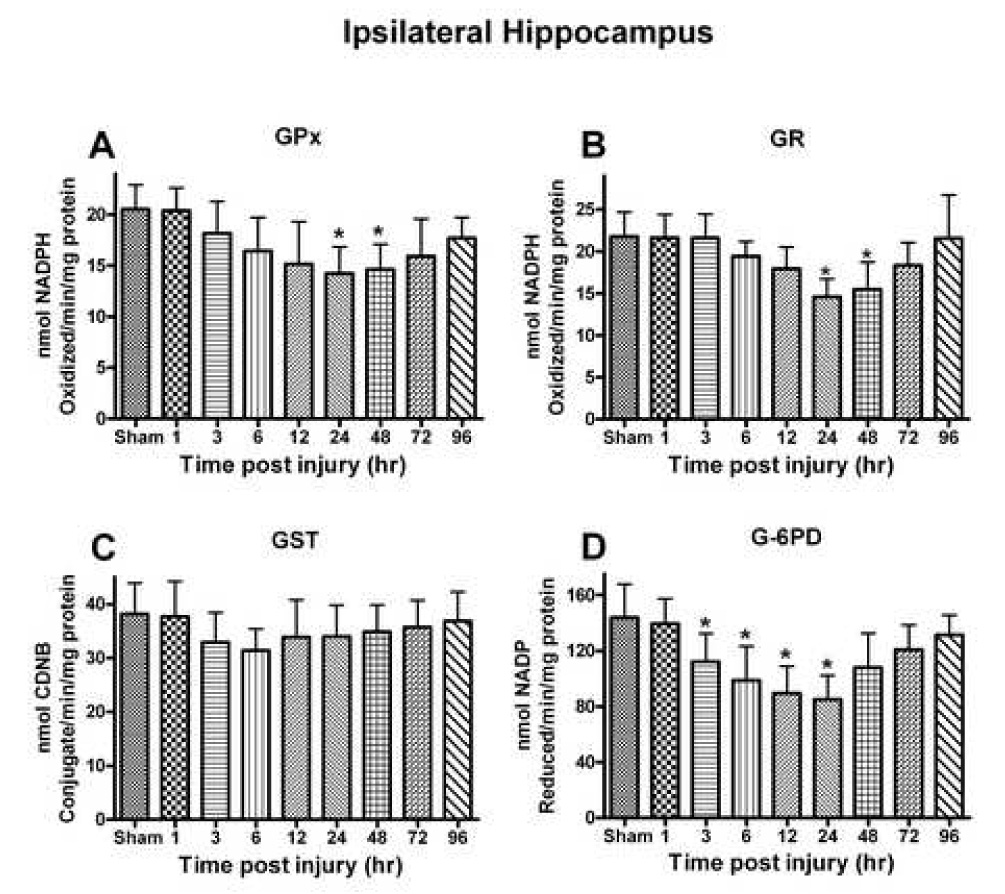
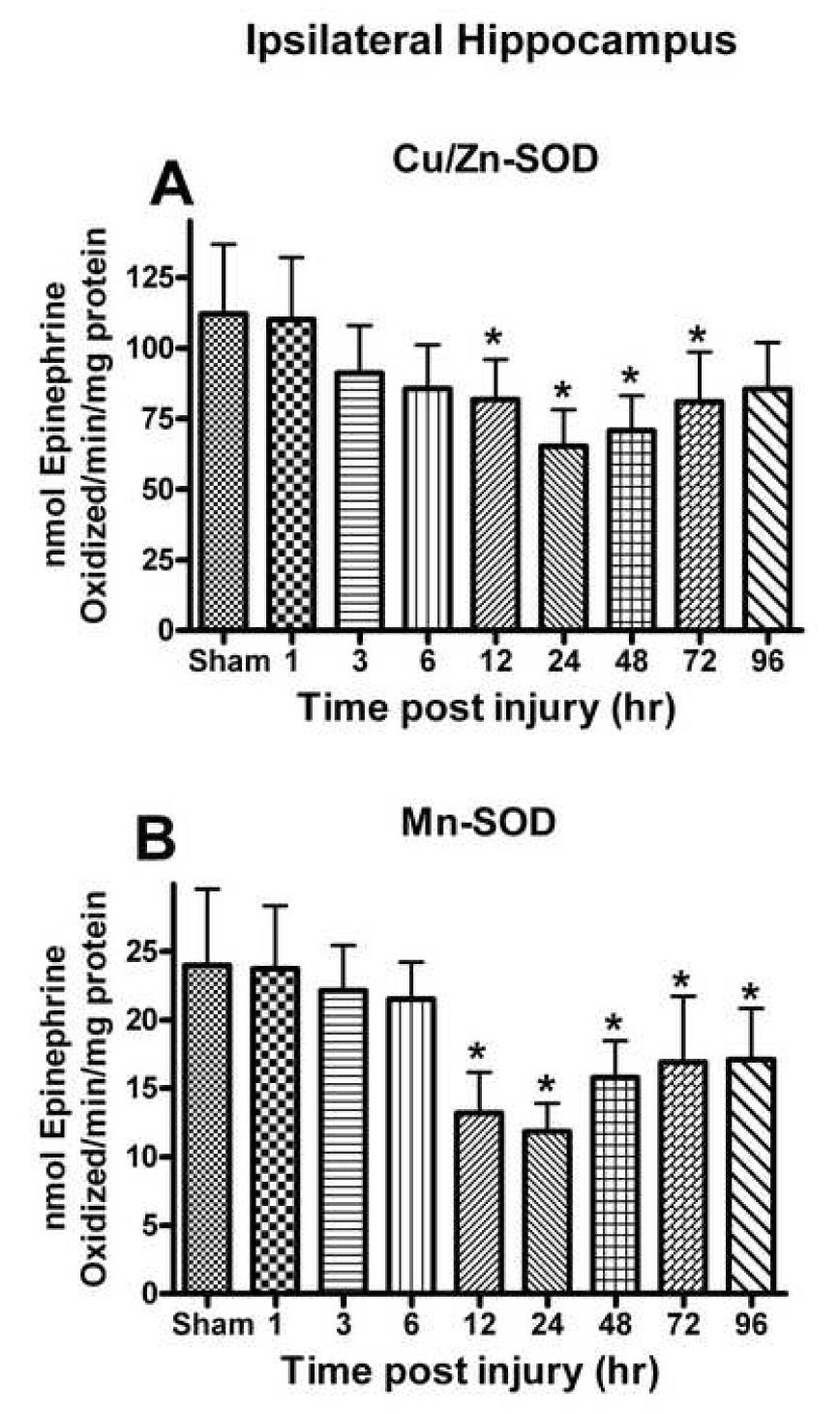
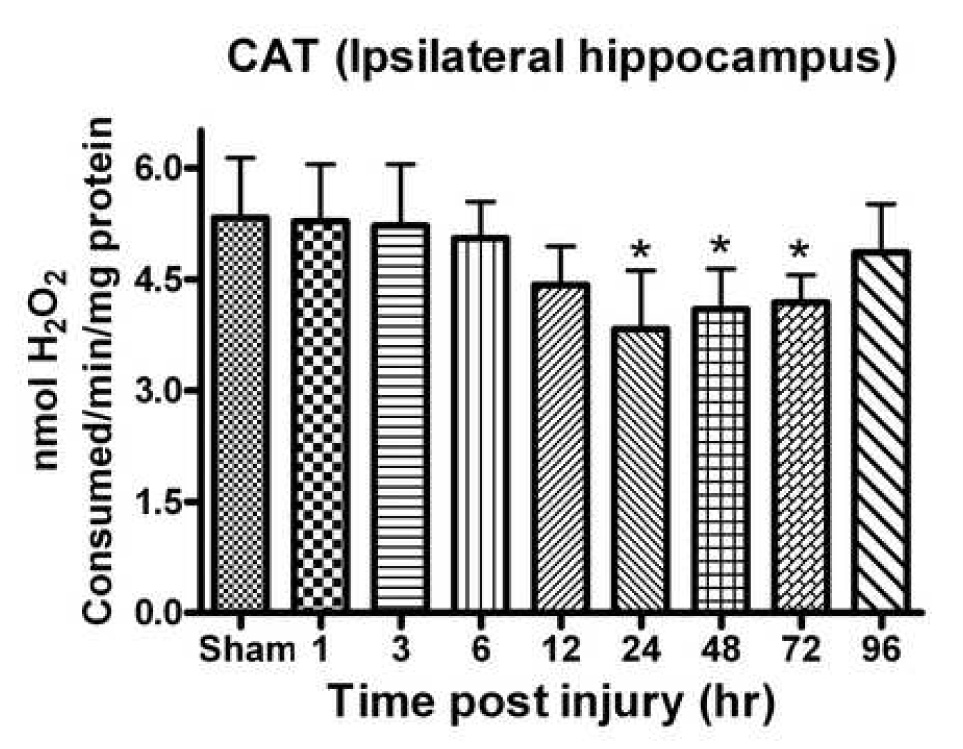
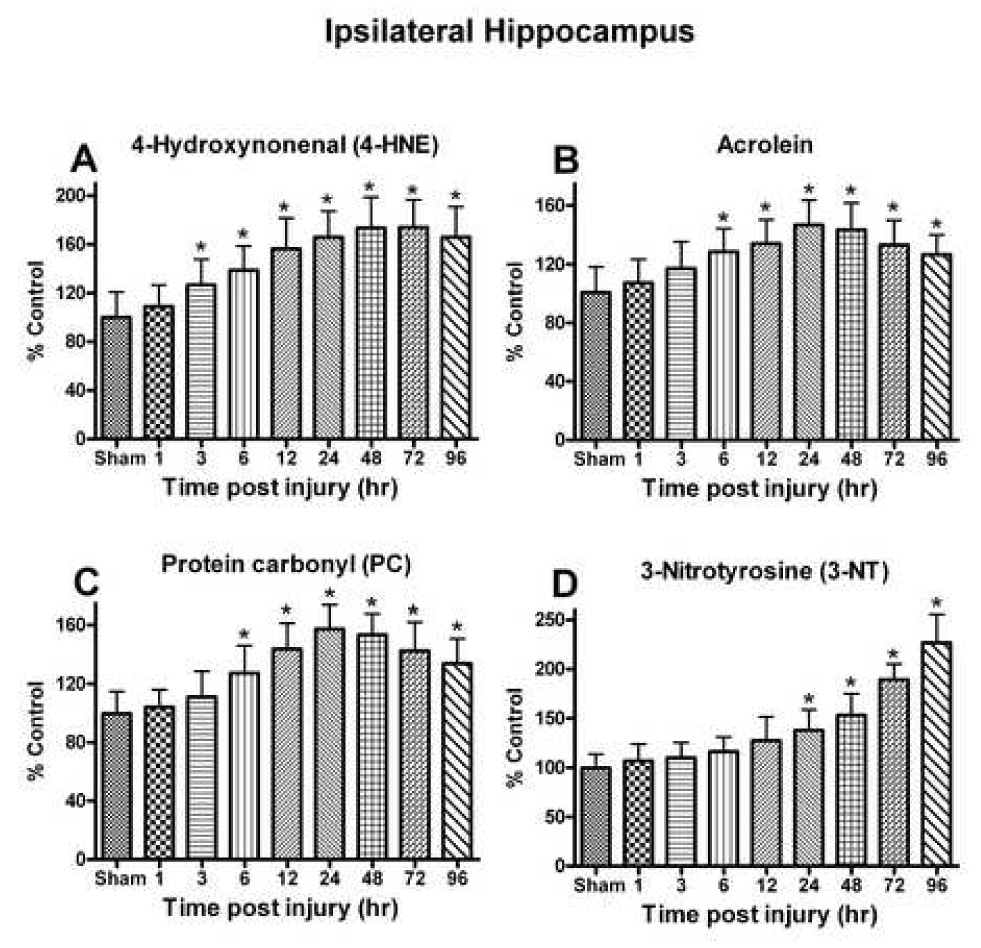
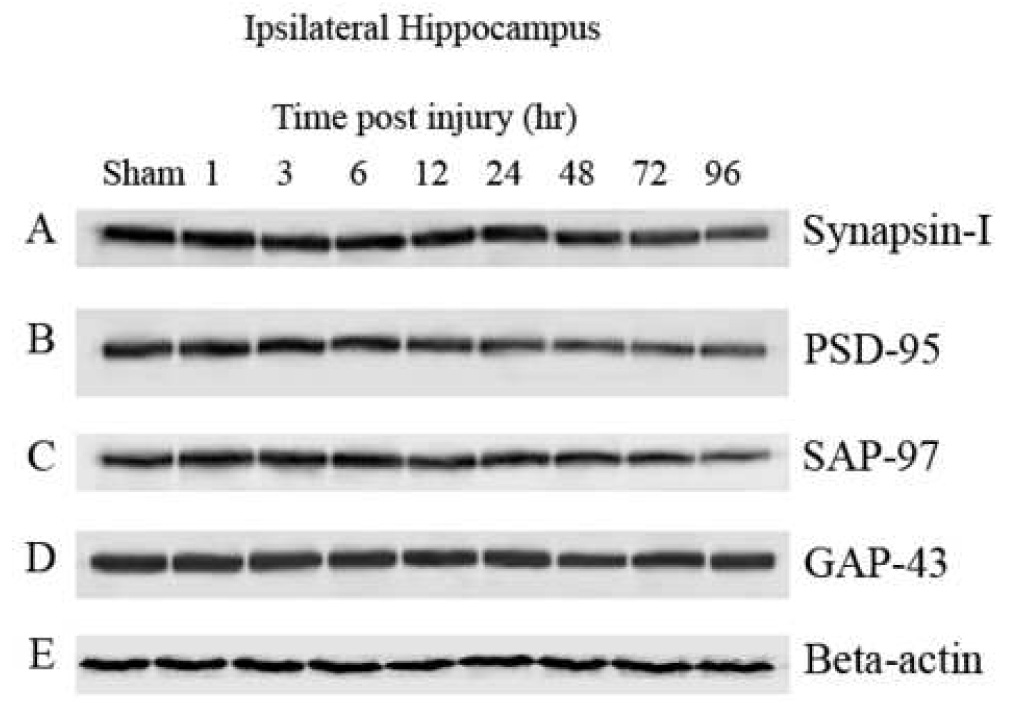
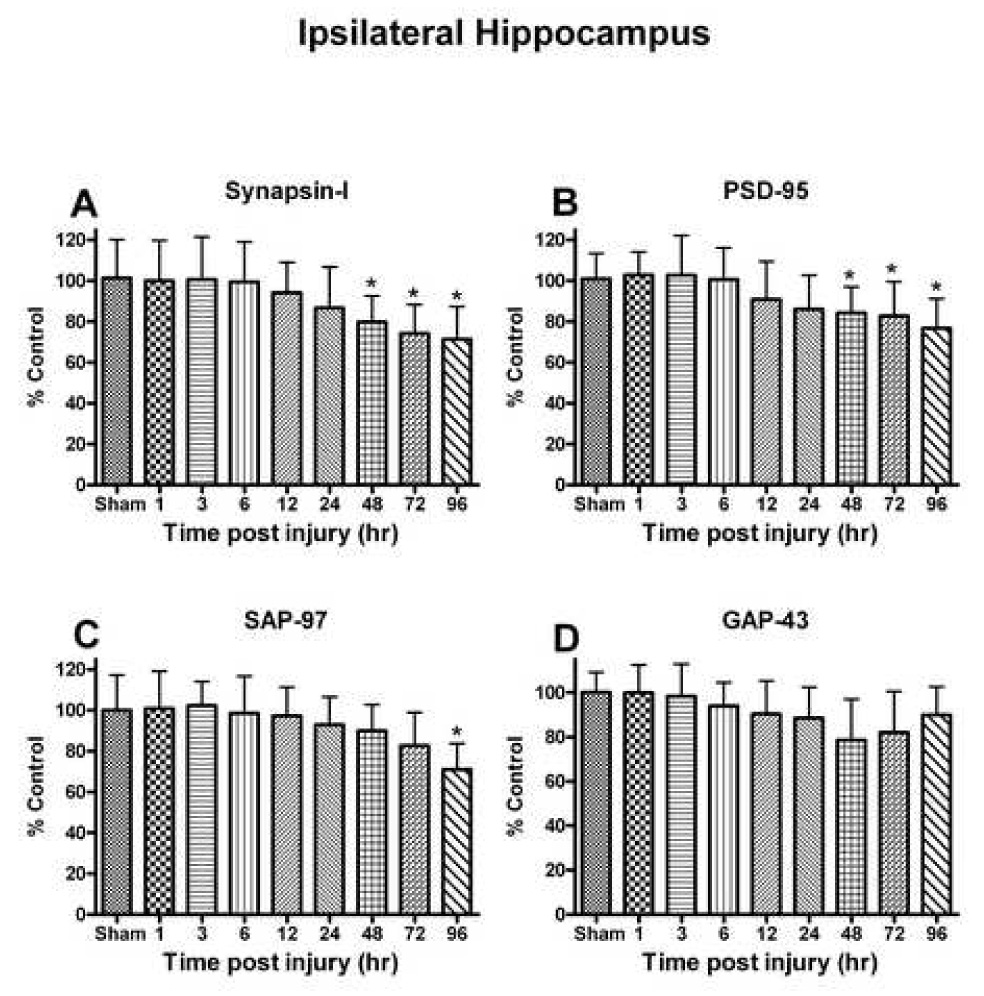
Oxidative stress, an imbalance between oxidants and antioxidants, contributes to the pathogenesis of traumatic brain injury (TBI). Oxidative neurodegeneration is a key mediator of exacerbated morphological responses and deficits in behavioral recoveries. The present study assessed early hippocampal sequential imbalance to possibly enhance antioxidant therapy. Young adult male Sprague-Dawley rats were subjected to a unilateral moderate cortical contusion. At various times post-TBI, animals were killed and the hippocampus was analyzed for antioxidants (GSH, GSSG, glutathione peroxidase, glutathione reductase, glutathione-S-transferase, glucose-6-phosphate dehydrogenase, superoxide dismutase, and catalase) and oxidants (acrolein, 4-hydroxynonenal, protein carbonyl, and 3-nitrotyrosine). Synaptic markers (synapsin I, postsynaptic density protein 95, synapse-associated protein 97, growth-associated protein 43) were also analyzed. All values were compared with those for sham-operated animals. Significant time-dependent changes in antioxidants were observed as early as 3 h posttrauma and paralleled increases in oxidants (4-hydroxynonenal, acrolein, and protein carbonyl), with peak values obtained at 24-48 h. Time-dependent changes in synaptic proteins (synapsin I, postsynaptic density protein 95, and synapse-associated protein 97) occurred well after levels of oxidants peaked. These results indicate that depletion of antioxidant systems following trauma could adversely affect synaptic function and plasticity. Early onset of oxidative stress suggests that the initial therapeutic window following TBI appears to be relatively short, and it may be necessary to stagger selective types of antioxidant therapy to target specific oxidative components.
氧化应激,即氧化剂与抗氧化剂之间的失衡,在创伤性脑损伤(TBI)的发病机制中起作用。氧化神经变性是形态学反应加剧和行为恢复缺陷的关键介质。本研究评估了早期海马顺序失衡,以可能增强抗氧化治疗。对年轻成年雄性Sprague-Dawley大鼠进行单侧中度皮质挫伤。在TBI后的不同时间,处死动物并分析海马中的抗氧化剂(谷胱甘肽、氧化型谷胱甘肽、谷胱甘肽过氧化物酶、谷胱甘肽还原酶、谷胱甘肽-S-转移酶、葡萄糖-6-磷酸脱氢酶、超氧化物歧化酶和过氧化氢酶)和氧化剂(丙烯醛、4-羟基壬烯醛、蛋白质羰基和3-硝基酪氨酸)。还分析了突触标记物(突触素I、突触后密度蛋白95、突触相关蛋白97、生长相关蛋白43)。所有值均与假手术动物的值进行比较。早在创伤后3小时就观察到抗氧化剂有显著的时间依赖性变化,同时氧化剂(4-羟基壬烯醛、丙烯醛和蛋白质羰基)增加,在24-48小时达到峰值。突触蛋白(突触素I、突触后密度蛋白95和突触相关蛋白97)的时间依赖性变化在氧化剂水平达到峰值后很久才出现。这些结果表明,创伤后抗氧化系统的耗竭可能会对突触功能和可塑性产生不利影响。氧化应激的早期发生表明,TBI后的初始治疗窗口似乎相对较短,可能有必要错开选择性的抗氧化治疗类型,以针对特定的氧化成分。