Arana Mercedes E, Seki Mineaki, Wood Richard D, Rogozin Igor B, Kunkel Thomas A
Laboratory of Molecular Genetics and Laboratory of Structural Biology, NIEHS, National Institutes of Health, Department of Health and Human Services, Research Triangle Park, NC 27709, USA.
Nucleic Acids Res. 2008 Jun;36(11):3847-56. doi: 10.1093/nar/gkn310. Epub 2008 May 24.
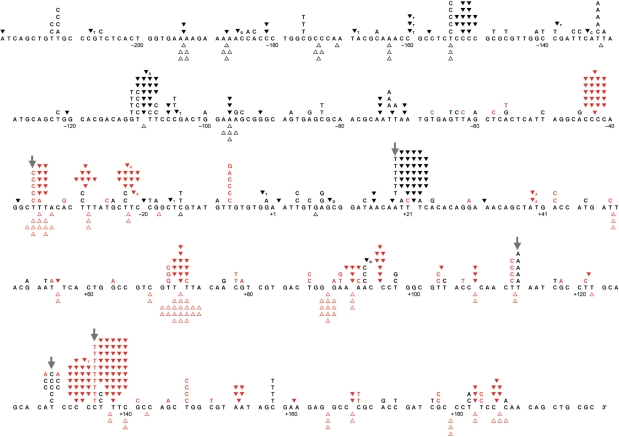
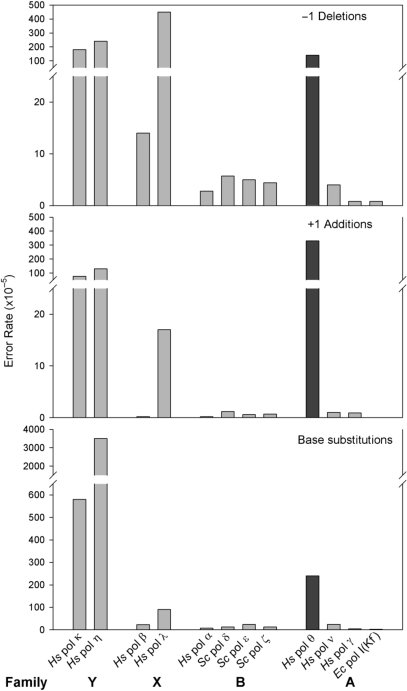
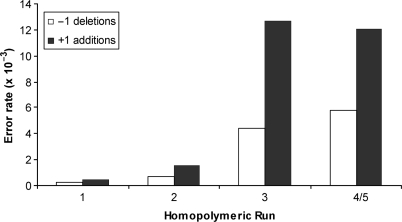
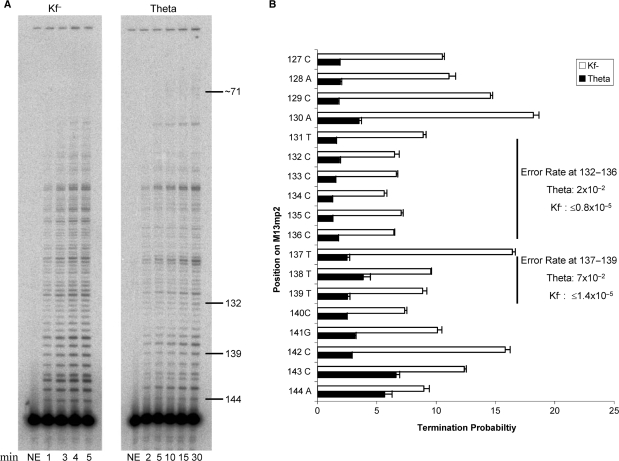
Human DNA polymerase theta (pol or POLQ) is a proofreading-deficient family A enzyme implicated in translesion synthesis (TLS) and perhaps in somatic hypermutation (SHM) of immunoglobulin genes. These proposed functions and kinetic studies imply that pol may synthesize DNA with low fidelity. Here, we show that when copying undamaged DNA, pol generates single base errors at rates 10- to more than 100-fold higher than for other family A members. Pol adds single nucleotides to homopolymeric runs at particularly high rates, exceeding 1% in certain sequence contexts, and generates single base substitutions at an average rate of 2.4 x 10(-3), comparable to inaccurate family Y human pol kappa (5.8 x 10(-3)) also implicated in TLS. Like pol kappa, pol is processive, implying that it may be tightly regulated to avoid deleterious mutagenesis. Pol also generates certain base substitutions at high rates within sequence contexts similar to those inferred to be copied by pol during SHM of immunoglobulin genes in mice. Thus, pol is an exception among family A polymerases, and its low fidelity is consistent with its proposed roles in TLS and SHM.
人类DNA聚合酶θ(polθ或POLQ)是一种缺乏校对功能的A家族酶,与跨损伤合成(TLS)有关,可能还与免疫球蛋白基因的体细胞高频突变(SHM)有关。这些推测的功能和动力学研究表明,polθ可能以低保真度合成DNA。在这里,我们表明,在复制未受损的DNA时,polθ产生单碱基错误的速率比其他A家族成员高10到100倍以上。Polθ以特别高的速率向同聚物序列添加单核苷酸,在某些序列背景下超过1%,并以平均2.4×10⁻³的速率产生单碱基替换,这与同样参与TLS的不准确的Y家族人类聚合酶κ(5.8×10⁻³)相当。与聚合酶κ一样,polθ具有持续性,这意味着它可能受到严格调控以避免有害的诱变。在与小鼠免疫球蛋白基因SHM过程中polθ推测复制的序列背景相似的序列背景下,polθ也以高速率产生某些碱基替换。因此,polθ是A家族聚合酶中的一个例外,其低保真度与其在TLS和SHM中的推测作用一致。