Mudge Jonathan M, Armstrong Stuart D, McLaren Karen, Beynon Robert J, Hurst Jane L, Nicholson Christine, Robertson Duncan H, Wilming Laurens G, Harrow Jennifer L
Wellcome Trust Sanger Institute, Wellcome Trust Genome Campus, Hinxton, Cambridge CB101SA, UK.
Genome Biol. 2008;9(5):R91. doi: 10.1186/gb-2008-9-5-r91. Epub 2008 May 28.
The major urinary proteins (MUPs) of Mus musculus domesticus are deposited in urine in large quantities, where they bind and release pheromones and also provide an individual 'recognition signal' via their phenotypic polymorphism. Whilst important information about MUP functionality has been gained in recent years, the gene cluster is poorly studied in terms of structure, genic polymorphism and evolution.
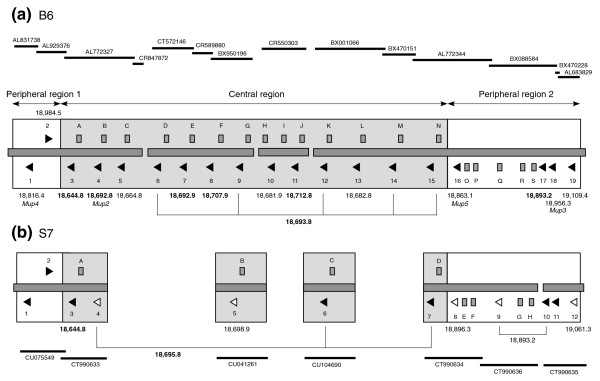
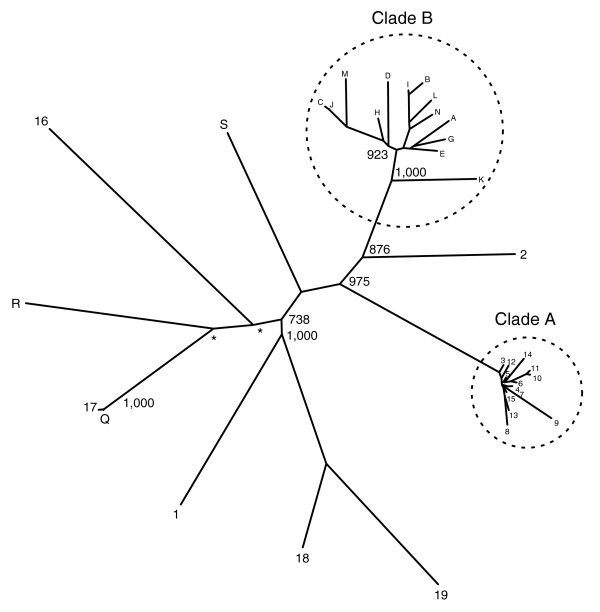
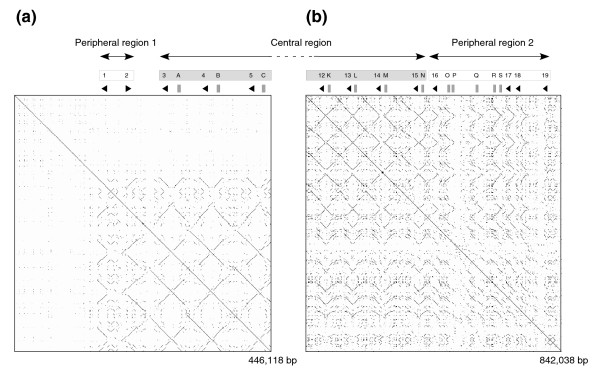
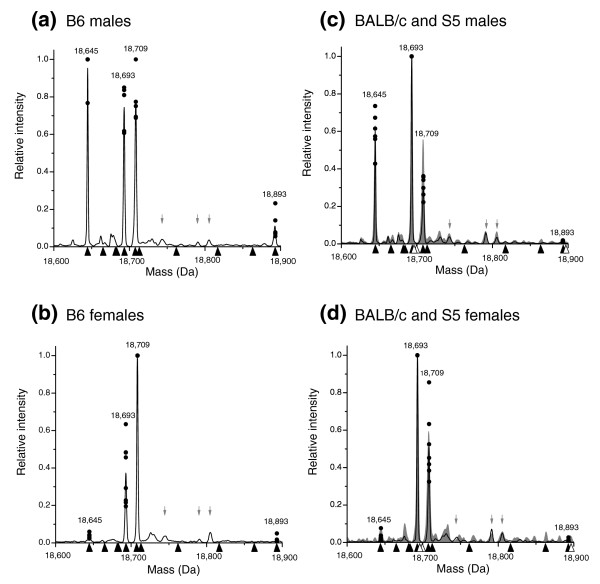
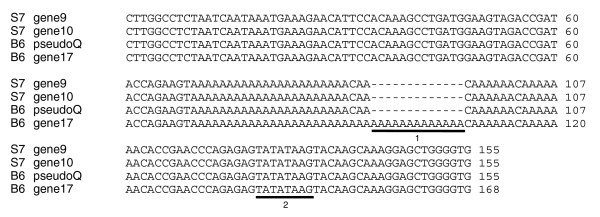
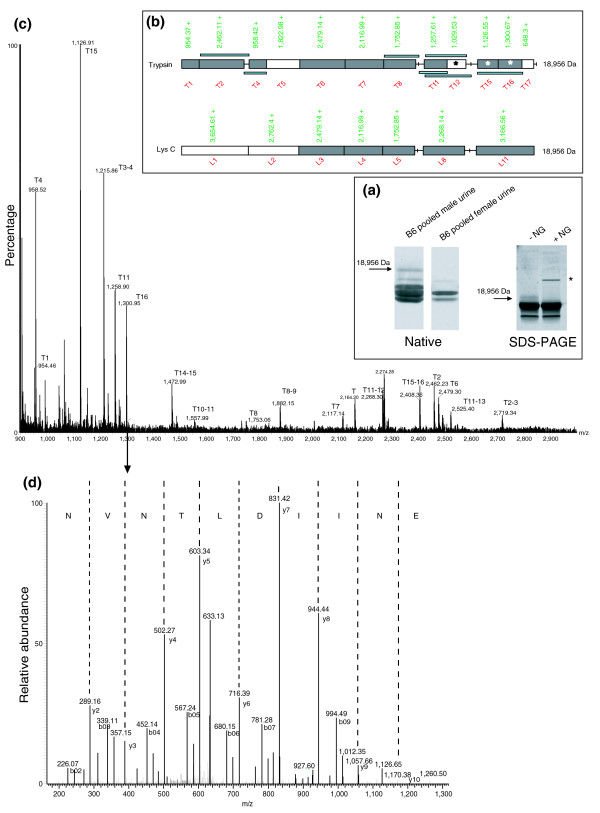
We combine targeted sequencing, manual genome annotation and phylogenetic analysis to compare the Mup clusters of C57BL/6J and 129 strains of mice. We describe organizational heterogeneity within both clusters: a central array of cassettes containing Mup genes highly similar at the protein level, flanked by regions containing Mup genes displaying significantly elevated divergence. Observed genomic rearrangements in all regions have likely been mediated by endogenous retroviral elements. Mup loci with coding sequences that differ between the strains are identified--including a gene/pseudogene pair--suggesting that these inbred lineages exhibit variation that exists in wild populations. We have characterized the distinct MUP profiles in the urine of both strains by mass spectrometry. The total MUP phenotype data is reconciled with our genomic sequence data, matching all proteins identified in urine to annotated genes.
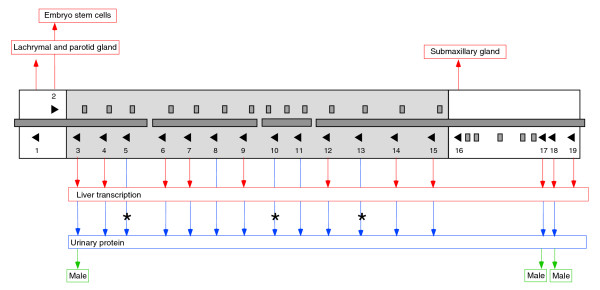
Our observations indicate that the MUP phenotypic polymorphism observed in wild populations results from a combination of Mup gene turnover coupled with currently unidentified mechanisms regulating gene expression patterns. We propose that the structural heterogeneity described within the cluster reflects functional divergence within the Mup gene family.
小家鼠的主要尿蛋白(MUPs)大量沉积在尿液中,它们在尿液中结合并释放信息素,还通过其表型多态性提供个体“识别信号”。尽管近年来已获得有关MUP功能的重要信息,但该基因簇在结构、基因多态性和进化方面的研究较少。
我们结合靶向测序、人工基因组注释和系统发育分析,比较了C57BL/6J和129品系小鼠的Mup基因簇。我们描述了两个基因簇内的组织异质性:一个包含在蛋白质水平上高度相似的Mup基因的中央盒式阵列,两侧是包含显示出明显更高分歧的Mup基因的区域。在所有区域观察到的基因组重排可能是由内源性逆转录病毒元件介导的。鉴定出了编码序列在品系间存在差异的Mup基因座——包括一个基因/假基因对——这表明这些近交系表现出野生种群中存在的变异。我们通过质谱分析对两个品系尿液中不同的MUP谱进行了表征。总的MUP表型数据与我们的基因组序列数据相匹配,将尿液中鉴定出的所有蛋白质与注释基因进行了匹配。
我们的观察结果表明,在野生种群中观察到的MUP表型多态性是由Mup基因更新与目前尚未确定的调节基因表达模式的机制共同作用的结果。我们认为,基因簇内描述的结构异质性反映了Mup基因家族内的功能差异。