Painsipp Evelin, Herzog Herbert, Holzer Peter
Research Unit of Translational Neurogastroenterology, Institute of Experimental and Clinical Pharmacology, Medical University of Graz, Universitätsplatz 4, A-8010 Graz, Austria.
Neuropharmacology. 2008 Jul;55(1):117-26. doi: 10.1016/j.neuropharm.2008.05.004. Epub 2008 May 10.
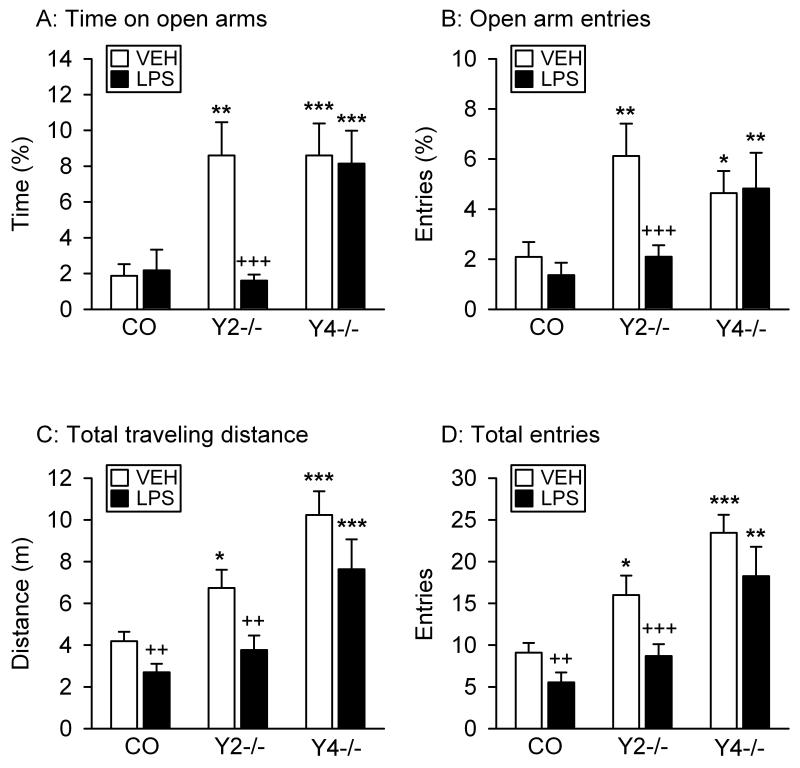
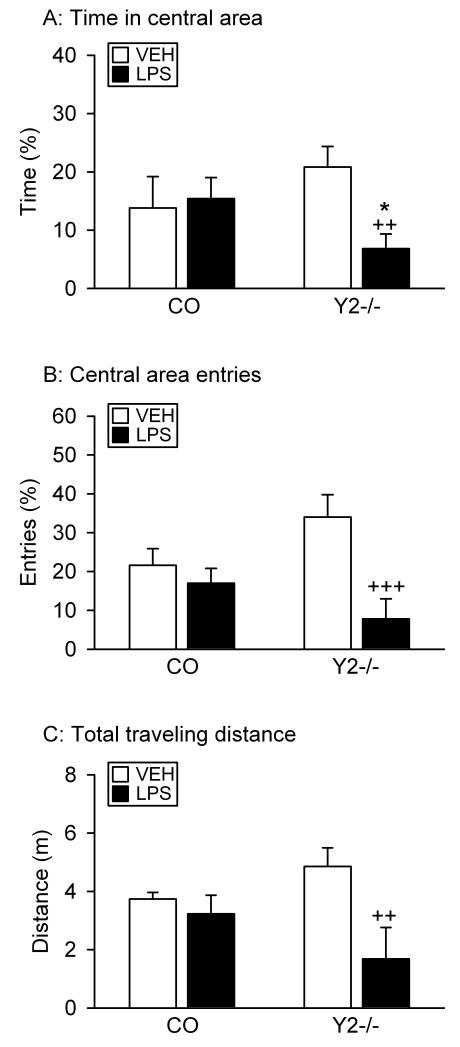
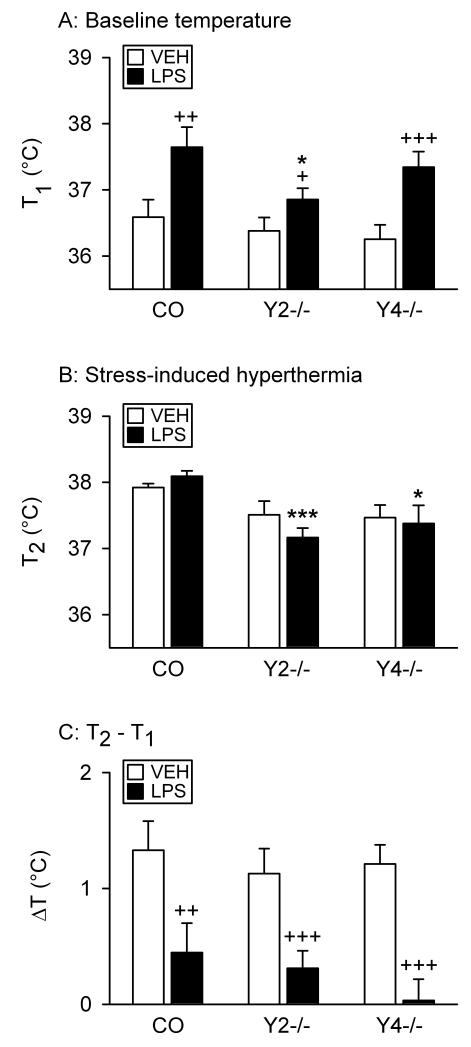
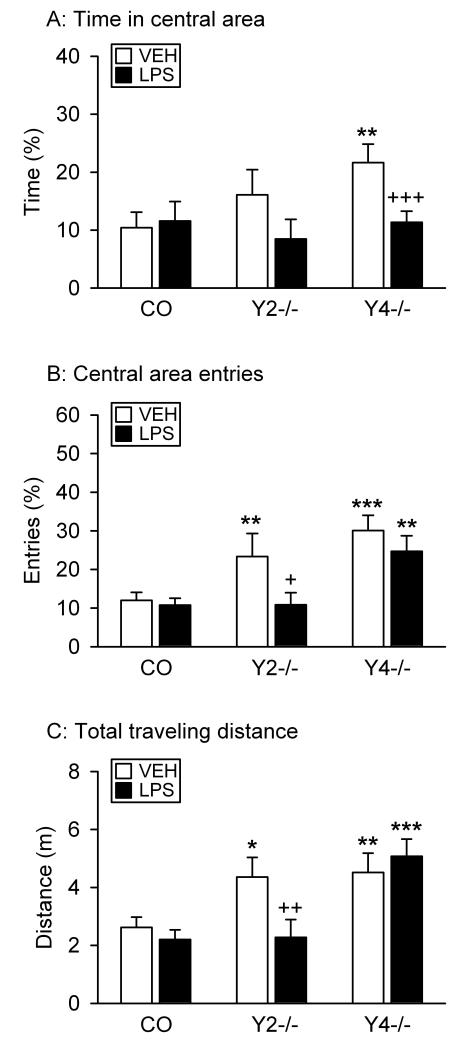
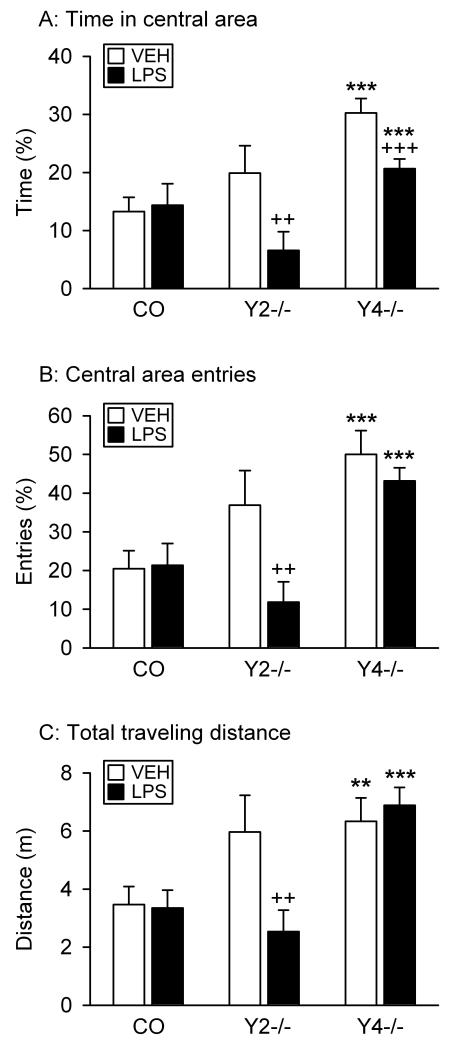
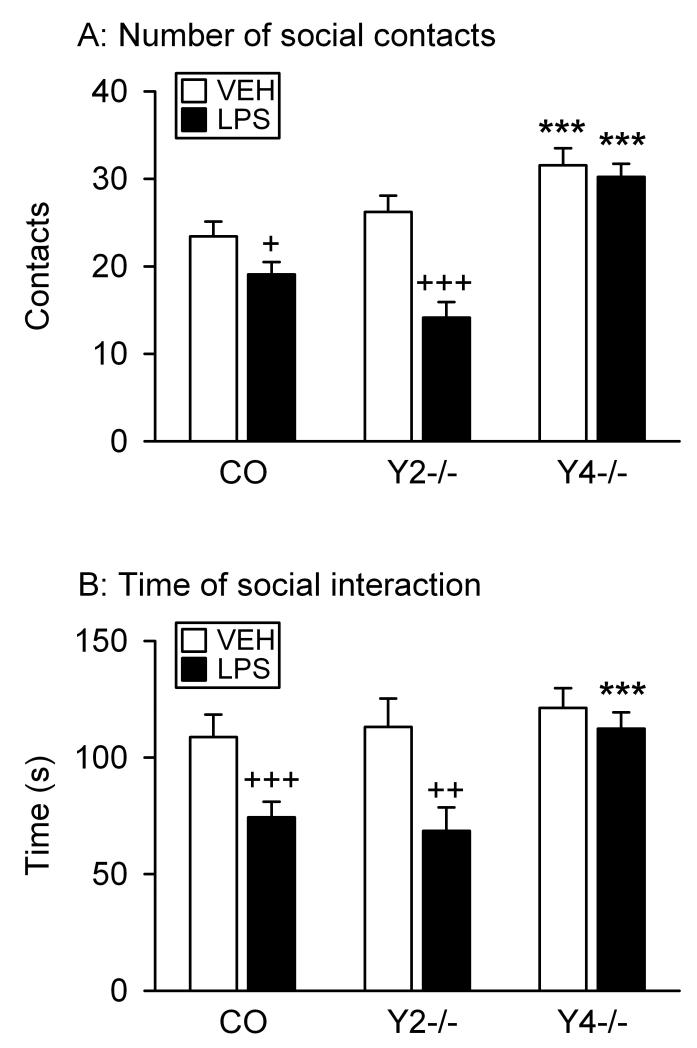
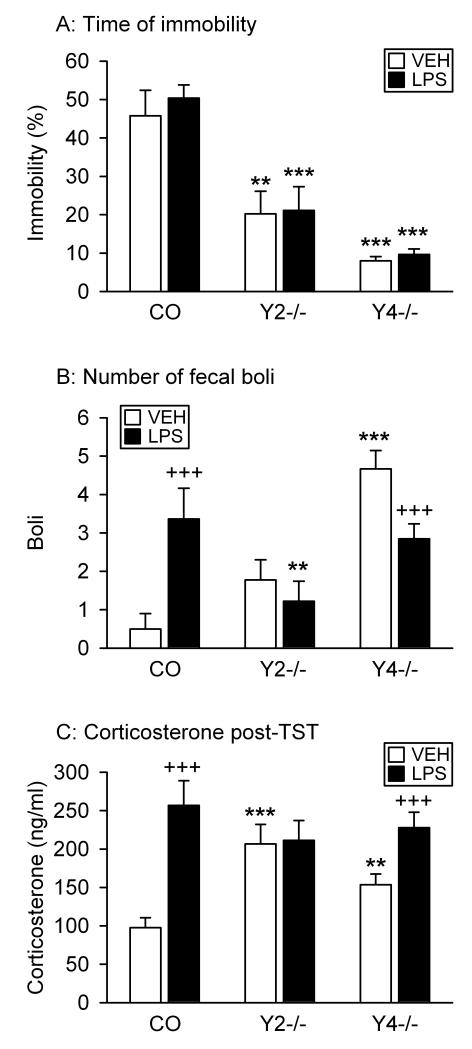
Neuropeptide Y (NPY) is involved in the regulation of emotional behavior, and there is indirect evidence for a role of NPY in the cerebral responses to peripheral immune challenge. Since the NPY receptors involved in these reactions are not known, we investigated the effect of Escherichia coli lipopolysaccharide (LPS) on emotional, locomotor and social behavior, body temperature and circulating corticosterone in female Y2 (Y2-/-) and Y4 (Y4-/-) receptor knockout mice. LPS (0.1mg/kg injected IP 2.5h before testing) increased rectal temperature in control and Y4-/- mice to a larger degree than in Y2-/- animals. Both Y2-/- and Y4-/- mice exhibited reduced anxiety-related and depression-like behavior in the open field, elevated plus-maze and tail suspension test, respectively. While depression-like behavior was not changed by LPS, anxiety-related behavior was enhanced by LPS in Y2-/-, but not control and Y4-/- animals. Y2-/- mice were also particularly susceptible to the effect of LPS to attenuate locomotor behavior and social interaction with another mouse. The corticosterone response to LPS was blunted in Y2-/- mice which presented elevated levels of circulating corticosterone following vehicle treatment. These data show that Y2-/- mice are particularly sensitive to the effects of LPS-evoked immune stress to attenuate locomotion and social interaction and to increase anxiety-like behavior, while the LPS-induced rise of temperature and circulating corticosterone is suppressed by Y2 receptor knockout. Our observations attest to an important role of endogenous NPY acting via Y2 receptors in the cerebral response to peripheral immune challenge.
神经肽Y(NPY)参与情绪行为的调节,并且有间接证据表明NPY在大脑对外周免疫刺激的反应中发挥作用。由于参与这些反应的NPY受体尚不清楚,我们研究了大肠杆菌脂多糖(LPS)对雌性Y2(Y2-/-)和Y4(Y4-/-)受体基因敲除小鼠的情绪、运动和社交行为、体温及循环皮质酮的影响。LPS(在测试前2.5小时腹腔注射0.1mg/kg)使对照小鼠和Y4-/-小鼠的直肠温度升高幅度大于Y2-/-动物。在旷场试验、高架十字迷宫试验和悬尾试验中,Y2-/-和Y4-/-小鼠分别表现出焦虑相关行为和抑郁样行为减少。虽然LPS未改变抑郁样行为,但LPS增强了Y2-/-小鼠的焦虑相关行为,而对照小鼠和Y4-/-小鼠则未出现这种情况。Y2-/-小鼠对LPS减弱运动行为和与另一只小鼠社交互动的作用也特别敏感。Y2-/-小鼠对LPS的皮质酮反应减弱,在给予赋形剂处理后其循环皮质酮水平升高。这些数据表明,Y2-/-小鼠对LPS诱发的免疫应激减弱运动和社交互动以及增加焦虑样行为的作用特别敏感,而Y2受体基因敲除抑制了LPS诱导的体温升高和循环皮质酮升高。我们的观察结果证明内源性NPY通过Y2受体在大脑对外周免疫刺激的反应中起重要作用。