Earth and Biosphere Institute, School of Earth and Environment, University of Leeds, Leeds, LS2 9JT, UK.
Geochem Trans. 2008 May 30;9:7. doi: 10.1186/1467-4866-9-7.
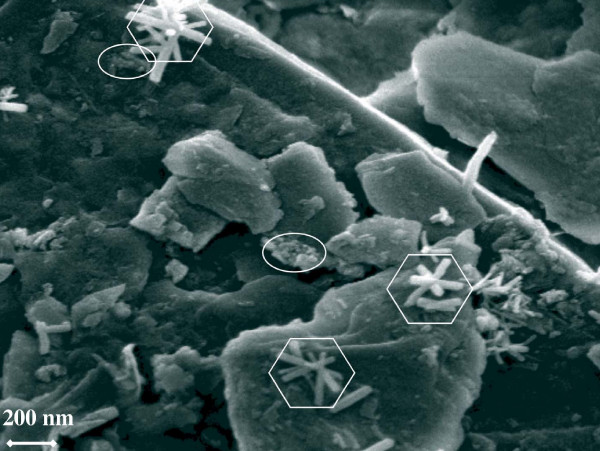
Productivity in the Southern Oceans is iron-limited, and the supply of iron dissolved from aeolian dust is believed to be the main source from outside the marine reservoir. Glacial sediment sources of iron have rarely been considered, as the iron has been assumed to be inert and non-bioavailable. This study demonstrates the presence of potentially bioavailable Fe as ferrihydrite and goethite in nanoparticulate clusters, in sediments collected from icebergs in the Southern Ocean and glaciers on the Antarctic landmass. Nanoparticles in ice can be transported by icebergs away from coastal regions in the Southern Ocean, enabling melting to release bioavailable Fe to the open ocean. The abundance of nanoparticulate iron has been measured by an ascorbate extraction. This data indicates that the fluxes of bioavailable iron supplied to the Southern Ocean from aeolian dust (0.01-0.13 Tg yr(-1)) and icebergs (0.06-0.12 Tg yr(-1)) are comparable. Increases in iceberg production thus have the capacity to increase productivity and this newly identified negative feedback may help to mitigate fossil fuel emissions.
南大洋的生产力受到铁元素的限制,而从风成尘埃中溶解的铁供应被认为是海洋储层以外的主要来源。由于铁被认为是惰性的和不可生物利用的,因此很少考虑冰川沉积物中的铁源。本研究表明,在从南大洋冰山和南极陆地上的冰川收集的沉积物中,存在以纳米颗粒簇形式存在的、具有潜在生物利用性的 Fe,如针铁矿和水铁矿。冰中的纳米颗粒可以通过冰山从南大洋的沿海地区运走,使冰融化后将生物可用的铁释放到开阔的海洋中。通过抗坏血酸提取法测量了纳米颗粒铁的丰度。这些数据表明,从风尘(0.01-0.13 太克/年)和冰山(0.06-0.12 太克/年)输送到南大洋的生物可用铁通量相当。因此,冰山产量的增加有可能增加生产力,而这种新发现的负反馈可能有助于减轻化石燃料排放。