Basto Renata, Brunk Kathrin, Vinadogrova Tatiana, Peel Nina, Franz Anna, Khodjakov Alexey, Raff Jordan W
The Gurdon Institute, Tennis Court Road, Cambridge CB2 1QN, UK.
Cell. 2008 Jun 13;133(6):1032-42. doi: 10.1016/j.cell.2008.05.039.
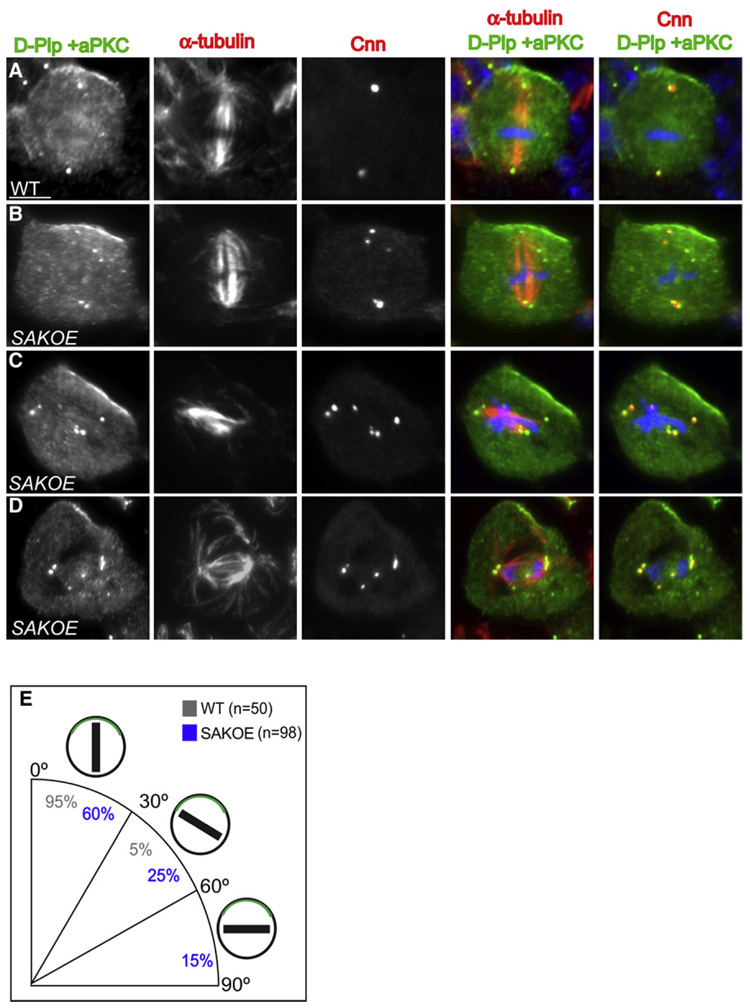
Centrosome amplification is a common feature of many cancer cells, and it has been previously proposed that centrosome amplification can drive genetic instability and so tumorigenesis. To test this hypothesis, we generated Drosophila lines that have extra centrosomes in approximately 60% of their somatic cells. Many cells with extra centrosomes initially form multipolar spindles, but these spindles ultimately become bipolar. This requires a delay in mitosis that is mediated by the spindle assembly checkpoint (SAC). As a result of this delay, there is no dramatic increase in genetic instability in flies with extra centrosomes, and these flies maintain a stable diploid genome over many generations. The asymmetric division of the larval neural stem cells, however, is compromised in the presence of extra centrosomes, and larval brain cells with extra centrosomes can generate metastatic tumors when transplanted into the abdomens of wild-type hosts. Thus, centrosome amplification can initiate tumorigenesis in flies.
中心体扩增是许多癌细胞的一个共同特征,此前有人提出中心体扩增可导致基因不稳定,进而引发肿瘤发生。为了验证这一假说,我们构建了果蝇品系,其约60%的体细胞含有额外的中心体。许多含有额外中心体的细胞最初会形成多极纺锤体,但这些纺锤体最终会变成两极纺锤体。这需要由纺锤体组装检查点(SAC)介导的有丝分裂延迟。由于这种延迟,含有额外中心体的果蝇的基因不稳定不会显著增加,并且这些果蝇在许多代中都能维持稳定的二倍体基因组。然而,幼虫神经干细胞的不对称分裂在存在额外中心体的情况下会受到影响,并且含有额外中心体的幼虫脑细胞在移植到野生型宿主的腹部时会产生转移性肿瘤。因此,中心体扩增可在果蝇中引发肿瘤发生。