Wood-Kaczmar Alison, Gandhi Sonia, Yao Zhi, Abramov Andrey Y, Miljan Erik A, Keen Gregory, Stanyer Lee, Hargreaves Iain, Klupsch Kristina, Deas Emma, Downward Julian, Mansfield Louise, Jat Parmjit, Taylor Joanne, Heales Simon, Duchen Michael R, Latchman David, Tabrizi Sarah J, Wood Nicholas W
Department of Molecular Neuroscience, Institute of Neurology, London, United Kingdom.
PLoS One. 2008 Jun 18;3(6):e2455. doi: 10.1371/journal.pone.0002455.
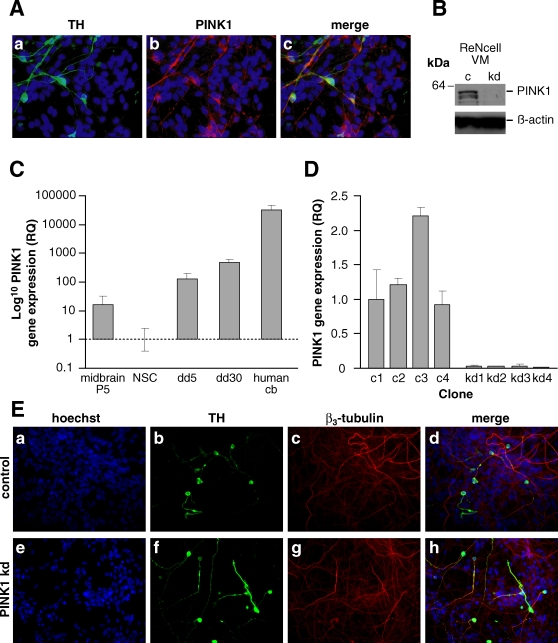
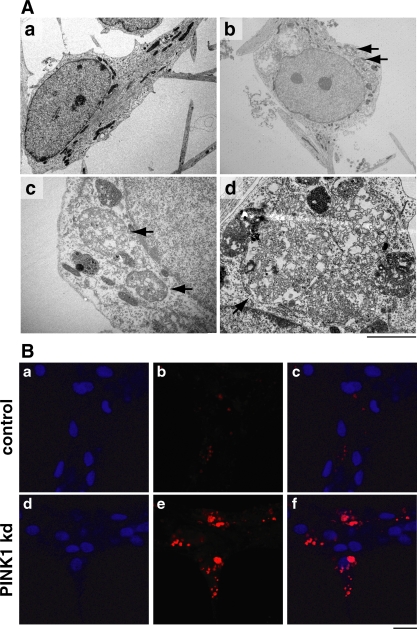
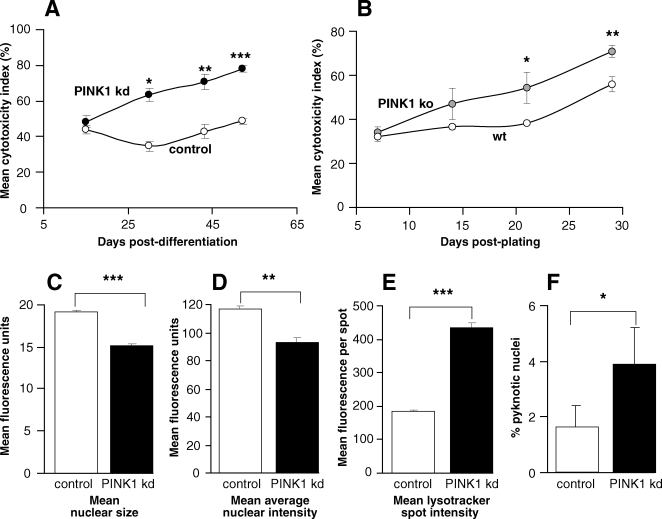
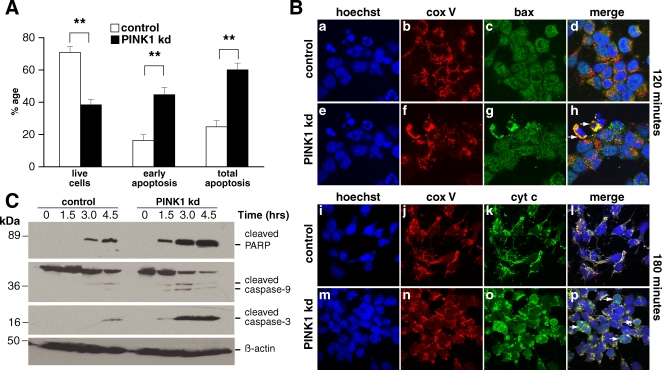
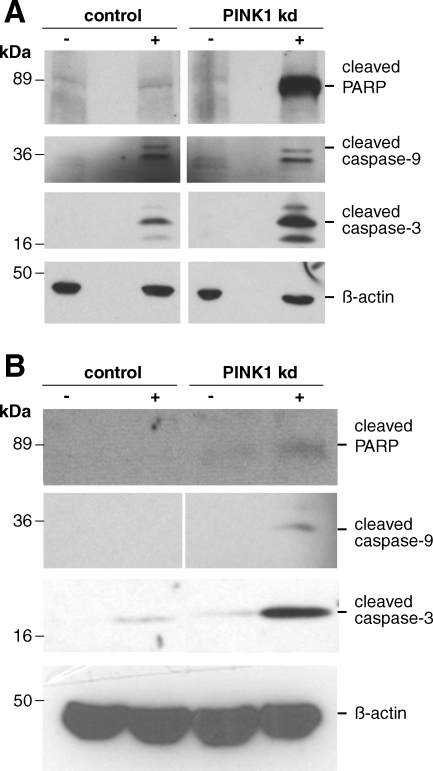
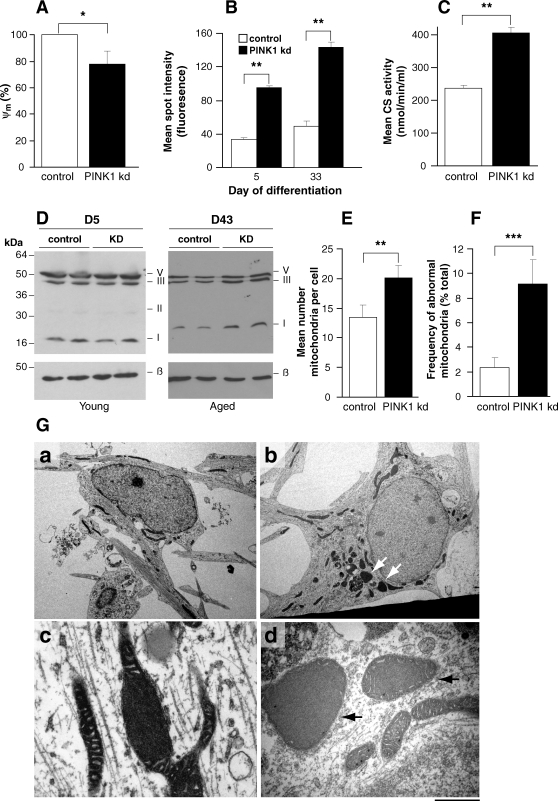
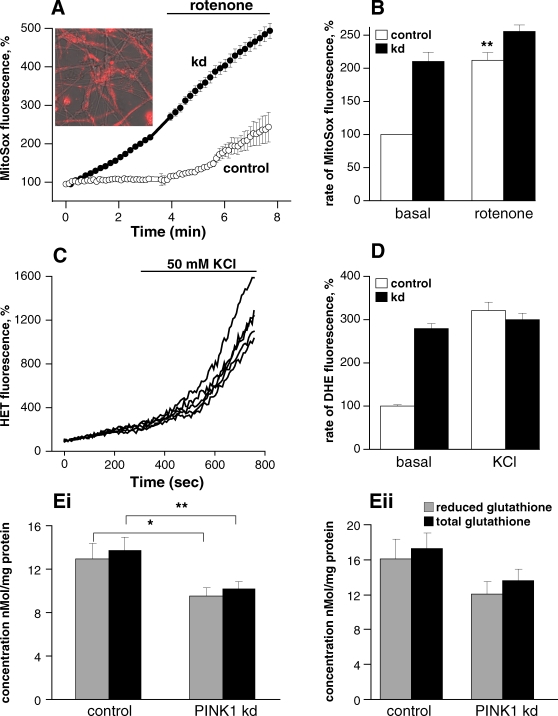
Parkinson's disease (PD) is a common age-related neurodegenerative disease and it is critical to develop models which recapitulate the pathogenic process including the effect of the ageing process. Although the pathogenesis of sporadic PD is unknown, the identification of the mendelian genetic factor PINK1 has provided new mechanistic insights. In order to investigate the role of PINK1 in Parkinson's disease, we studied PINK1 loss of function in human and primary mouse neurons. Using RNAi, we created stable PINK1 knockdown in human dopaminergic neurons differentiated from foetal ventral mesencephalon stem cells, as well as in an immortalised human neuroblastoma cell line. We sought to validate our findings in primary neurons derived from a transgenic PINK1 knockout mouse. For the first time we demonstrate an age dependent neurodegenerative phenotype in human and mouse neurons. PINK1 deficiency leads to reduced long-term viability in human neurons, which die via the mitochondrial apoptosis pathway. Human neurons lacking PINK1 demonstrate features of marked oxidative stress with widespread mitochondrial dysfunction and abnormal mitochondrial morphology. We report that PINK1 plays a neuroprotective role in the mitochondria of mammalian neurons, especially against stress such as staurosporine. In addition we provide evidence that cellular compensatory mechanisms such as mitochondrial biogenesis and upregulation of lysosomal degradation pathways occur in PINK1 deficiency. The phenotypic effects of PINK1 loss-of-function described here in mammalian neurons provides mechanistic insight into the age-related degeneration of nigral dopaminergic neurons seen in PD.
帕金森病(PD)是一种常见的与年龄相关的神经退行性疾病,开发能够重现包括衰老过程影响在内的致病过程的模型至关重要。尽管散发性帕金森病的发病机制尚不清楚,但孟德尔遗传因子PINK1的鉴定提供了新的机制见解。为了研究PINK1在帕金森病中的作用,我们研究了人类和原代小鼠神经元中PINK1的功能丧失情况。利用RNA干扰技术,我们在由胎儿腹侧中脑干细胞分化而来的人类多巴胺能神经元以及永生化的人类神经母细胞瘤细胞系中创建了稳定的PINK1基因敲低。我们试图在源自转基因PINK1基因敲除小鼠的原代神经元中验证我们的发现。我们首次在人类和小鼠神经元中证明了一种年龄依赖性神经退行性表型。PINK1缺乏导致人类神经元长期活力降低,这些神经元通过线粒体凋亡途径死亡。缺乏PINK1的人类神经元表现出明显的氧化应激特征,伴有广泛的线粒体功能障碍和线粒体形态异常。我们报告PINK1在哺乳动物神经元的线粒体中发挥神经保护作用,尤其是抵抗如星形孢菌素等应激。此外,我们提供证据表明,在PINK1缺乏时会发生细胞补偿机制,如线粒体生物发生和溶酶体降解途径的上调。本文所述的PINK1功能丧失在哺乳动物神经元中的表型效应为帕金森病中黑质多巴胺能神经元的年龄相关性变性提供了机制性见解。