Desai Salil, Heffelfinger Amy K, Orcutt Timothy M, Litman Gary W, Yoder Jeffrey A
Department of Molecular Biomedical Sciences and Center for Comparative Medicine and Translational Research, College of Veterinary Medicine, North Carolina State University, 4700 Hillsborough Street, Raleigh, NC 27606, USA.
BMC Evol Biol. 2008 Jun 19;8:177. doi: 10.1186/1471-2148-8-177.
Novel immune-type receptor (NITR) genes are members of diversified multigene families that are found in bony fish and encode type I transmembrane proteins containing one or two extracellular immunoglobulin (Ig) domains. The majority of NITRs can be classified as inhibitory receptors that possess cytoplasmic immunoreceptor tyrosine-based inhibition motifs (ITIMs). A much smaller number of NITRs can be classified as activating receptors by the lack of cytoplasmic ITIMs and presence of a positively charged residue within their transmembrane domain, which permits partnering with an activating adaptor protein.
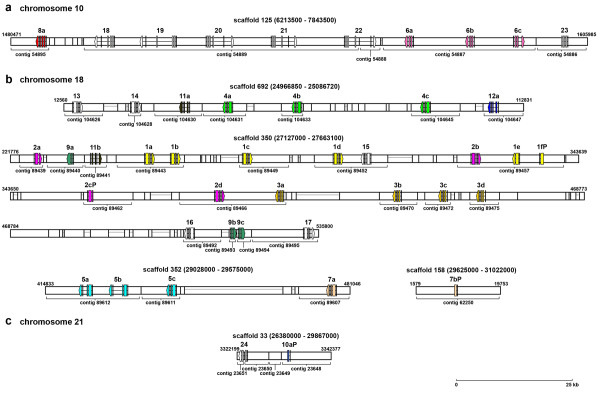
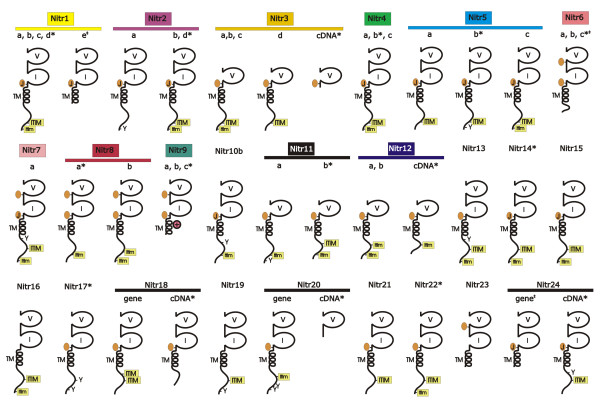
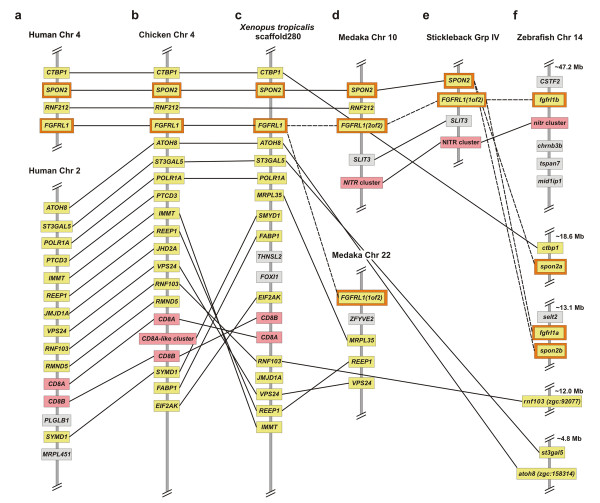
Forty-four NITR genes in medaka (Oryzias latipes) are located in three gene clusters on chromosomes 10, 18 and 21 and can be organized into 24 families including inhibitory and activating forms. The particularly large dataset acquired in medaka makes direct comparison possible to another complete dataset acquired in zebrafish in which NITRs are localized in two clusters on different chromosomes. The two largest medaka NITR gene clusters share conserved synteny with the two zebrafish NITR gene clusters. Shared synteny between NITRs and CD8A/CD8B is limited but consistent with a potential common ancestry.
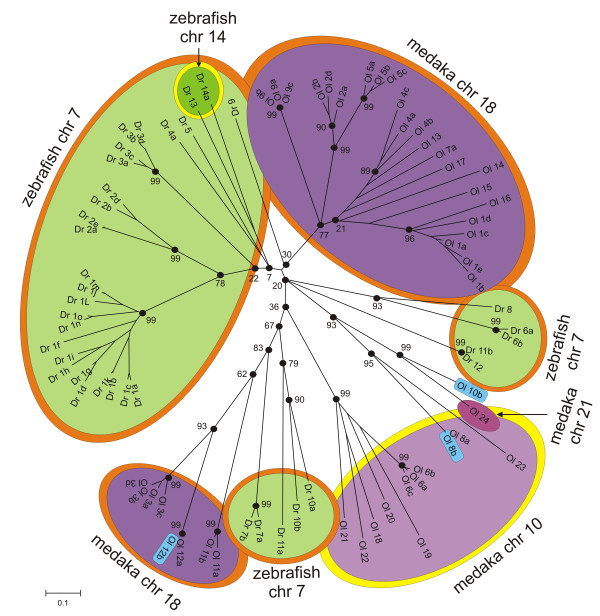
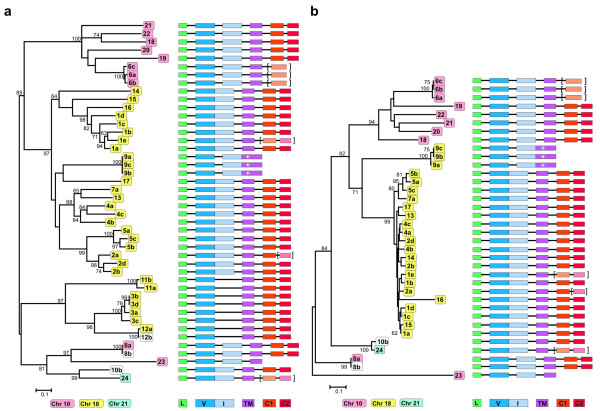
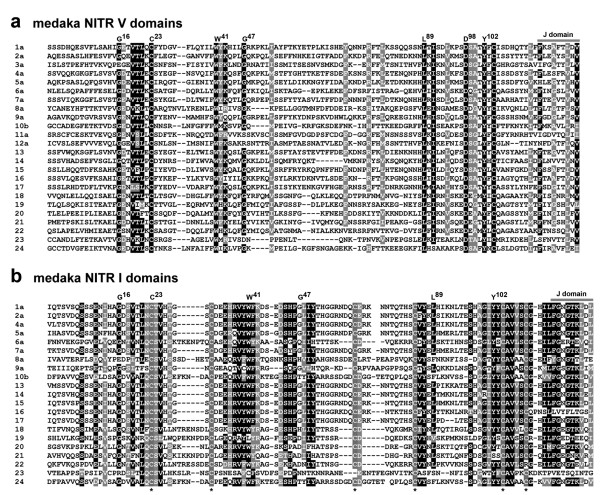
Comprehensive phylogenetic analyses between the complete datasets of NITRs from medaka and zebrafish indicate multiple species-specific expansions of different families of NITRs. The patterns of sequence variation among gene family members are consistent with recent birth-and-death events. Similar effects have been observed with mammalian immunoglobulin (Ig), T cell antigen receptor (TCR) and killer cell immunoglobulin-like receptor (KIR) genes. NITRs likely diverged along an independent pathway from that of the somatically rearranging antigen binding receptors but have undergone parallel evolution of V family diversity.
新型免疫型受体(NITR)基因是多样的多基因家族成员,存在于硬骨鱼中,编码含有一个或两个细胞外免疫球蛋白(Ig)结构域的I型跨膜蛋白。大多数NITR可归类为抑制性受体,其具有基于免疫受体酪氨酸的抑制基序(ITIM)。少数NITR可归类为激活受体,因其缺乏细胞质ITIM且跨膜结构域内存在带正电荷的残基,这使得它们能够与激活衔接蛋白结合。
青鳉(Oryzias latipes)中的44个NITR基因位于第10、18和21号染色体上的三个基因簇中,可分为24个家族,包括抑制性和激活形式。在青鳉中获得的特别大的数据集使得与在斑马鱼中获得的另一个完整数据集进行直接比较成为可能,在斑马鱼中NITR位于不同染色体上的两个基因簇中。青鳉两个最大的NITR基因簇与斑马鱼的两个NITR基因簇具有保守的同线性。NITR与CD8A/CD8B之间的共享同线性有限,但与潜在的共同祖先一致。
对青鳉和斑马鱼NITR完整数据集的全面系统发育分析表明,不同NITR家族存在多种物种特异性扩增。基因家族成员之间的序列变异模式与近期的生死事件一致。在哺乳动物免疫球蛋白(Ig)、T细胞抗原受体(TCR)和杀伤细胞免疫球蛋白样受体(KIR)基因中也观察到了类似的效应。NITR可能沿着与体细胞重排抗原结合受体不同的独立途径发生分化,但经历了V家族多样性的平行进化。