Ansari Kausar M, Rundhaug Joyce E, Fischer Susan M
Science Park-Research Division, The University of Texas M D Anderson Cancer Center, PO Box 389, Smithville, TX 78957, USA.
Mol Cancer Res. 2008 Jun;6(6):1003-16. doi: 10.1158/1541-7786.MCR-07-2144.
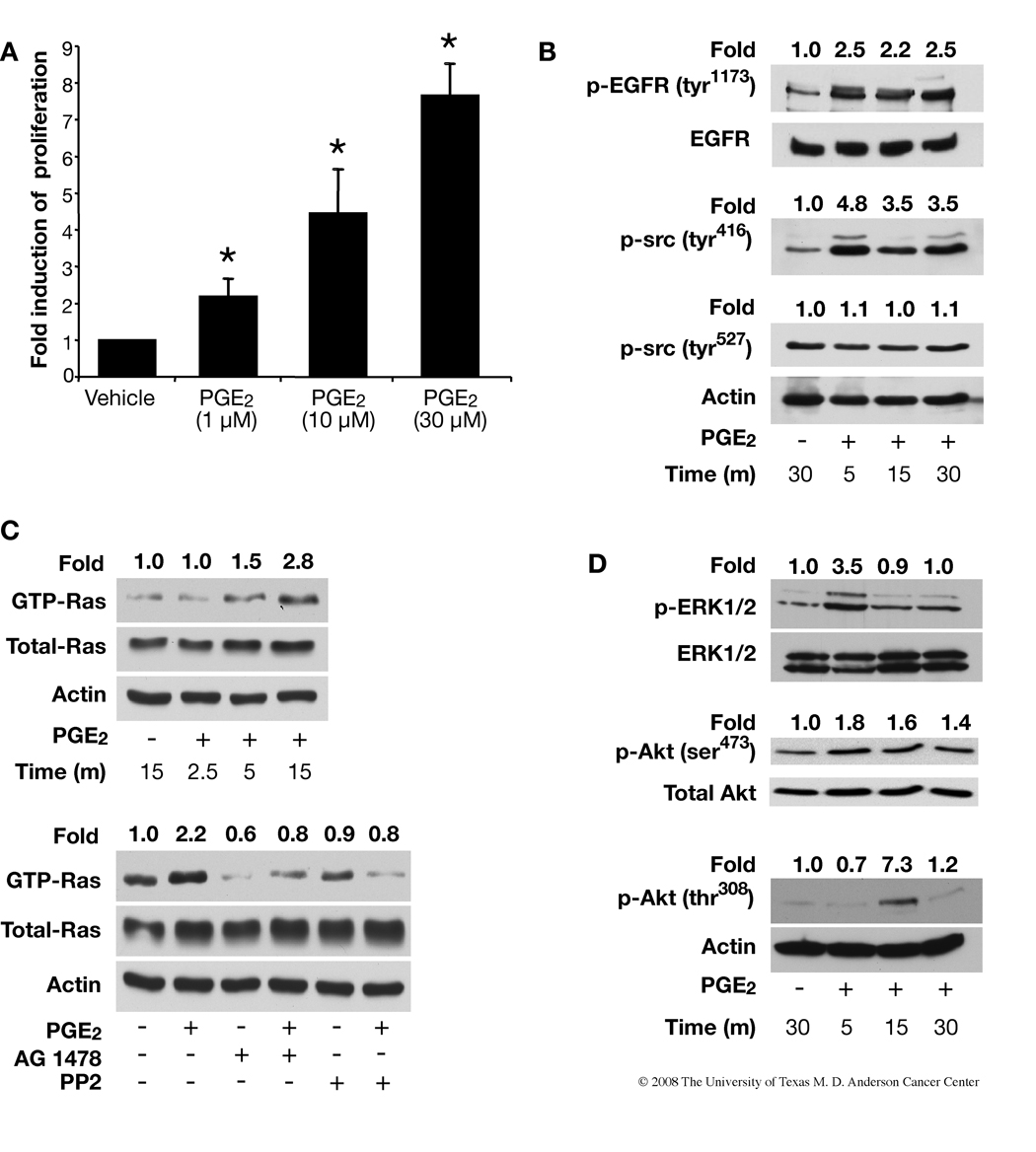
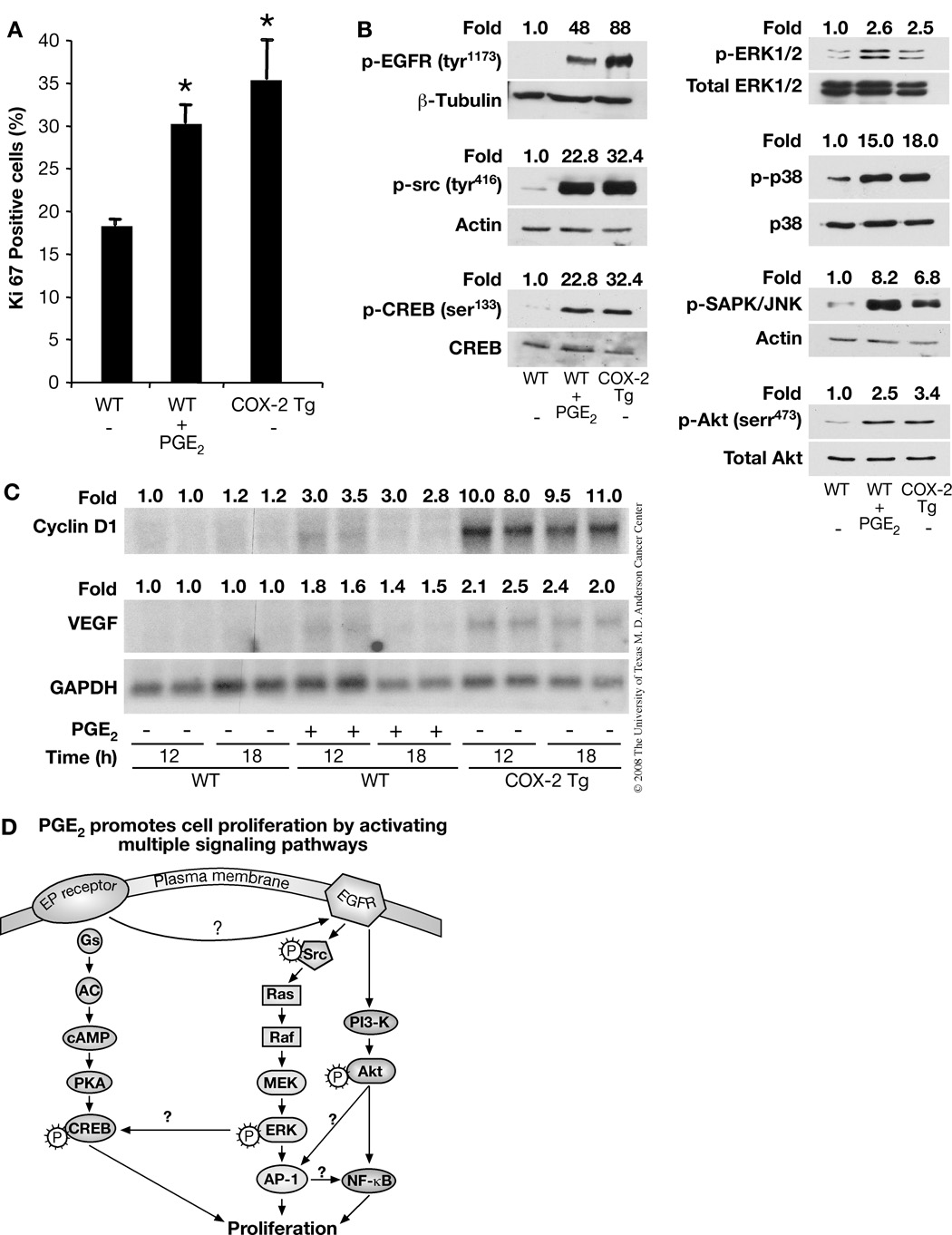
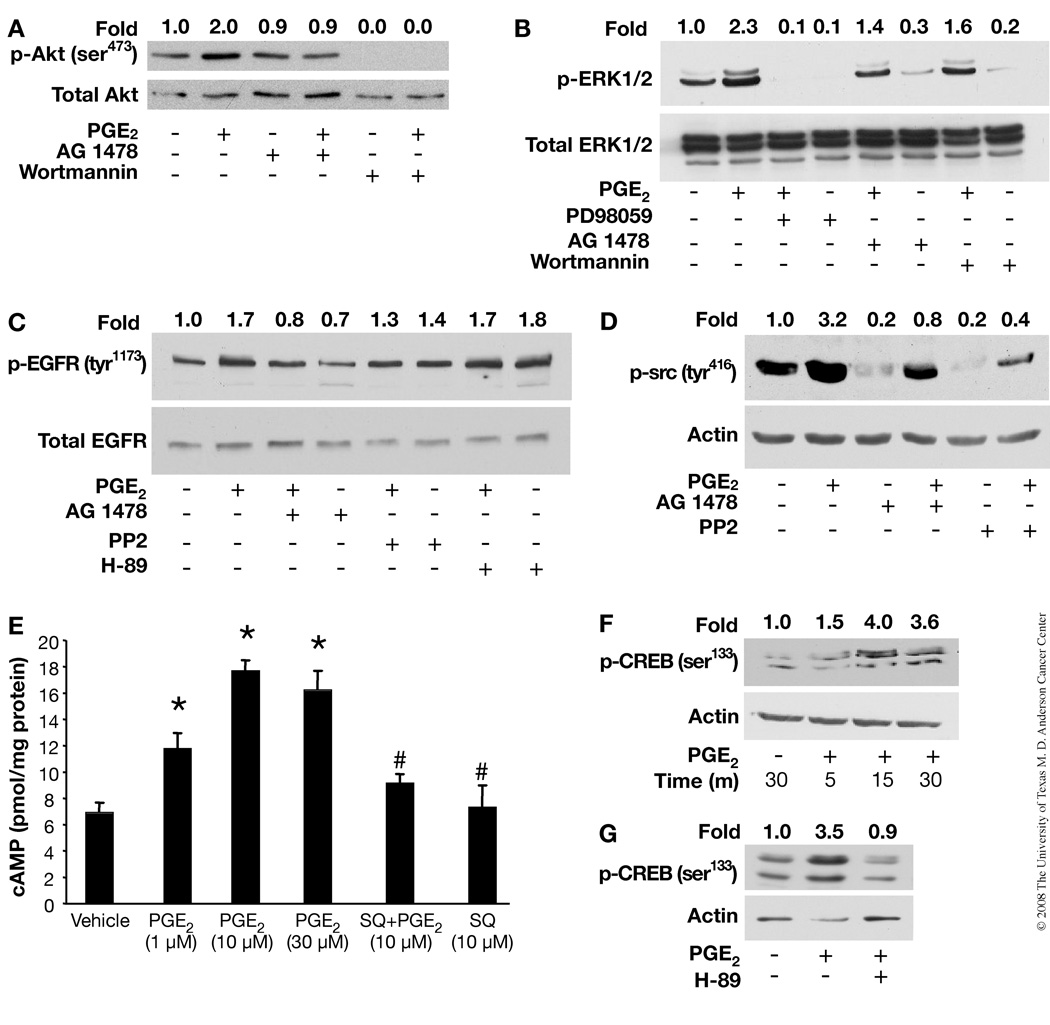
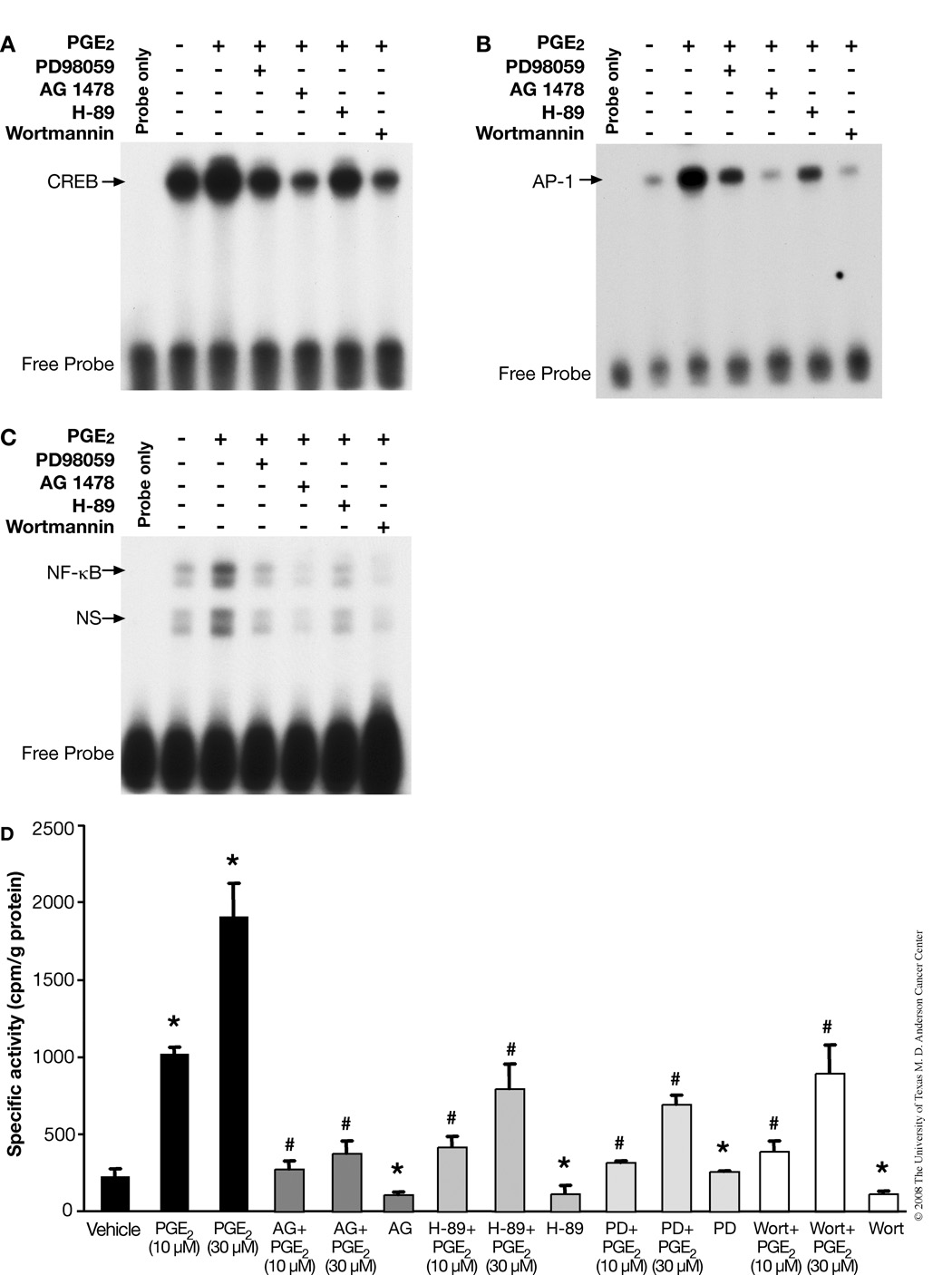
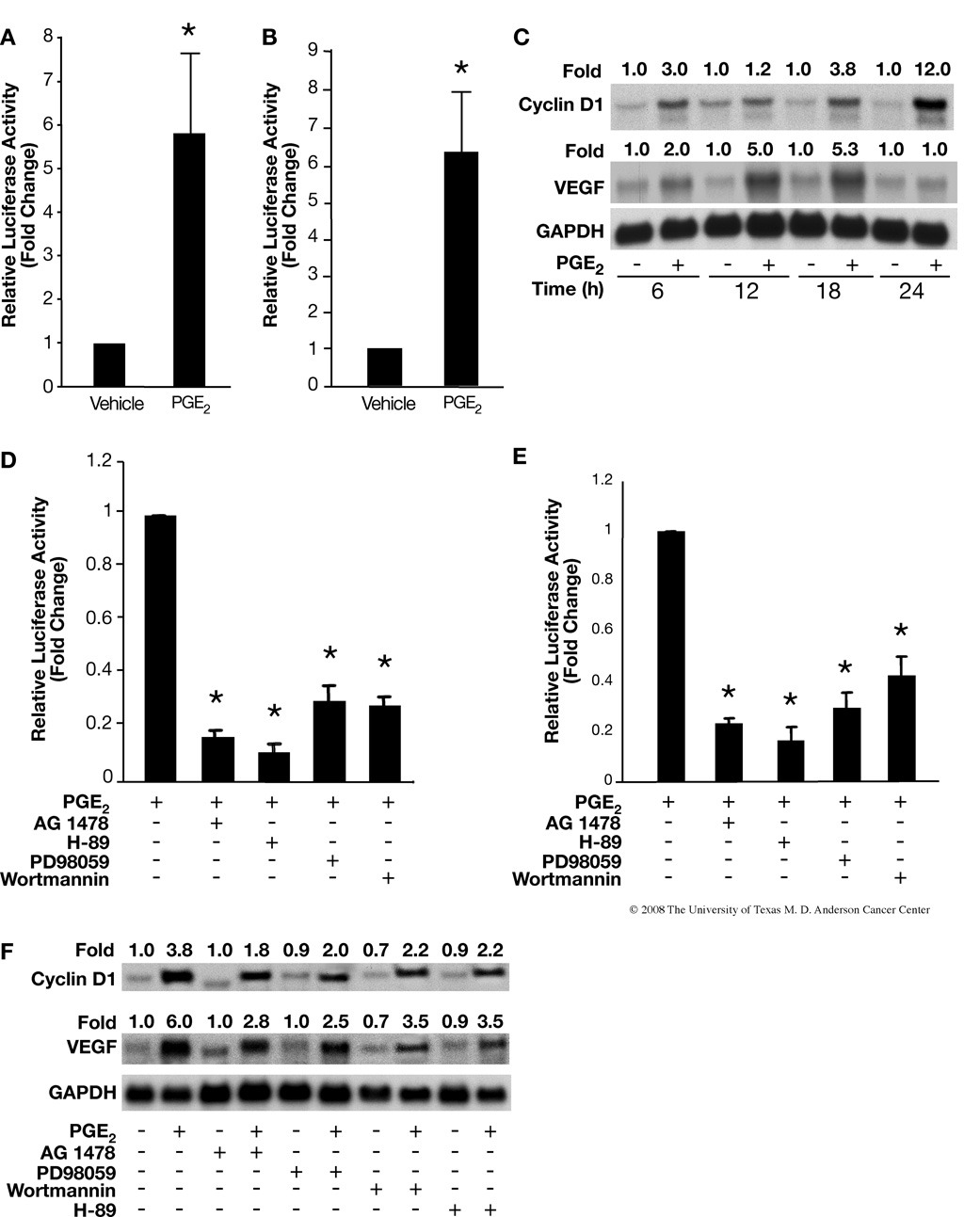
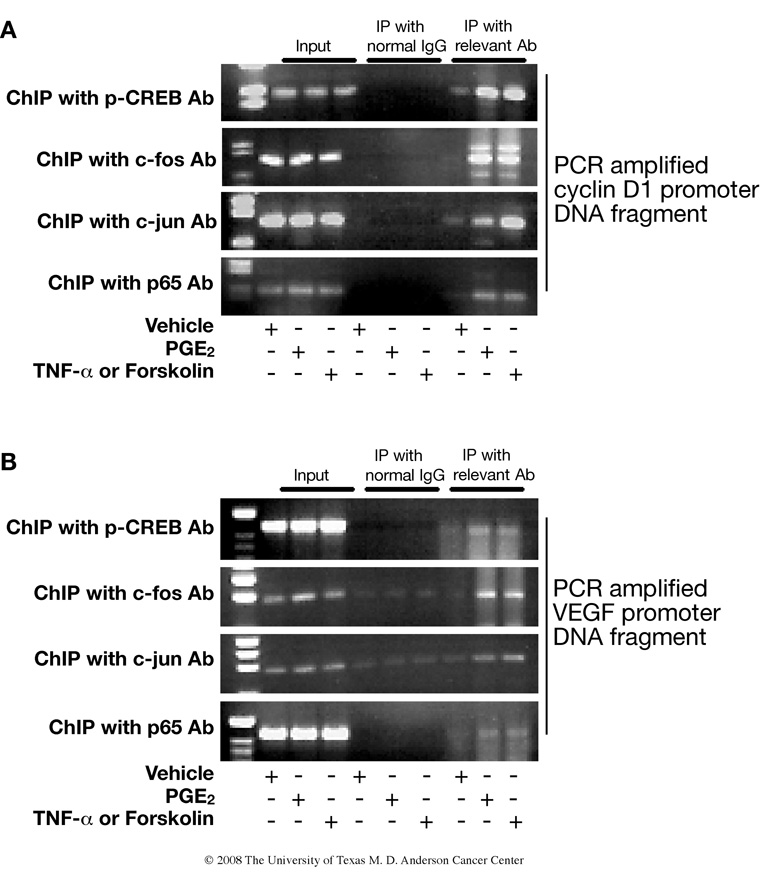
Although prostaglandin E2 (PGE2) has been shown by pharmacologic and genetic studies to be important in skin cancer, the molecular mechanism(s) by which it contributes to tumor growth is not well understood. In this study, we investigated the mechanisms by which PGE2 stimulates murine keratinocyte proliferation using in vitro and in vivo models. In primary mouse keratinocyte cultures, PGE2 activated the epidermal growth factor receptor (EGFR) and its downstream signaling pathways as well as increased cyclic AMP (cAMP) production and activated the cAMP response element binding protein (CREB). EGFR activation was not significantly inhibited by pretreatment with a c-src inhibitor (PP2), nor by a protein kinase A inhibitor (H-89). However, PGE2-stimulated extracellularly regulated kinase 1/2 (ERK1/2) activation was completely blocked by EGFR, ERK1/2, and phosphatidylinositol 3-kinase (PI3K) pathway inhibitors. In addition, these inhibitors attenuated the PGE2-induced proliferation, nuclear factor-kappa B, activator protein-1 (AP-1), and CREB binding to the promoter regions of the cyclin D1 and vascular endothelial growth factor (VEGF) genes and expression of cyclin D1 and VEGF in primary mouse keratinocytes. Similarly, in vivo, we found that WT mice treated with PGE2 and untreated cyclooxygenase-2-overexpressing transgenic mice had higher levels of cell proliferation and expression of cyclin D1 and VEGF, as well as higher levels of activated EGFR, nuclear factor-kappa B, AP-1, and CREB, than vehicle-treated WT mice. Our findings provide evidence for a link between cyclooxygenase-2 overexpression and EGFR-, ERK-, PI3K-, cAMP-mediated cell proliferation, and the tumor-promoting activity of PGE2 in mouse skin.
尽管药理学和遗传学研究表明前列腺素E2(PGE2)在皮肤癌中很重要,但其促进肿瘤生长的分子机制尚未完全明确。在本研究中,我们使用体外和体内模型研究了PGE2刺激小鼠角质形成细胞增殖的机制。在原代小鼠角质形成细胞培养物中,PGE2激活了表皮生长因子受体(EGFR)及其下游信号通路,同时增加了环磷酸腺苷(cAMP)的产生并激活了cAMP反应元件结合蛋白(CREB)。用c-src抑制剂(PP2)或蛋白激酶A抑制剂(H-89)预处理并不能显著抑制EGFR的激活。然而,EGFR、细胞外调节蛋白激酶1/2(ERK1/2)和磷脂酰肌醇3-激酶(PI3K)通路抑制剂可完全阻断PGE2刺激的ERK1/2激活。此外,这些抑制剂减弱了PGE2诱导的增殖、核因子-κB、活化蛋白-1(AP-1)以及CREB与细胞周期蛋白D1和血管内皮生长因子(VEGF)基因启动子区域的结合,以及原代小鼠角质形成细胞中细胞周期蛋白D1和VEGF的表达。同样,在体内,我们发现用PGE2处理的野生型小鼠和未处理的过表达环氧化酶-2的转基因小鼠,与用载体处理的野生型小鼠相比,具有更高水平的细胞增殖、细胞周期蛋白D1和VEGF的表达,以及更高水平的活化EGFR、核因子-κB、AP-1和CREB。我们的研究结果为环氧化酶-2过表达与EGFR、ERK、PI3K、cAMP介导的细胞增殖之间的联系,以及PGE2在小鼠皮肤中的促肿瘤活性提供了证据。