Lee Nancy, Robitz Rachel, Zurbrugg Rebekah J, Karpman Adam M, Mahler Ashley M, Cronier Samantha A, Vesey Rachel, Spearry Rachel P, Zolotukhin Sergei, Maclennan A John
Department of Molecular and Cellular Physiology, University of Cincinnati, Cincinnati, OH 45267-0576, USA.
Eur J Neurosci. 2008 Jun;27(11):2830-7. doi: 10.1111/j.1460-9568.2008.06298.x.
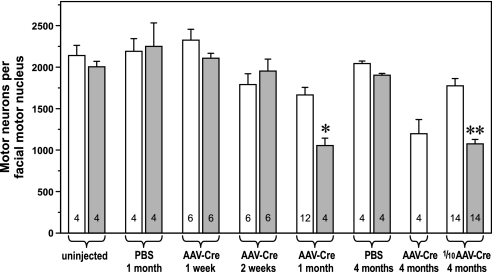
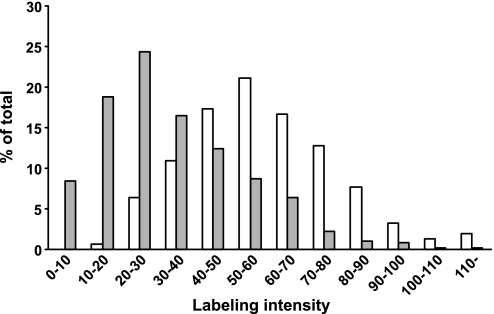
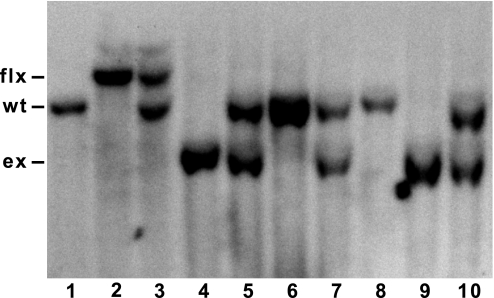
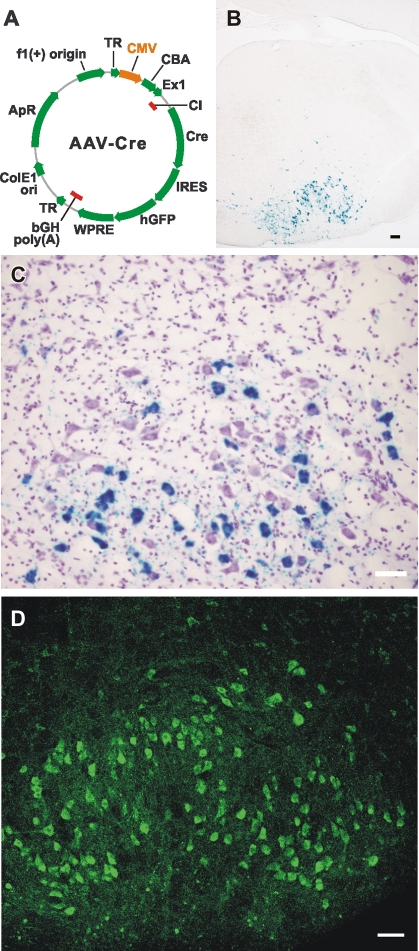
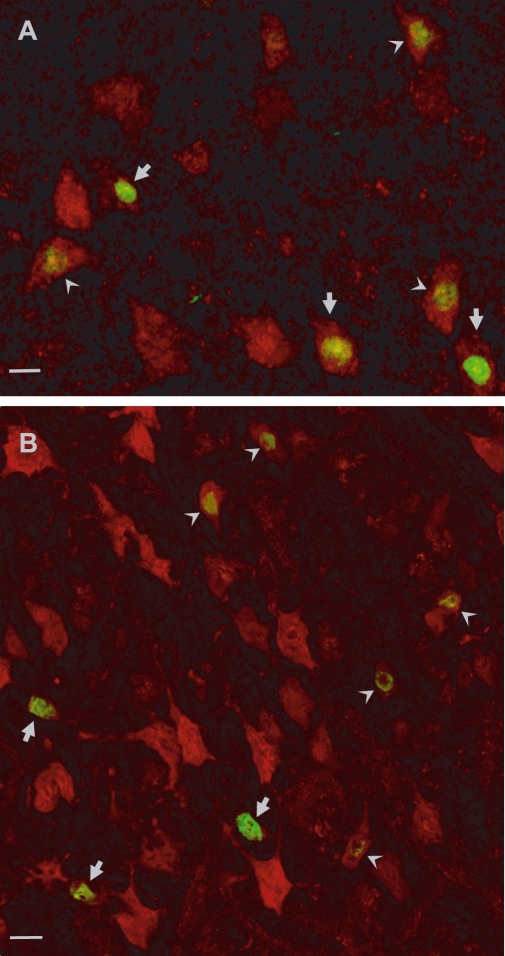
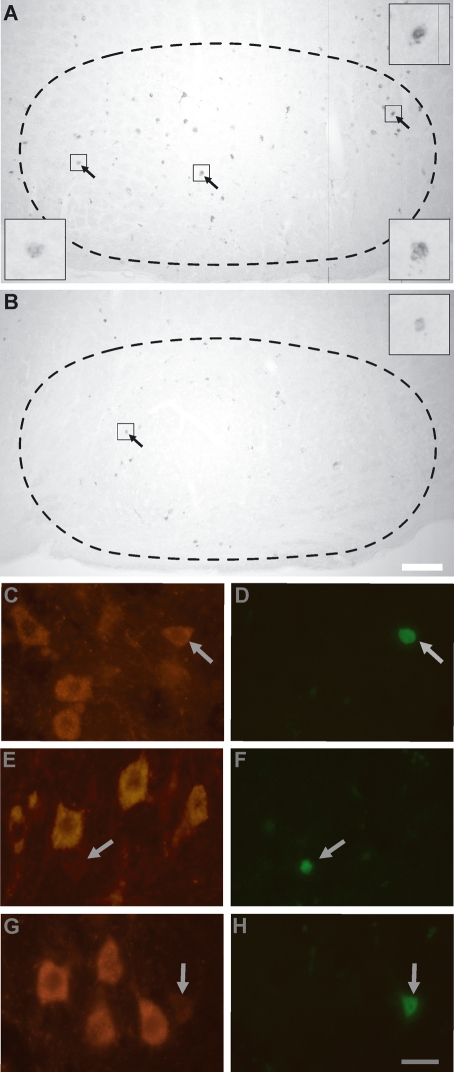
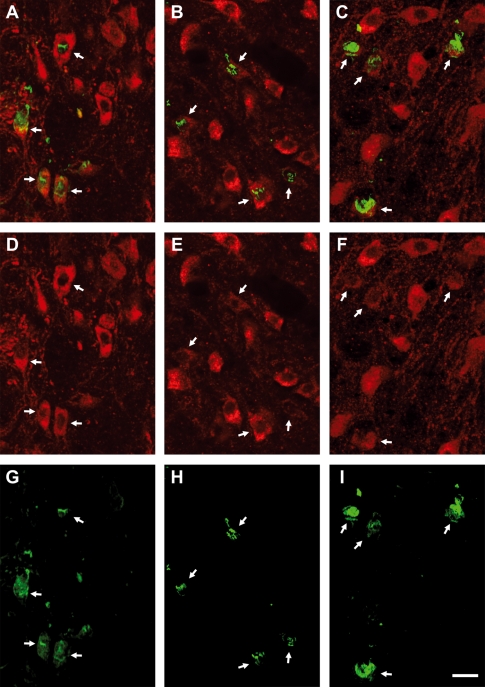
Indirect evidence suggests that endogenous ciliary neurotrophic factor (CNTF) receptor signaling can promote motor neuron (MN) survival in the adult. If so, proper targeting of this signaling may selectively counteract the effects of adult MN diseases. However, direct evidence for CNTF receptor involvement in adult MN survival is lacking, presumably because the unconditional blockade of the mouse CNTF receptor in vivo [through genetic disruption of the essential CNTF receptor alpha (CNTFRalpha) gene] leads to uniform perinatal death of the mice. To overcome this limitation, we have developed a method to selectively disrupt CNTF receptor function in a targeted subset of adult MNs that are not required for survival. A 'floxed CNTFRalpha' mouse line was generated and characterized. In addition, an adeno-associated virus (AAV) vector that drives Cre recombinase (Cre) expression was constructed and shown, with reporter mouse lines, to selectively excise floxed genes in facial MNs following its stereotaxic injection into the facial motor nucleus. Adult floxed CNTFRalpha mice were then injected with the AAV-Cre vector to excise the CNTFRalpha gene in the targeted MNs. The resulting data indicate that adult CNTF receptor signaling, likely by the MNs themselves, can play an essential role in MN survival. The data further indicate that this role is independent of any developmental contributions CNTF receptor signaling makes to MN survival or function.
间接证据表明,内源性睫状神经营养因子(CNTF)受体信号传导可促进成年动物运动神经元(MN)的存活。如果是这样,对该信号传导进行适当靶向可能会选择性地抵消成年MN疾病的影响。然而,缺乏CNTF受体参与成年MN存活的直接证据,推测是因为在体内无条件阻断小鼠CNTF受体[通过对必需的CNTF受体α(CNTFRα)基因进行基因破坏]会导致小鼠围产期全部死亡。为了克服这一限制,我们开发了一种方法,可在成年MN的一个不需要用于存活的靶向亚群中选择性破坏CNTF受体功能。构建并鉴定了一个“floxed CNTFRα”小鼠品系。此外,构建了一种驱动Cre重组酶(Cre)表达的腺相关病毒(AAV)载体,并与报告基因小鼠品系一起表明,将其立体定向注射到面神经运动核后,可在面部MN中选择性切除floxed基因。然后给成年floxed CNTFRα小鼠注射AAV-Cre载体,以在靶向MN中切除CNTFRα基因。所得数据表明,成年CNTF受体信号传导,可能是由MN自身介导的,可在MN存活中发挥重要作用。数据进一步表明,这一作用独立于CNTF受体信号传导对MN存活或功能所做的任何发育贡献。