Conticello Silvestro G
Core Research Laboratory, Istituto Toscano Tumori, Florence, Via Cosimo il Vecchio 2, 50139 Firenze, Italy.
Genome Biol. 2008;9(6):229. doi: 10.1186/gb-2008-9-6-229. Epub 2008 Jun 17.
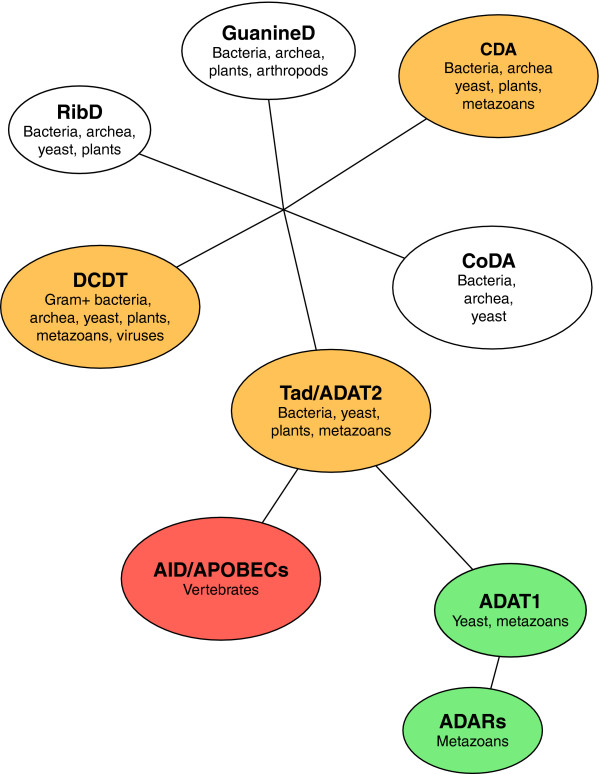
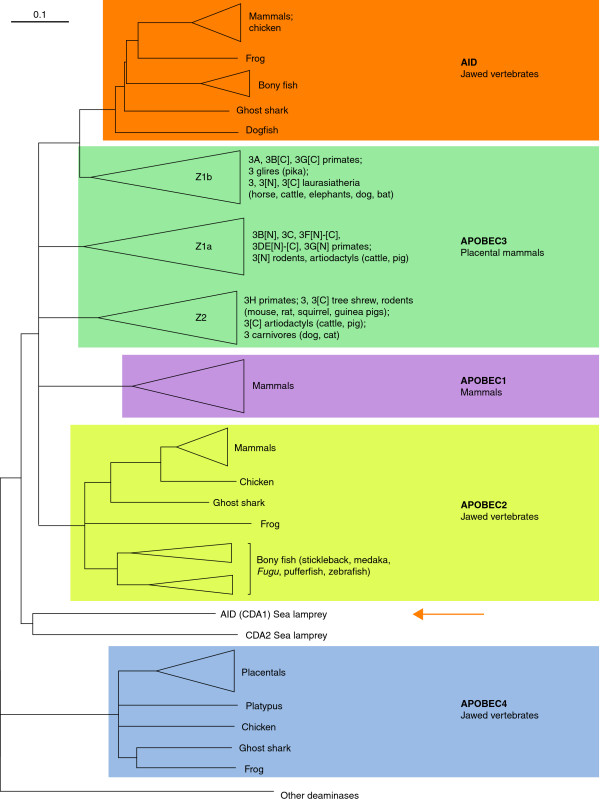
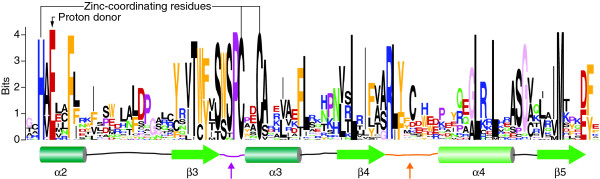
The AID/APOBECs, a group of cytidine deaminases, represent a somewhat unusual protein family that can insert mutations in DNA and RNA as a result of their ability to deaminate cytidine to uridine. The ancestral AID/APOBECs originated from a branch of the zinc-dependent deaminase superfamily at the beginning of the vertebrate radiation. Other members of the family have arisen in mammals and present a history of complex gene duplications and positive selection. All AID/APOBECs have a characteristic zinc-coordination motif, which forms the core of the catalytic site. The crystal structure of human APOBEC2 shows remarkable similarities to that of the bacterial tRNA-editing enzyme TadA, which suggests a conserved mechanism by which polynucleotides are recognized and deaminated. The AID/APOBECs seem to have diverse roles. AID and the APOBEC3s are DNA mutators, acting in antigen-driven antibody diversification processes and in an innate defense system against retroviruses, respectively. APOBEC1 edits the mRNA for apolipoprotein B, a protein involved in lipid transport. A detailed understanding of the biological roles of the family is still some way off, however, and the functions of some members of the family are completely unknown. Given their ability to mutate DNA, a role for the AID/APOBECs in the onset of cancer has been proposed.
AID/APOBEC家族是一组胞苷脱氨酶,代表了一个有点特别的蛋白质家族,由于它们能将胞苷脱氨为尿苷,从而可在DNA和RNA中引入突变。AID/APOBEC家族的祖先起源于脊椎动物辐射初期锌依赖性脱氨酶超家族的一个分支。该家族的其他成员出现在哺乳动物中,呈现出复杂的基因复制和正选择的历史。所有AID/APOBEC都有一个特征性的锌配位基序,它构成了催化位点的核心。人APOBEC2的晶体结构与细菌tRNA编辑酶TadA的晶体结构有显著相似性,这表明存在一种保守机制,通过该机制多核苷酸被识别并脱氨。AID/APOBEC家族似乎具有多种作用。AID和APOBEC3家族成员是DNA突变诱导因子,分别在抗原驱动的抗体多样化过程和针对逆转录病毒的先天防御系统中发挥作用。APOBEC1编辑载脂蛋白B的mRNA,载脂蛋白B是一种参与脂质运输的蛋白质。然而,对该家族生物学作用的详细了解仍有很长的路要走,而且该家族一些成员的功能完全未知。鉴于它们具有使DNA发生突变的能力,有人提出AID/APOBEC家族在癌症发生过程中发挥作用。