Faigle Marion, Seessle Jessica, Zug Stephanie, El Kasmi Karim C, Eltzschig Holger K
Department of Anesthesiology and Intensive Care Medicine, Tübingen University Hospital, Tübingen, Germany.
PLoS One. 2008 Jul 30;3(7):e2801. doi: 10.1371/journal.pone.0002801.
Extracellular ATP is an important signaling molecule for vascular adaptation to limited oxygen availability (hypoxia). Here, we pursued the contribution of vascular endothelia to extracellular ATP release under hypoxic conditions.
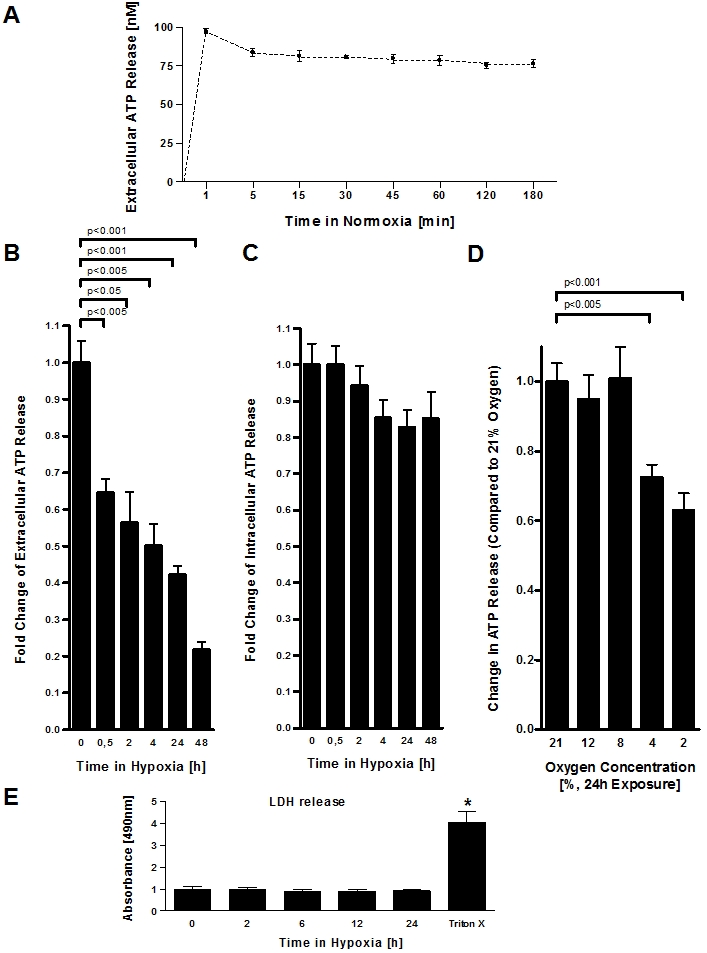
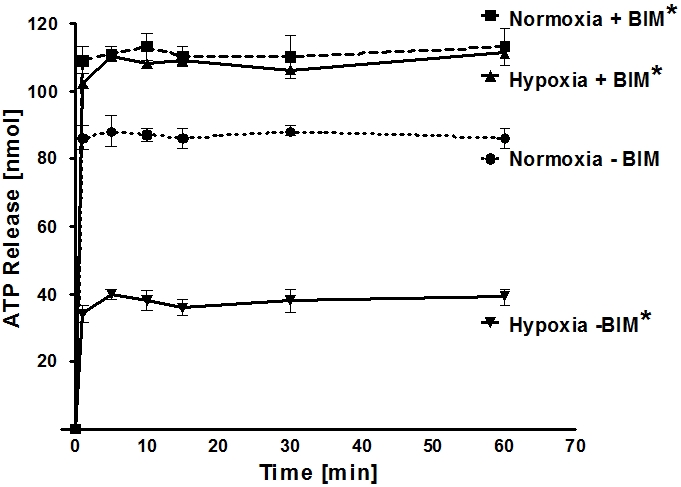
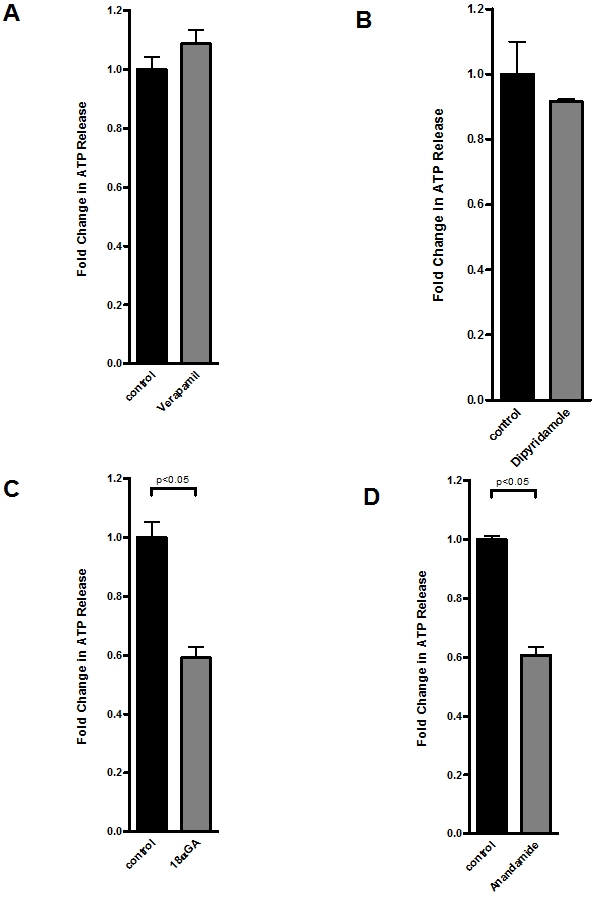
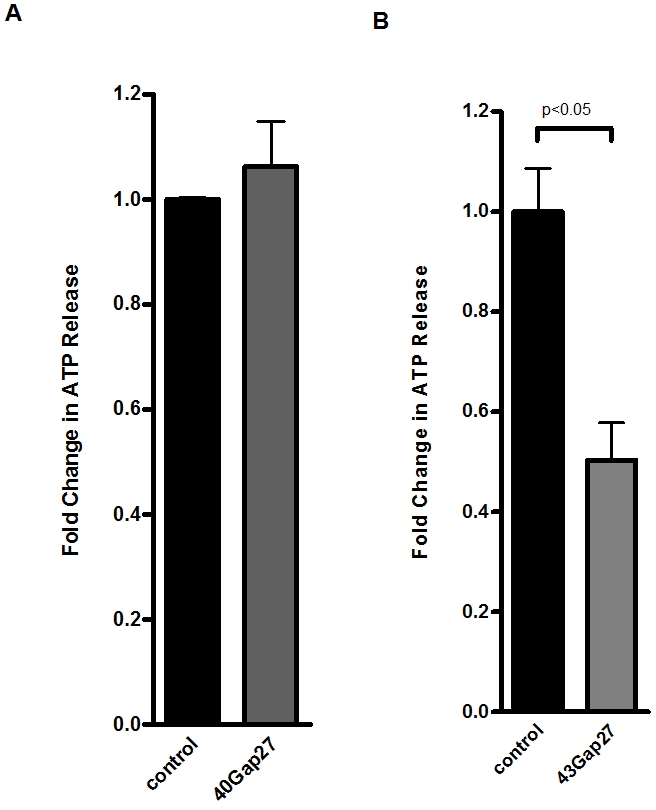
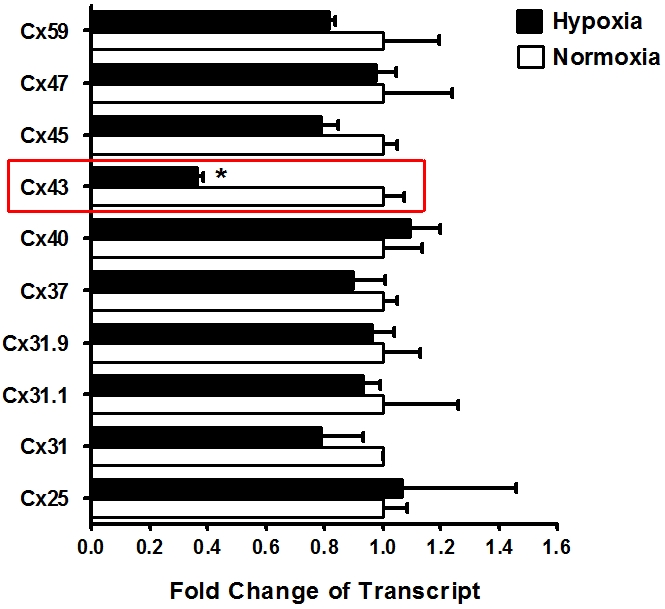
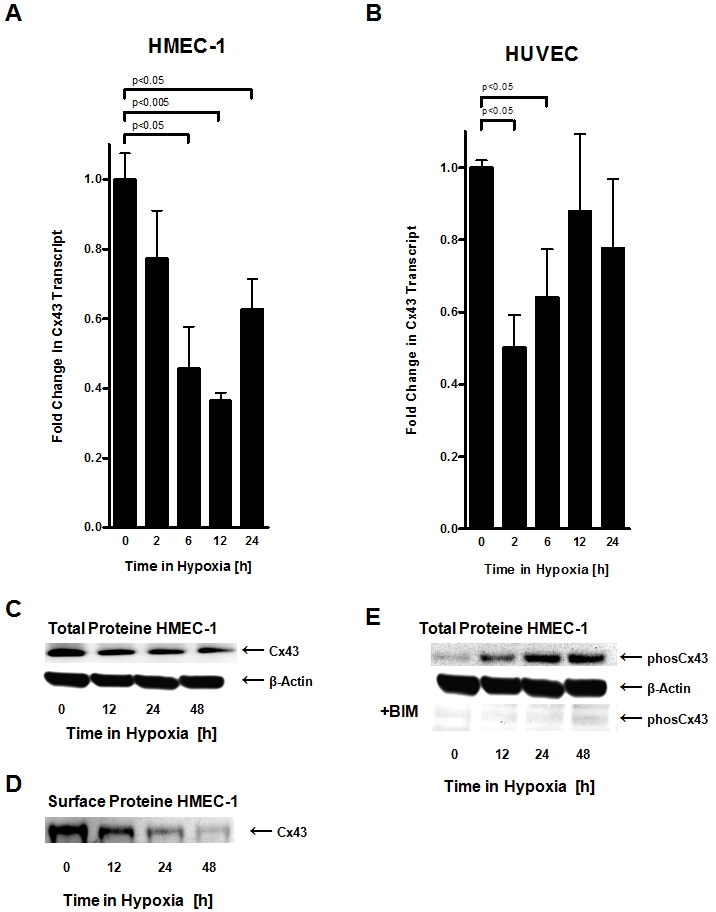
METHODOLOGY, PRINCIPAL FINDINGS: We gained first insight from studying ATP release from endothelia (HMEC-1) pre-exposed to hypoxia. Surprisingly, we found that ATP release was significantly attenuated following hypoxia exposure (2% oxygen, 22+/-3% after 48 h). In contrast, intracellular ATP was unchanged. Similarly, lactate-dehydrogenase release into the supernatants was similar between normoxic or hypoxic endothelia, suggesting that differences in lytic ATP release between normoxia or hypoxia are minimal. Next, we used pharmacological strategies to study potential mechanisms for endothelial-dependent ATP release (eg, verapamil, dipyridamole, 18-alpha-glycyrrhetinic acid, anandamide, connexin-mimetic peptides). These studies revealed that endothelial ATP release occurs--at least in part--through connexin 43 (Cx43) hemichannels. A real-time RT-PCR screen of endothelial connexin expression showed selective repression of Cx43 transcript and additional studies confirmed time-dependent Cx43 mRNA, total and surface protein repression during hypoxia. In addition, hypoxia resulted in Cx43-serine368 phosphorylation, which is known to switch Cx43 hemi-channels from an open to a closed state.
CONCLUSIONS/SIGNIFICANCE: Taken together, these studies implicate endothelial Cx43 in hypoxia-associated repression of endothelial ATP release.
细胞外ATP是血管适应有限氧供应(缺氧)的重要信号分子。在此,我们探究了缺氧条件下血管内皮细胞对细胞外ATP释放的作用。
方法、主要发现:我们通过研究预先暴露于缺氧环境的内皮细胞(HMEC-1)释放ATP,获得了初步认识。令人惊讶的是,我们发现缺氧暴露后(2%氧气,48小时后为22±3%)ATP释放显著减弱。相比之下,细胞内ATP没有变化。同样,常氧或缺氧内皮细胞上清液中乳酸脱氢酶的释放相似,这表明常氧或缺氧条件下溶解性ATP释放的差异很小。接下来,我们采用药理学策略研究内皮依赖性ATP释放的潜在机制(例如维拉帕米、双嘧达莫、18-α-甘草次酸、花生四烯乙醇胺、连接蛋白模拟肽)。这些研究表明,内皮细胞ATP释放至少部分通过连接蛋白43(Cx43)半通道发生。对内皮连接蛋白表达的实时RT-PCR筛选显示Cx43转录本受到选择性抑制,进一步研究证实缺氧期间Cx43 mRNA、总蛋白和表面蛋白呈时间依赖性抑制。此外,缺氧导致Cx43-丝氨酸368磷酸化,已知这会使Cx43半通道从开放状态转变为关闭状态。
结论/意义:综上所述,这些研究表明内皮Cx43参与了缺氧相关的内皮ATP释放抑制。