Lurie Ithai Z, Dunlop Dorothy D, Manheim Larry M
US Department of the Treasury, Washington, DC, USA.
Arthritis Rheum. 2008 Aug;58(8):2236-40. doi: 10.1002/art.23731.
To provide estimates of the growth in out-of-pocket (OOP) medical expenditures for persons with arthritis.
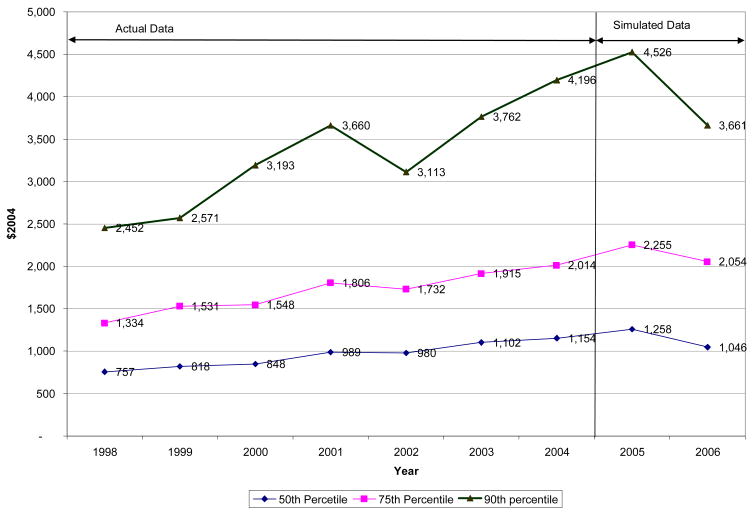
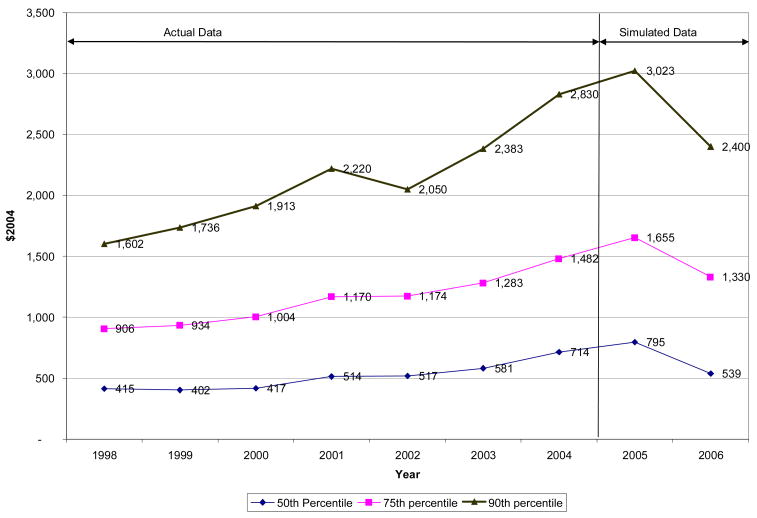
OOP medical expenditures were estimated for 1998-2004 based on 7 panels of the Medical Expenditures Panel Survey, which provide nationally representative data. A simple simulation then extrapolated the data through 2006, for which the potential effects of Medicare Part D drug coverage were computed.
Median total OOP expenditures for persons with arthritis showed an increase of 52.4% between 1998 and 2004 (7.3% annually beyond inflation). Median OOP expenditures for prescription medication showed larger growth, at 72.0%. Medicare Part D was predicted to lower both total and prescription OOP expenditures and return them close to 2003 levels. Simulation limitations included exclusive use of the standard Medicare Part D benefit structure and the assumption of stable prescribing trends during this period.
High prescription drug expenditures are likely to continue to be an issue, both for individuals faced with increasing OOP burden and for policy makers faced with increasing budgetary shortfalls to fund increasing Medicare expenses.
估算关节炎患者自付医疗费用的增长情况。
基于医疗支出小组调查的7个面板数据估算了1998 - 2004年的自付医疗费用,这些数据具有全国代表性。然后通过简单模拟将数据外推至2006年,并计算了医疗保险D部分药品覆盖的潜在影响。
关节炎患者的自付总费用中位数在1998年至2004年间增长了52.4%(扣除通胀因素后每年增长7.3%)。处方药的自付费用中位数增长幅度更大,为72.0%。预计医疗保险D部分将降低自付总费用和处方药费用,并使其接近2003年的水平。模拟的局限性包括仅使用标准的医疗保险D部分福利结构以及在此期间假设处方趋势稳定。
高处方药费用可能继续成为一个问题,对于面临自付负担增加的个人以及面临预算短缺以资助不断增加的医疗保险费用的政策制定者来说都是如此。