Onodera K, Yamaguchi N, Kuchino T, Aoi Y
Proc Natl Acad Sci U S A. 1976 Nov;73(11):4090-4. doi: 10.1073/pnas.73.11.4090.
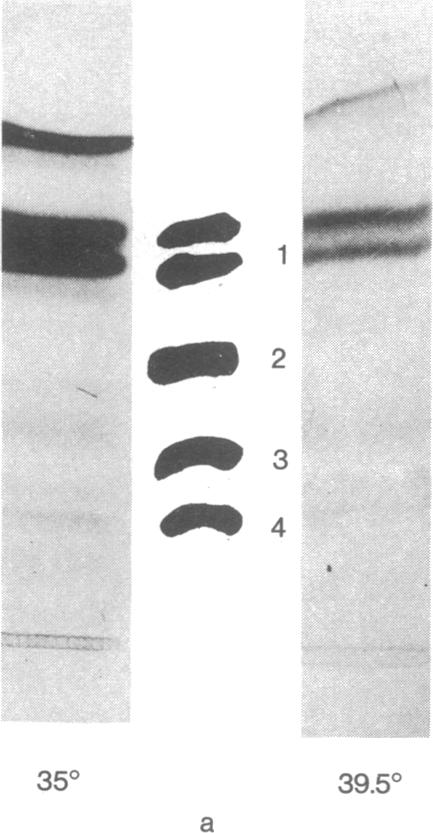
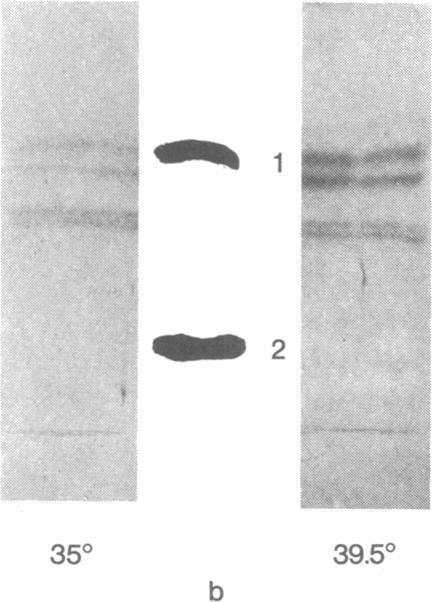
Mouse cells transformed by a temperature-sensitive mutant of simian virus 40 belonging to complementation group A lost their ability to regulate cell growth when grown at the permissive temperature (35 degrees) but showed the low saturation density of cell growth at the restrictive temperature (39.5 degrees) that is characteristic of normal cells in vitro. Biochemical analysis of the membranes of cells grown under the restrictive and the permissive conditions demonstrated no qualitative temperature-dependent differences either in neutral glycolipids or in acidic glycolipids of the cells. Plasma membrane glycoproteins labeled with radioactive glucosamine showed significantly different patterns on both polyacrylamide gel electrophoresis and electrofocusing. When the levels of glycoprotein glycosyltransferases of the cells were examined, the level of sialyltransferase (CMP-N-acetylneuraminytransferase,EC 2.4.99.1) of the cells grown at the restrictive temperature was low compared with that of cells grown at the permissive temperature. Our results indicate that the level of sialyltransferase is under the control of the gene A function of simian virus 40 and consequently is related to alterations in the cell surface glycoproteins.
被属于A互补组的猴病毒40温度敏感突变体转化的小鼠细胞,在允许温度(35摄氏度)下生长时丧失了调节细胞生长的能力,但在限制温度(39.5摄氏度)下呈现出体外正常细胞特有的低细胞生长饱和密度。对在限制条件和允许条件下生长的细胞的膜进行生化分析表明,细胞的中性糖脂或酸性糖脂在质量上没有温度依赖性差异。用放射性葡糖胺标记的质膜糖蛋白在聚丙烯酰胺凝胶电泳和电聚焦上都显示出明显不同的模式。当检测细胞糖蛋白糖基转移酶的水平时,与在允许温度下生长的细胞相比,在限制温度下生长的细胞的唾液酸转移酶(CMP-N-乙酰神经氨酸转移酶,EC 2.4.99.1)水平较低。我们的结果表明,唾液酸转移酶的水平受猴病毒40基因A功能的控制,因此与细胞表面糖蛋白的改变有关。