Veracini Laurence, Simon Valérie, Richard Véronique, Schraven Burkhart, Horejsi Vaclav, Roche Serge, Benistant Christine
Centre de Recherche en Biochimie Macromoléculare, Centre National de la Recherche Scientifique UMR5237, Universities of Montpellier I and II, 34293 Montpellier, France.
J Cell Biol. 2008 Aug 11;182(3):603-14. doi: 10.1083/jcb.200705102.
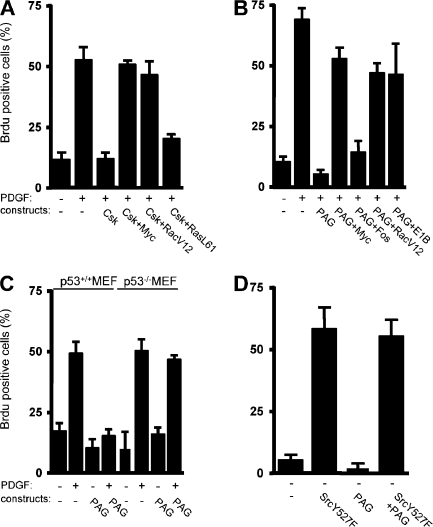
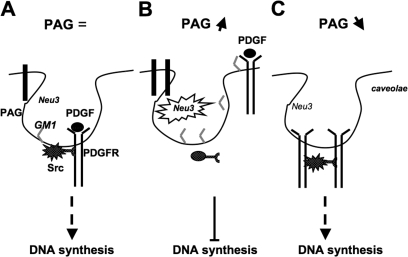
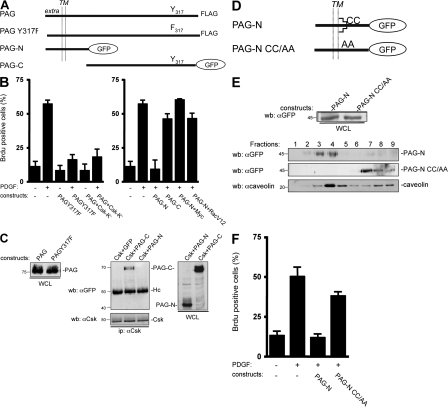
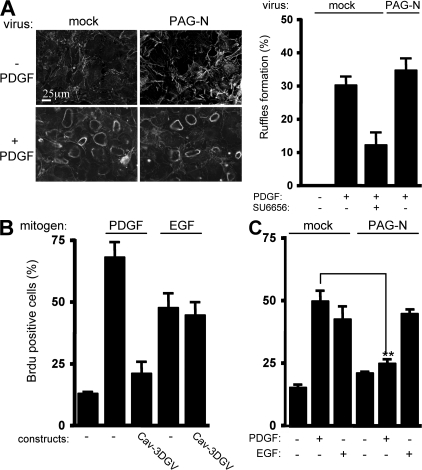
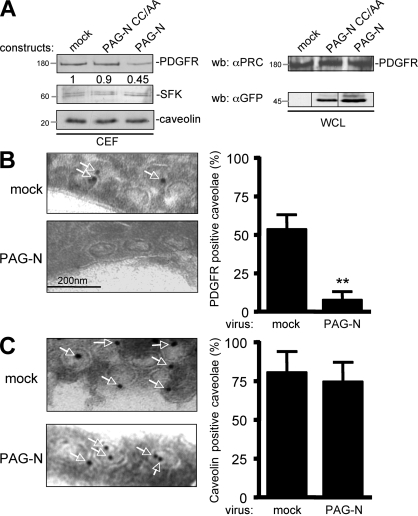
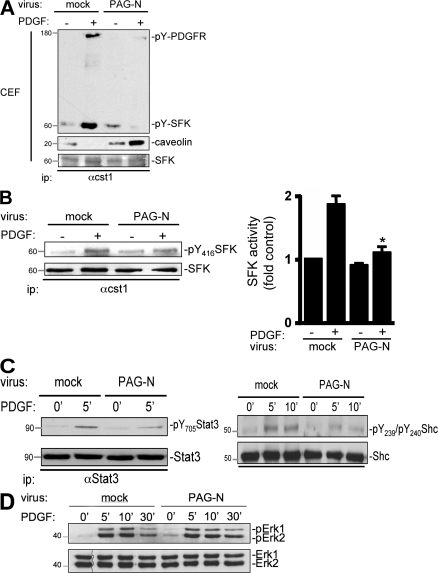
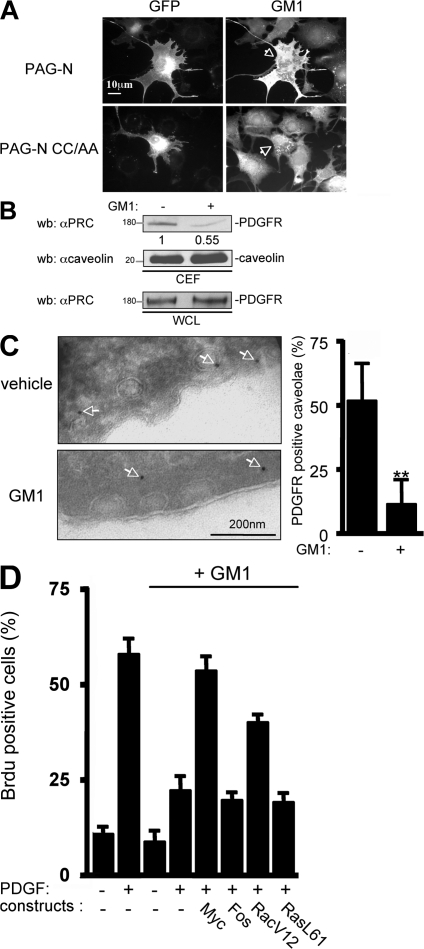
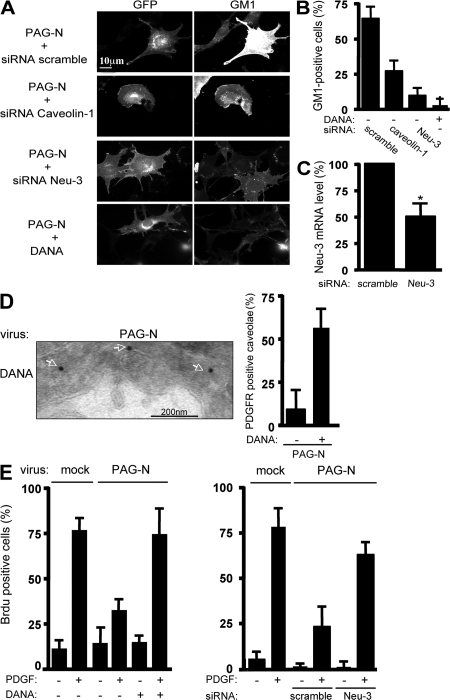
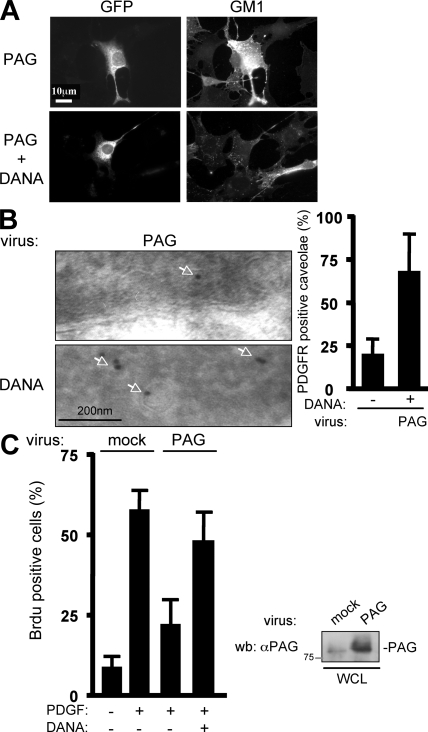
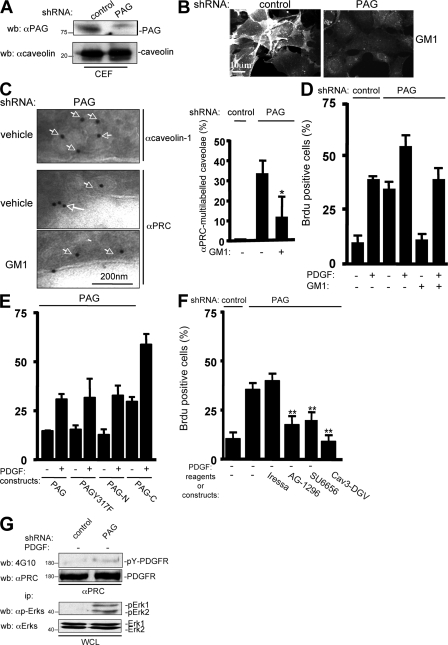
Spatial regulation is an important feature of signal specificity elicited by cytoplasmic tyrosine kinases of the Src family (SRC family protein tyrosine kinases [SFK]). Cholesterol-enriched membrane domains, such as caveolae, regulate association of SFK with the platelet-derived growth factor receptor (PDGFR), which is needed for kinase activation and mitogenic signaling. PAG, a ubiquitously expressed member of the transmembrane adaptor protein family, is known to negatively regulate SFK signaling though binding to Csk. We report that PAG modulates PDGFR levels in caveolae and SFK mitogenic signaling through a Csk-independent mechanism. Regulation of SFK mitogenic activity by PAG requires the first N-terminal 97 aa (PAG-N), which include the extracellular and transmembrane domains, palmitoylation sites, and a short cytoplasmic sequence. We also show that PAG-N increases ganglioside GM1 levels at the cell surface and, thus, displaces PDGFR from caveolae, a process that requires the ganglioside-specific sialidase Neu-3. In conclusion, PAG regulates PDGFR membrane partitioning and SFK mitogenic signaling by modulating GM1 levels within caveolae independently from Csk.
空间调控是Src家族(Src家族蛋白酪氨酸激酶[SFK])的细胞质酪氨酸激酶引发的信号特异性的一个重要特征。富含胆固醇的膜结构域,如小窝,可调节SFK与血小板衍生生长因子受体(PDGFR)的结合,而这是激酶激活和有丝分裂信号传导所必需的。PAG是跨膜衔接蛋白家族中广泛表达的成员,已知其通过与Csk结合来负向调节SFK信号传导。我们报告称,PAG通过一种不依赖Csk的机制调节小窝中PDGFR的水平和SFK有丝分裂信号传导。PAG对SFK有丝分裂活性的调节需要N端前97个氨基酸(PAG-N),其中包括细胞外和跨膜结构域、棕榈酰化位点以及一段短的细胞质序列。我们还表明,PAG-N会增加细胞表面神经节苷脂GM1的水平,从而将PDGFR从小窝中置换出来,这一过程需要神经节苷脂特异性唾液酸酶Neu-3。总之,PAG通过独立于Csk调节小窝内GM1的水平来调控PDGFR的膜分配和SFK有丝分裂信号传导。