Fotaki Vassiliki, Price David J, Mason John O
Genes and Development Group, Centres for Integrative Physiology and Neuroscience Research, School of Biomedical Sciences, University of Edinburgh, Hugh Robson Building, George Square, Edinburgh, EH8 9XD, UK.
BMC Dev Biol. 2008 Aug 13;8:79. doi: 10.1186/1471-213X-8-79.
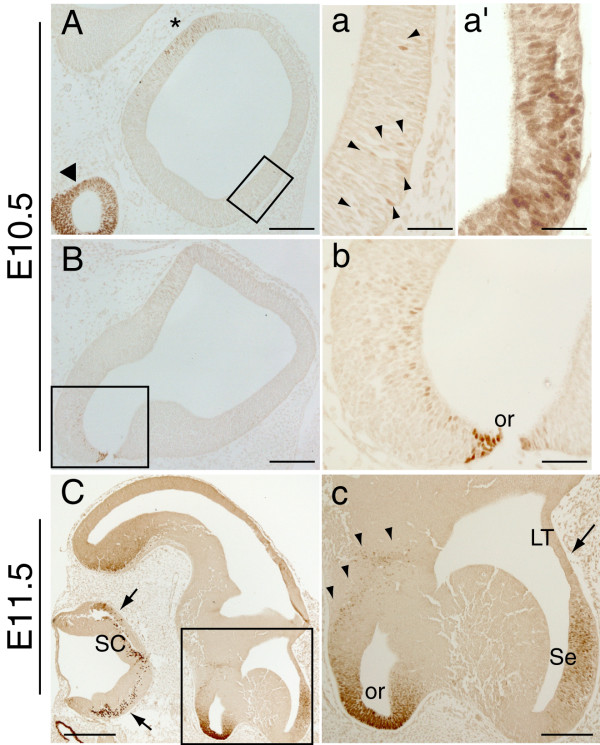
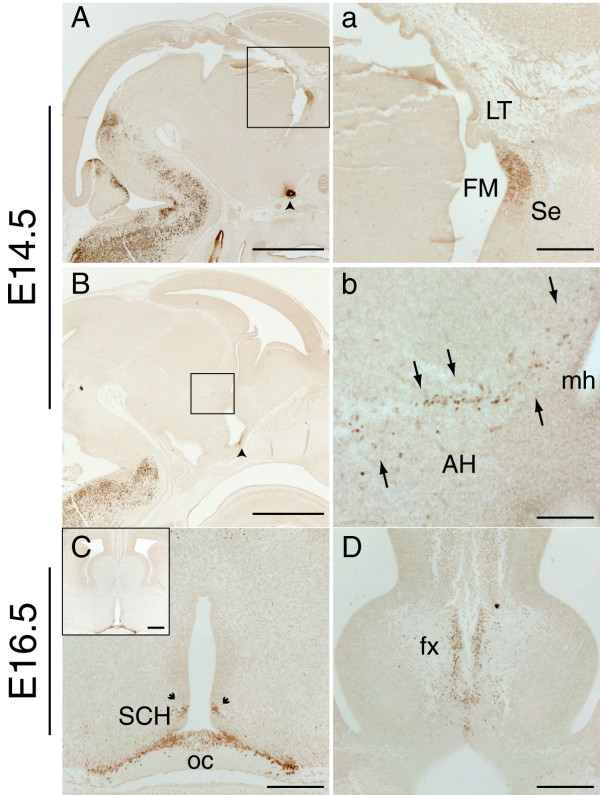
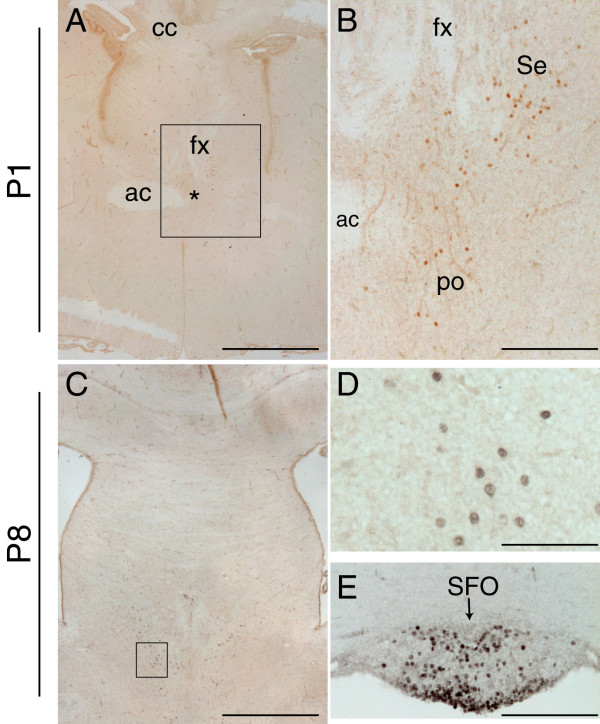
The availability of specific markers expressed in different regions of the developing nervous system provides a useful tool for the study of mouse mutants. One such marker, the transcription factor Pax2, is expressed at the midbrain-hindbrain boundary and in the cerebellum, spinal cord, retina, optic stalk, and optic chiasm. We recently described a group of diencephalic cells that express Pax2 as early as embryonic day (E) 10.5, and become part of the eminentia thalami by E11.5. The discovery of this previously undescribed cell population prompted us to examine Pax2 protein expression in the developing mouse forebrain in more detail.
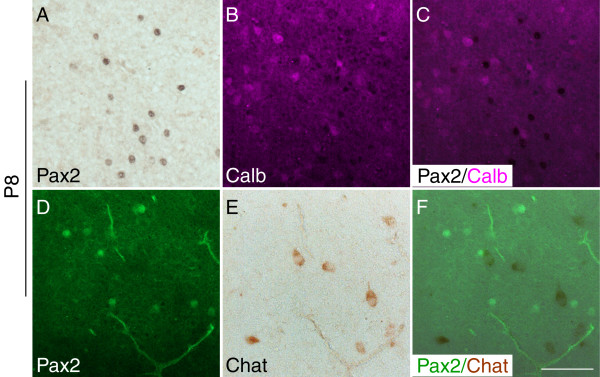
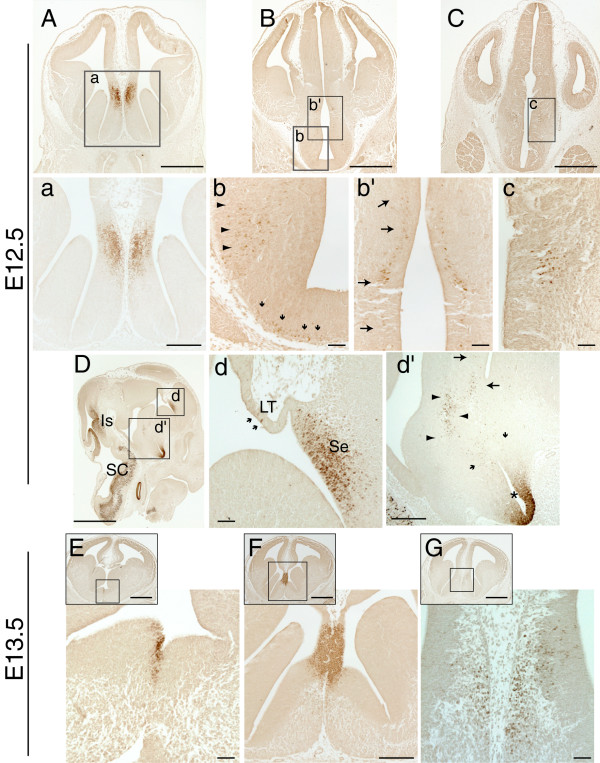
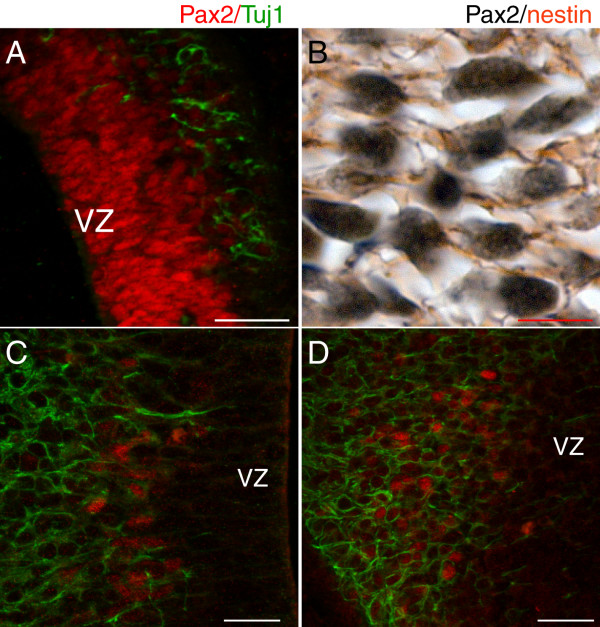
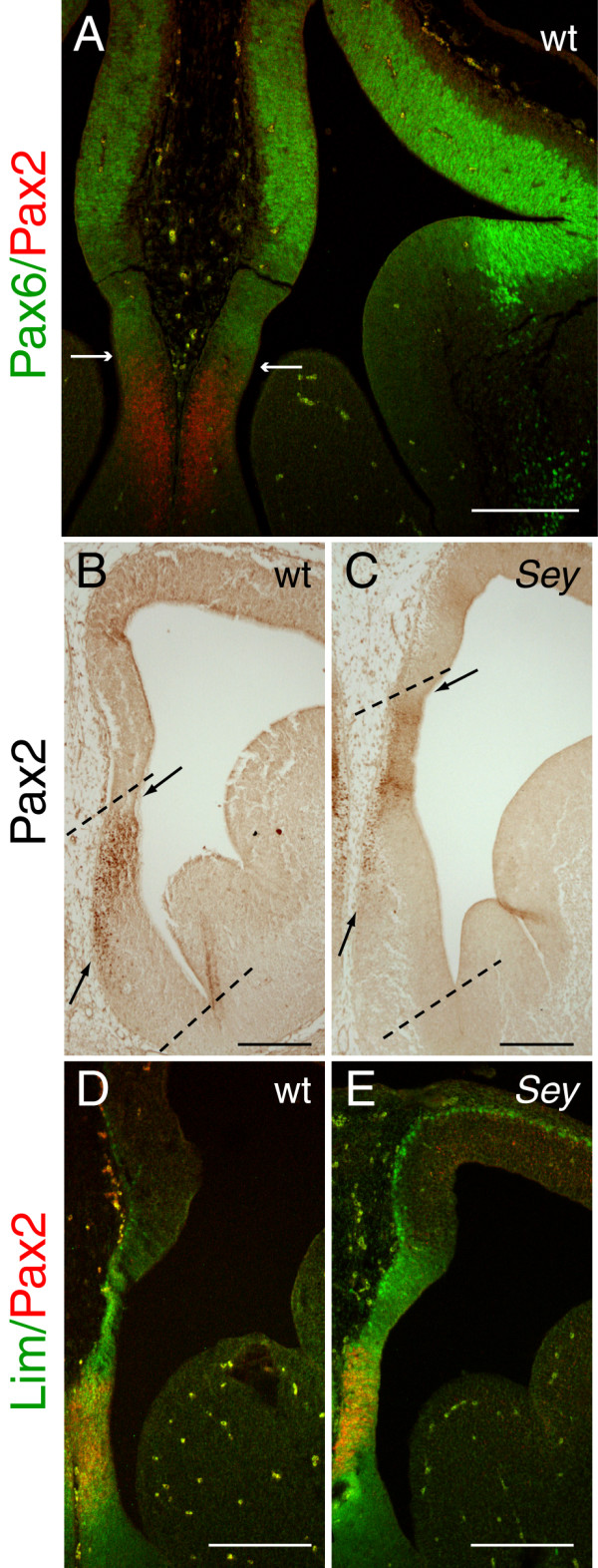
We determined the expression pattern of Pax2 in the forebrain of wild type mouse embryos between E10.5 and postnatal day (P) 15. Pax2 expression was detected in the septum of the basal forebrain, hypothalamus, eminentia thalami and in the subfornical organ. To evaluate Pax2 as a marker for septal cells, we examined Pax2 expression in Pax6Sey/Sey mutants, which have an enlarged septum. We found that Pax2 clearly marks a population of septal cells equivalent to that seen in wild types, indicating its utility as a marker of septal identity. These cells did not express the GABAergic marker calbindin nor the cholinergic marker choline acetyltransferase and were not detectable after P15.
Pax2 is expressed in populations of cells within the developing septum, hypothalamus, and eminentia thalami. It seems especially useful as a marker of the telencephalic septum, because of its early, strong and characteristic expression in this structure. Further, its expression is maintained in the enlarged septum of Pax6Sey/Sey mutants.
在发育中的神经系统不同区域表达的特定标志物为研究小鼠突变体提供了有用的工具。一种这样的标志物,即转录因子Pax2,在中脑 - 后脑边界以及小脑、脊髓、视网膜、视柄和视交叉中表达。我们最近描述了一组早在胚胎第(E)10.5天就表达Pax2的间脑细胞,并在E11.5时成为丘脑隆起的一部分。这一先前未描述的细胞群体的发现促使我们更详细地研究发育中小鼠前脑中Pax2蛋白的表达。
我们确定了野生型小鼠胚胎在E10.5至出生后第(P)15天期间前脑中Pax2的表达模式。在基底前脑的隔区、下丘脑、丘脑隆起和穹窿下器官中检测到Pax2表达。为了评估Pax2作为隔区细胞标志物的作用,我们检查了Pax6Sey/Sey突变体(其隔区增大)中Pax2的表达。我们发现Pax2清楚地标记了一组与野生型中所见相当的隔区细胞,表明其作为隔区特征标志物的效用。这些细胞不表达GABA能标志物钙结合蛋白,也不表达胆碱能标志物胆碱乙酰转移酶,并且在P15之后无法检测到。
Pax2在发育中的隔区、下丘脑和丘脑隆起的细胞群体中表达。由于其在该结构中早期、强烈且特征性的表达,它似乎特别适合作为端脑隔区的标志物。此外,其表达在Pax6Sey/Sey突变体增大的隔区中得以维持。