Tohda Chihiro, Naito Rie, Joyashiki Eri
Division of Biofunctional Evaluation, Research Center for Ethnomedicine, Institute of Natural Medicine, University of Toyama, Toyama 930-0194, Japan.
BMC Complement Altern Med. 2008 Aug 16;8:49. doi: 10.1186/1472-6882-8-49.
We previously hypothesized that achievement of recovery of brain function after the injury requires the reconstruction of neuronal networks, including neurite regeneration and synapse reformation. Kihi-to is composed of twelve crude drugs, some of which have already been shown to possess neurite extension properties in our previous studies. The effect of Kihi-to on memory deficit has not been examined. Thus, the goal of the present study is to determine the in vivo and in vitro effects of Kihi-to on memory, neurite growth and synapse reconstruction.
Effects of Kihi-to, a traditional Japanese-Chinese traditional medicine, on memory deficits and losses of neurites and synapses were examined using Alzheimer's disease model mice. Improvements of Abeta(25-35)-induced neuritic atrophy by Kihi-to and the mechanism were investigated in cultured cortical neurons.
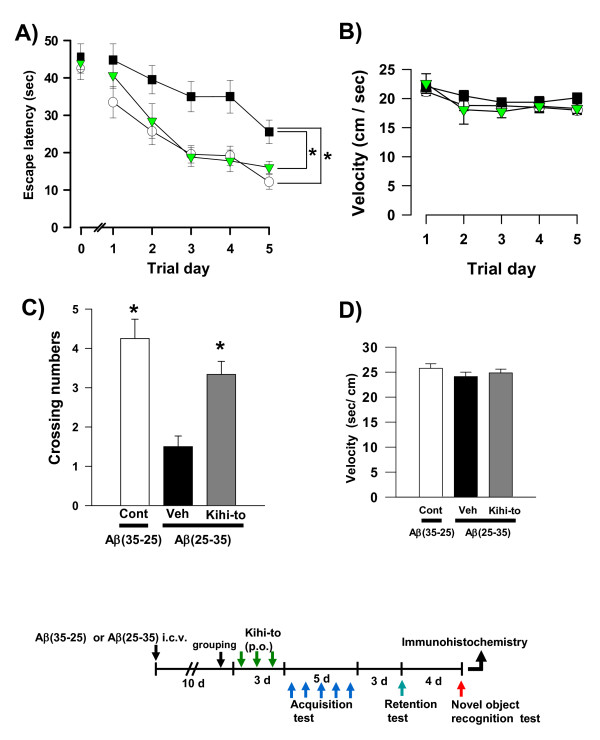
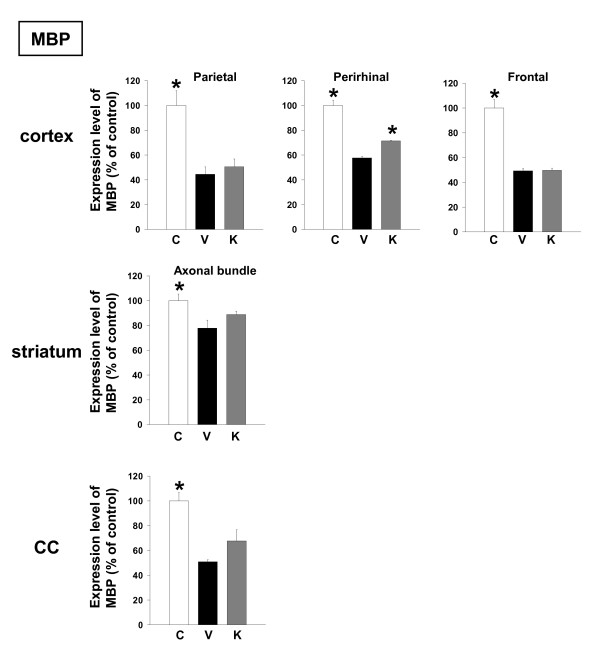
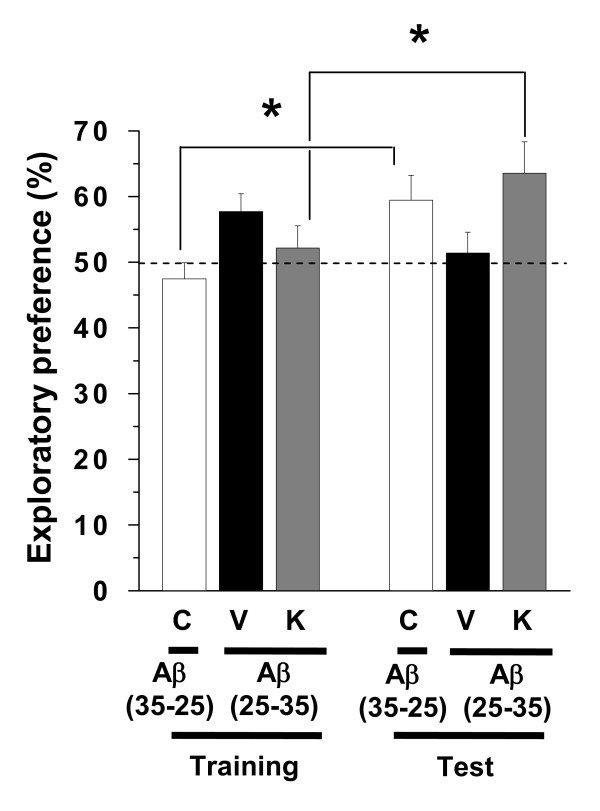
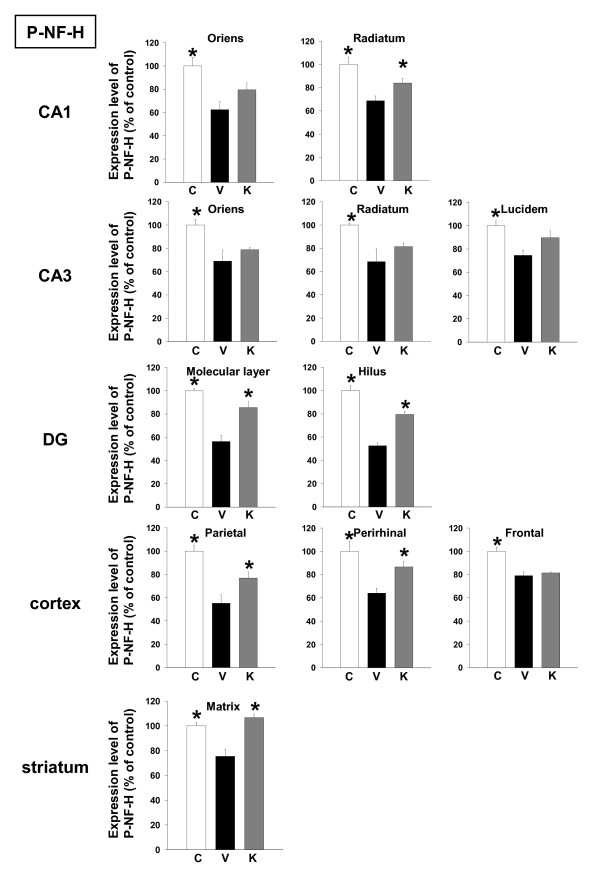
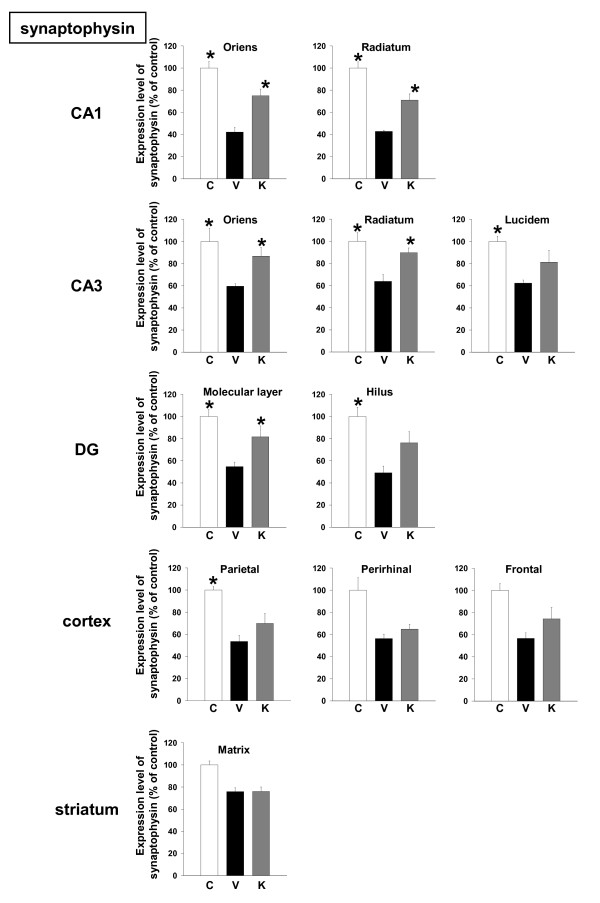
Administration of Kihi-to for consecutive 3 days resulted in marked improvements of Abeta(25-35)-induced impairments in memory acquisition, memory retention, and object recognition memory in mice. Immunohistochemical comparisons suggested that Kihi-to attenuated neuritic, synaptic and myelin losses in the cerebral cortex, hippocampus and striatum. Kihi-to also attenuated the calpain increase in the cerebral cortex and hippocampus. When Kihi-to was added to cells 4 days after Abeta(25-35) treatment, axonal and dendritic outgrowths in cultured cortical neurons were restored as demonstrated by extended lengths of phosphorylated neurofilament-H (P-NF-H) and microtubule-associated protein (MAP)2-positive neurites. Abeta(25-35)-induced cell death in cortical culture was also markedly inhibited by Kihi-to. Since NF-H, MAP2 and myelin basic protein (MBP) are substrates of calpain, and calpain is known to be involved in Abeta-induced axonal atrophy, expression levels of calpain and calpastatin were measured. Treatment with Kihi-to inhibited the Abeta(25-35)-evoked increase in the calpain level and decrease in the calpastatin level. In addition, Kihi-to inhibited Abeta(25-35)-induced calcium entry.
In conclusion Kihi-to clearly improved the memory impairment and losses of neurites and synapses.
我们之前曾假设,损伤后脑功能的恢复需要重建神经网络,包括神经突再生和突触重塑。杞菊汤由十二味生药组成,其中一些在我们之前的研究中已被证明具有促进神经突生长的特性。但杞菊汤对记忆缺陷的影响尚未得到研究。因此,本研究的目的是确定杞菊汤在体内和体外对记忆、神经突生长和突触重建的影响。
使用阿尔茨海默病模型小鼠,研究日本传统汉方药物杞菊汤对记忆缺陷以及神经突和突触丢失的影响。在培养的皮层神经元中,研究杞菊汤对β淀粉样蛋白(25-35)诱导的神经突萎缩的改善作用及其机制。
连续3天给予杞菊汤可显著改善β淀粉样蛋白(25-35)诱导的小鼠记忆获得、记忆保持和物体识别记忆障碍。免疫组织化学比较表明,杞菊汤可减轻大脑皮层、海马和纹状体中的神经突、突触和髓鞘丢失。杞菊汤还可减轻大脑皮层和海马中钙蛋白酶的增加。在β淀粉样蛋白(25-35)处理4天后向细胞中加入杞菊汤,培养的皮层神经元中的轴突和树突生长得以恢复,这可通过磷酸化神经丝-H(P-NF-H)和微管相关蛋白(MAP)2阳性神经突的延长长度来证明。杞菊汤还可显著抑制β淀粉样蛋白(25-35)诱导的皮层培养细胞死亡。由于NF-H、MAP2和髓鞘碱性蛋白(MBP)是钙蛋白酶的底物,且已知钙蛋白酶参与β淀粉样蛋白诱导的轴突萎缩,因此检测了钙蛋白酶和钙蛋白酶抑制蛋白的表达水平。杞菊汤处理可抑制β淀粉样蛋白(25-35)引起的钙蛋白酶水平升高和钙蛋白酶抑制蛋白水平降低。此外,杞菊汤可抑制β淀粉样蛋白(25-35)诱导的钙内流。
总之,杞菊汤可明显改善记忆障碍以及神经突和突触的丢失。