Houde Mario, Diallo Amadou Oury
Centre TOXEN, Département des Sciences biologiques, Université du Québec à Montréal, C.P. 8888, Succ. Centre-ville, Montréal QC, H3C 3P8, Canada.
BMC Genomics. 2008 Aug 27;9:400. doi: 10.1186/1471-2164-9-400.
Aluminum is considered the most limiting factor for plant productivity in acidic soils, which cover large areas of the world's potential arable lands. The inhibition of root growth is recognized as the primary effect of Al toxicity. To identify genes associated with Al stress and tolerance, transcriptome analyses of four different wheat lines (2 Al-tolerant and 2 Al sensitive) that differ in their response to Al were performed.
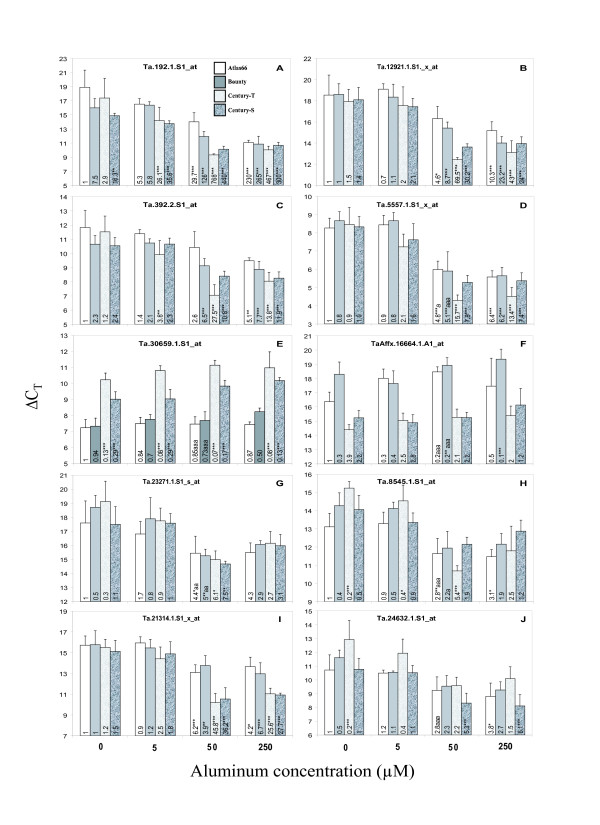
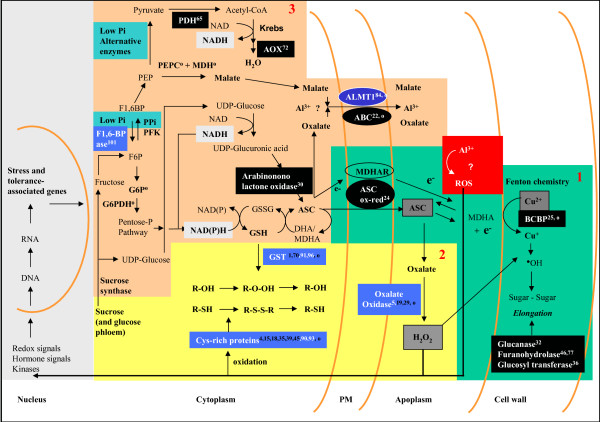
Microarray expression profiling revealed that 83 candidate genes are associated with Al stress and 25 are associated with tolerance. The stress-associated genes include important enzymes such as pyruvate dehydrogenase, alternative oxidase, and galactonolactone oxidase, ABC transporter and ascorbate oxido-reducatase. The Al tolerance-associated genes include the ALMT-1 malate transporter, glutathione S-transferase, germin/oxalate oxidase, fructose 1,6-bisphosphatase, cysteine-rich proteins, cytochrome P450 monooxygenase, cellulose synthase, zinc finger transcription factor, disease resistance response protein and F-box containing domain protein.
In this survey, we identified stress- and tolerance-associated genes that may be involved in the detoxification of Al and reactive oxygen species. Alternative pathways could help maintain the supply of important metabolites (H2O2, ascorbate, NADH, and phosphate) needed for Al tolerance and root growth. The Al tolerance-associated genes may be key factors that regulate these pathways.
铝被认为是酸性土壤中限制植物生产力的最主要因素,酸性土壤覆盖了世界上大面积的潜在耕地。根系生长受抑制被认为是铝毒的主要影响。为了鉴定与铝胁迫和耐受性相关的基因,对四种不同小麦品系(2个耐铝品系和2个铝敏感品系)进行了转录组分析,这些品系对铝的反应不同。
微阵列表达谱分析表明,83个候选基因与铝胁迫相关,25个与耐受性相关。与胁迫相关的基因包括丙酮酸脱氢酶、交替氧化酶、半乳糖内酯氧化酶、ABC转运蛋白和抗坏血酸氧化还原酶等重要酶类。与铝耐受性相关的基因包括苹果酸转运蛋白ALMT-1、谷胱甘肽S-转移酶、萌发素/草酸氧化酶、果糖1,6-二磷酸酶、富含半胱氨酸的蛋白质、细胞色素P450单加氧酶、纤维素合酶、锌指转录因子、抗病反应蛋白和含F-box结构域蛋白。
在本研究中,我们鉴定了与胁迫和耐受性相关的基因,这些基因可能参与铝和活性氧的解毒过程。替代途径可能有助于维持铝耐受性和根系生长所需的重要代谢物(过氧化氢、抗坏血酸、NADH和磷酸盐)的供应。与铝耐受性相关的基因可能是调节这些途径的关键因素。