Gonçalves Manuel A F V, Holkers Maarten, van Nierop Gijsbert P, Wieringa Roeland, Pau Maria G, de Vries Antoine A F
Virus and Stem Cell Biology Laboratory, Department of Molecular Cell Biology, Leiden University Medical Center, Leiden, The Netherlands.
PLoS One. 2008 Aug 29;3(8):e3084. doi: 10.1371/journal.pone.0003084.
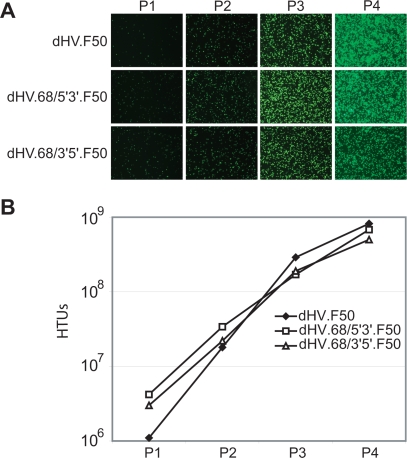
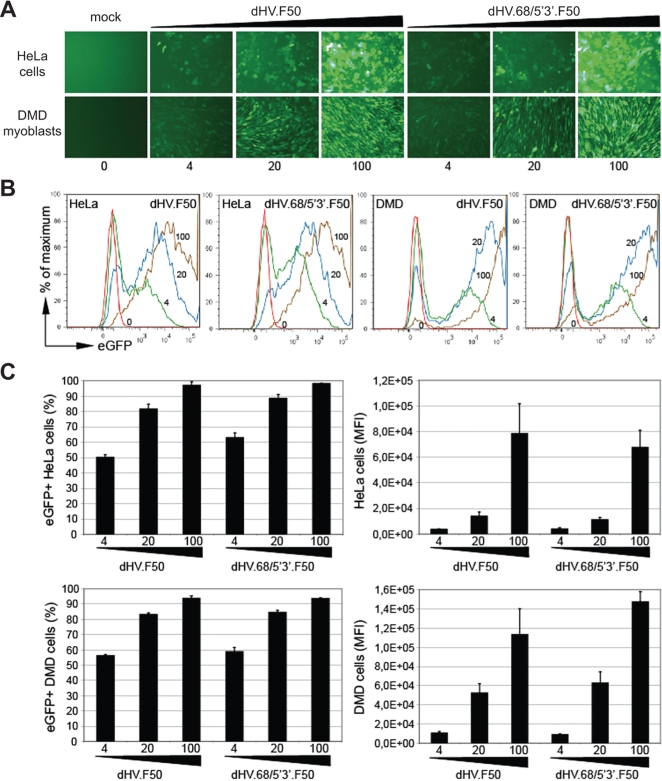
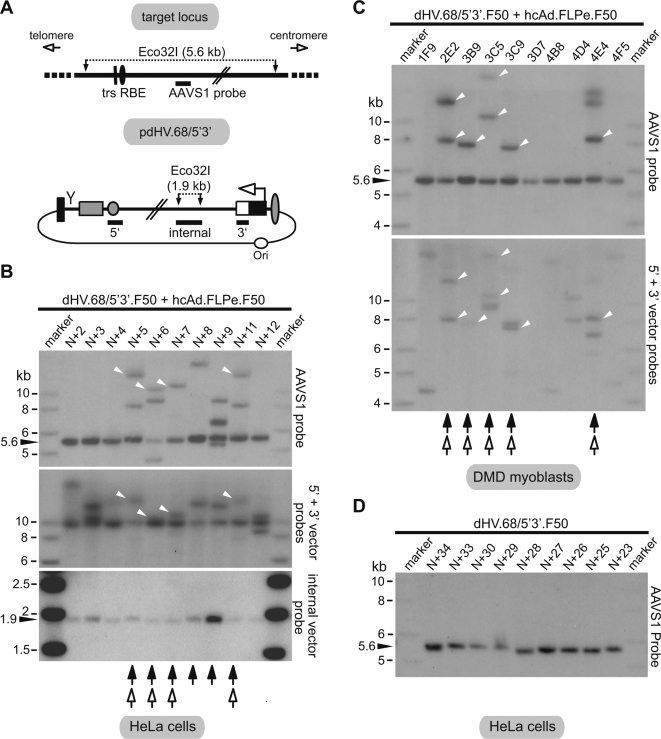
A prominent goal in gene therapy research concerns the development of gene transfer vehicles that can integrate exogenous DNA at specific chromosomal loci to prevent insertional oncogenesis and provide for long-term transgene expression. Adenovirus (Ad) vectors arguably represent the most efficient delivery systems of episomal DNA into eukaryotic cell nuclei. The most advanced recombinant Ads lack all adenoviral genes. This renders these so-called high-capacity (hc) Ad vectors less cytotoxic/immunogenic than those only deleted in early regions and creates space for the insertion of large/multiple transgenes. The versatility of hcAd vectors is been increased by capsid modifications to alter their tropism and by the incorporation into their genomes of sequences promoting chromosomal insertion of exogenous DNA. Adeno-associated virus (AAV) can insert its genome into a specific human locus designated AAVS1. Trans- and cis-acting elements needed for this reaction are the AAV Rep78/68 proteins and Rep78/68-binding sequences, respectively. Here, we describe the generation, characterization and testing of fiber-modified dual hcAd/AAV hybrid vectors (dHVs) containing both these elements. Due to the inhibitory effects of Rep78/68 on Ad-dependent DNA replication, we deployed a recombinase-inducible gene switch to repress Rep68 synthesis during vector rescue and propagation. Flow cytometric analyses revealed that rep68-positive dHVs can be produced similarly well as rep68-negative control vectors. Western blot experiments and immunofluorescence microscopy analyses demonstrated transfer of recombinase-dependent rep68 genes into target cells. Studies in HeLa cells and in the dystrophin-deficient myoblasts from a Duchenne muscular dystrophy (DMD) patient showed that induction of Rep68 synthesis in cells transduced with fiber-modified and rep68-positive dHVs leads to increased stable transduction levels and AAVS1-targeted integration of vector DNA. These results warrant further investigation especially considering the paucity of vector systems allowing permanent phenotypic correction of patient-own cell types with large DNA (e.g. recombinant full-length DMD genes).
基因治疗研究中的一个突出目标是开发能够将外源DNA整合到特定染色体位点的基因传递载体,以防止插入性肿瘤发生并实现转基因的长期表达。腺病毒(Ad)载体可以说是将游离DNA导入真核细胞核最有效的递送系统。最先进的重组腺病毒缺乏所有腺病毒基因。这使得这些所谓的高容量(hc)Ad载体比仅在早期区域缺失基因的载体具有更低的细胞毒性/免疫原性,并为插入大的/多个转基因创造了空间。通过衣壳修饰改变其嗜性以及将促进外源DNA染色体插入的序列整合到其基因组中,hcAd载体的多功能性得到了增强。腺相关病毒(AAV)可以将其基因组插入到一个特定的人类位点,称为AAVS1。该反应所需的反式和顺式作用元件分别是AAV Rep78/68蛋白和Rep78/68结合序列。在这里,我们描述了包含这两种元件的纤维修饰双hcAd/AAV杂交载体(dHVs)的产生、表征和测试。由于Rep78/68对依赖Ad的DNA复制具有抑制作用,我们部署了一种重组酶诱导型基因开关,以在载体拯救和繁殖过程中抑制Rep68的合成。流式细胞术分析表明,rep68阳性的dHVs与rep68阴性对照载体的产生效果相似。蛋白质免疫印迹实验和免疫荧光显微镜分析证明了重组酶依赖性rep68基因向靶细胞的转移。在HeLa细胞和一名杜兴氏肌营养不良(DMD)患者的肌营养不良蛋白缺陷成肌细胞中的研究表明,在用纤维修饰的rep68阳性dHVs转导的细胞中诱导Rep68合成会导致稳定转导水平增加以及载体DNA靶向整合到AAVS1中。这些结果值得进一步研究,特别是考虑到允许用大DNA(例如重组全长DMD基因)对患者自身细胞类型进行永久表型校正的载体系统很少。