Terol Javier, Naranjo M Angel, Ollitrault Patrick, Talon Manuel
Centro de Genómica, Instituto Valenciano de Investigaciones Agrarias, Carretera Moncada, Náquera, Km. 4,5 Moncada, Valencia, E46113, Spain.
BMC Genomics. 2008 Sep 18;9:423. doi: 10.1186/1471-2164-9-423.
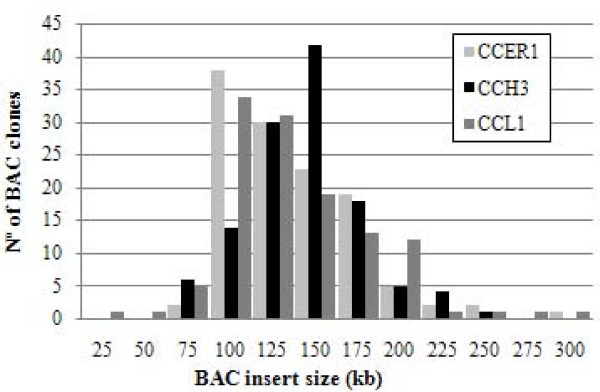
Citrus species constitute one of the major tree fruit crops of the subtropical regions with great economic importance. However, their peculiar reproductive characteristics, low genetic diversity and the long-term nature of tree breeding mostly impair citrus variety improvement. In woody plants, genomic science holds promise of improvements and in the Citrus genera the development of genomic tools may be crucial for further crop improvements. In this work we report the characterization of three BAC libraries from Clementine (Citrus clementina), one of the most relevant citrus fresh fruit market cultivars, and the analyses of 46.000 BAC end sequences. Clementine is a diploid plant with an estimated haploid genome size of 367 Mb and 2n = 18 chromosomes, which makes feasible the use of genomics tools to boost genetic improvement.
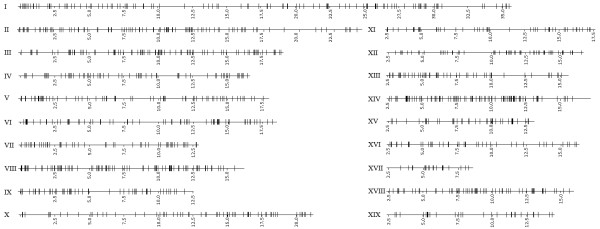
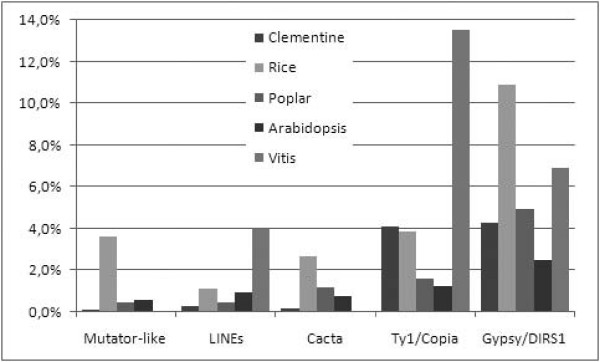
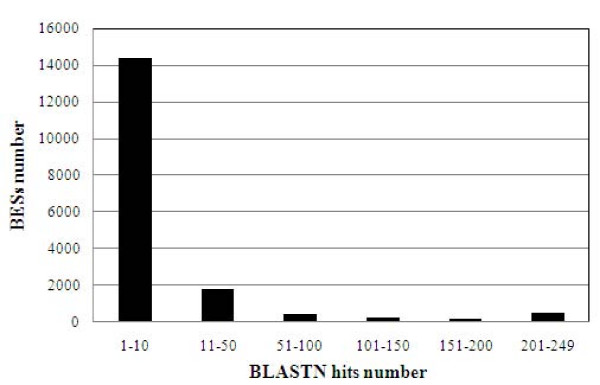
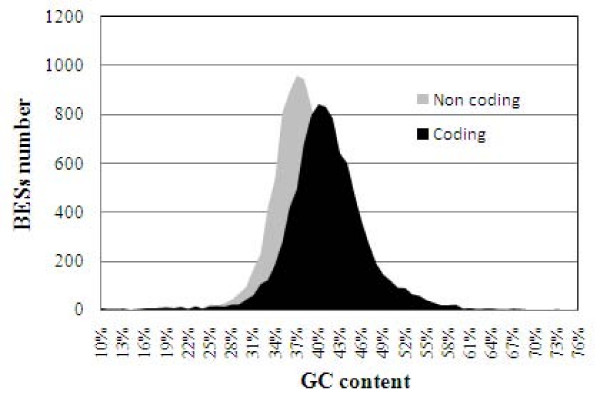
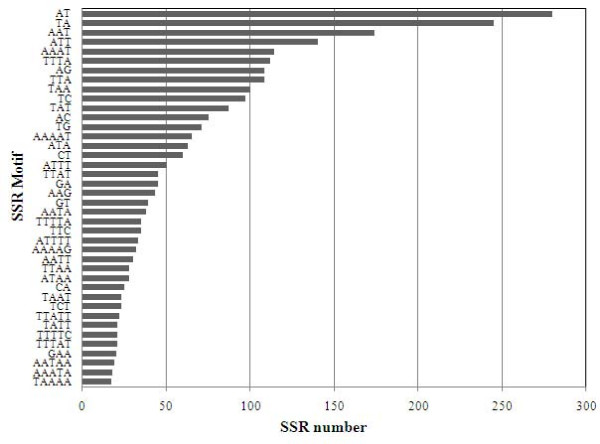
Three genomic BAC libraries of Citrus clementina were constructed through EcoRI, MboI and HindIII digestions and 56,000 clones, representing an estimated genomic coverage of 19.5 haploid genome-equivalents, were picked. BAC end sequencing (BES) of 28,000 clones produced 28.1 Mb of genomic sequence that allowed the identification of the repetitive fraction (12.5% of the genome) and estimation of gene content (31,000 genes) of this species. BES analyses identified 3,800 SSRs and 6,617 putative SNPs. Comparative genomic studies showed that citrus gene homology and microsyntheny with Populus trichocarpa was rather higher than with Arabidopsis thaliana, a species phylogenetically closer to citrus.
In this work, we report the characterization of three BAC libraries from C. clementina, and a new set of genomic resources that may be useful for isolation of genes underlying economically important traits, physical mapping and eventually crop improvement in Citrus species. In addition, BAC end sequencing has provided a first insight on the basic structure and organization of the citrus genome and has yielded valuable molecular markers for genetic mapping and cloning of genes of agricultural interest. Paired end sequences also may be very helpful for whole-genome sequencing programs.
柑橘类水果是亚热带地区主要的果树作物之一,具有重要的经济价值。然而,其独特的繁殖特性、低遗传多样性以及树木育种的长期性,大多阻碍了柑橘品种的改良。在木本植物中,基因组科学有望带来改良,而在柑橘属中,基因组工具的开发对于进一步的作物改良可能至关重要。在这项工作中,我们报告了来自克莱门氏小柑橘(Citrus clementina)的三个细菌人工染色体(BAC)文库的特征,克莱门氏小柑橘是最具相关性的柑橘鲜食市场品种之一,并对46000个BAC末端序列进行了分析。克莱门氏小柑橘是一种二倍体植物,估计单倍体基因组大小为367 Mb,2n = 18条染色体,这使得利用基因组学工具促进遗传改良成为可能。
通过EcoRI、MboI和HindIII酶切构建了三个克莱门氏小柑橘基因组BAC文库,并挑选出56000个克隆,估计基因组覆盖率为19.5个单倍体基因组当量。对28000个克隆进行BAC末端测序(BES)产生了28.1 Mb的基因组序列,这使得能够鉴定该物种的重复部分(占基因组的12.