Feng Hao, Dong Xiaonan, Negaard Ashley, Feng Pinghui
Department of Microbiology, University of Texas Southwestern Medical Center, Dallas, Texas, United States of America.
PLoS Pathog. 2008 Sep 19;4(9):e1000157. doi: 10.1371/journal.ppat.1000157.
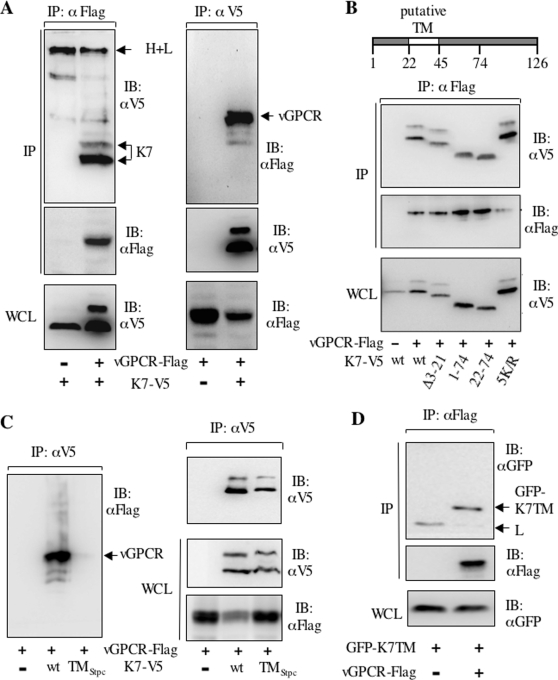
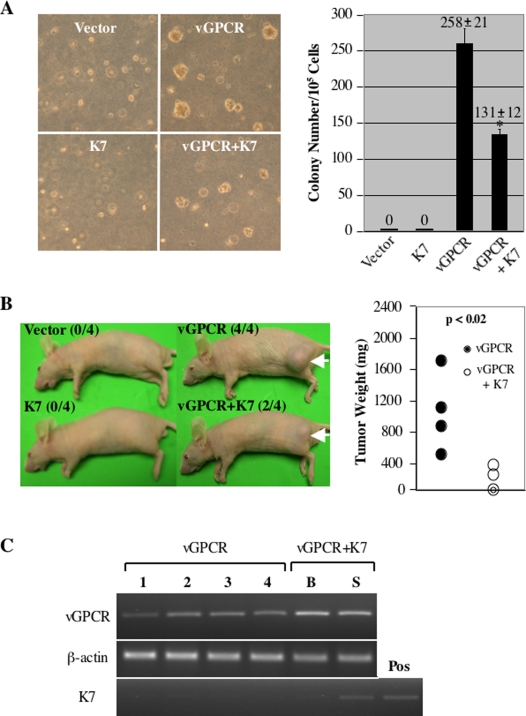
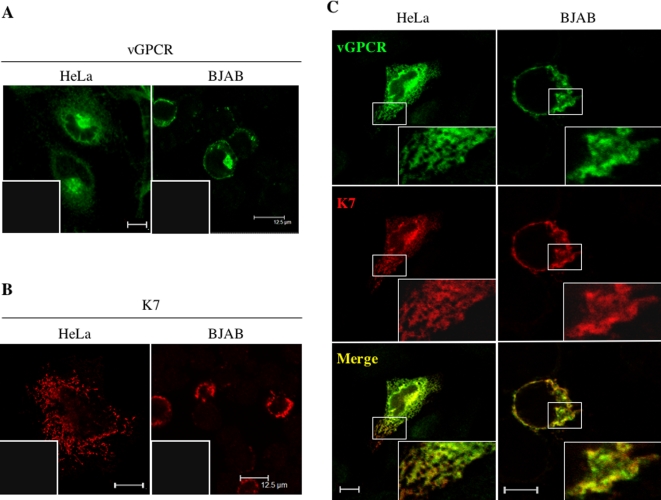
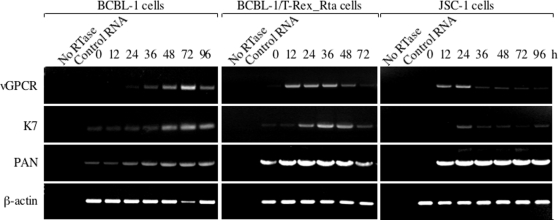
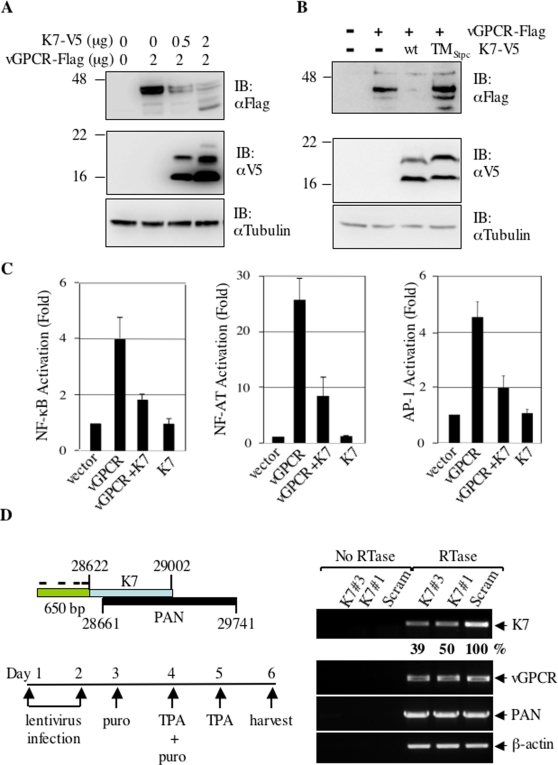
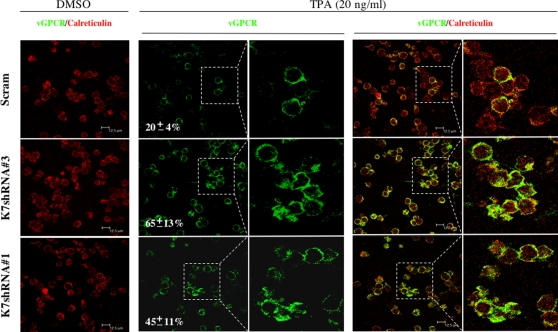
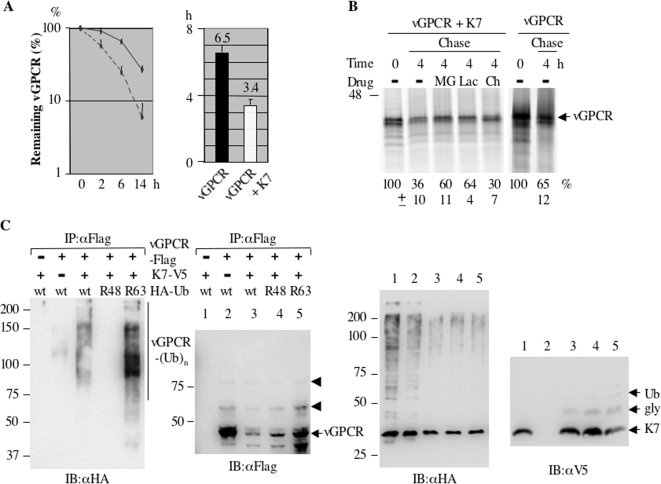
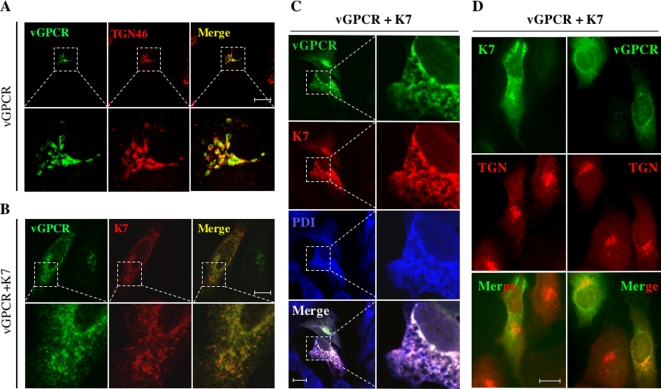
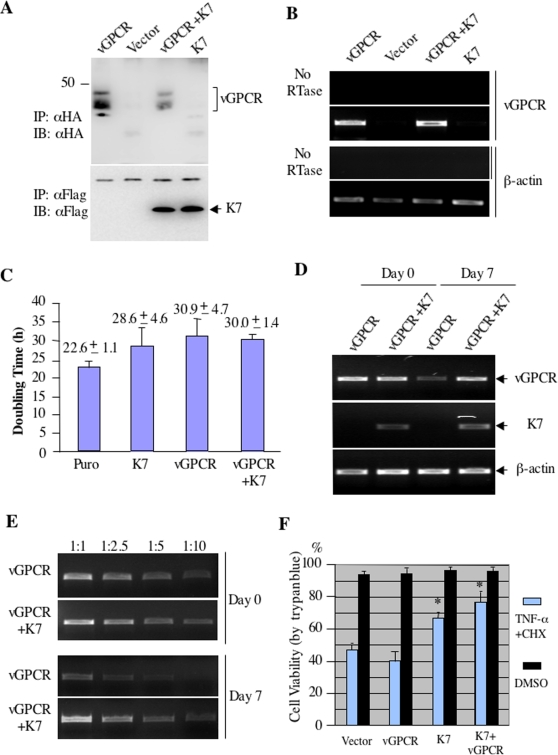
The Kaposi's sarcoma-associated herpesvirus (KSHV) genome encodes a G protein-coupled receptor (vGPCR). vGPCR is a ligand-independent, constitutively active signaling molecule that promotes cell growth and proliferation; however, it is not clear how vGPCR is negatively regulated. We report here that the KSHV K7 small membrane protein interacts with vGPCR and induces its degradation, thereby dampening vGPCR signaling. K7 interaction with vGPCR is readily detected in transiently transfected human cells. Mutational analyses reveal that the K7 transmembrane domain is necessary and sufficient for this interaction. Biochemical and confocal microscopy studies indicate that K7 retains vGPCR in the endoplasmic reticulum (ER) and induces vGPCR proteasomeal degradation. Indeed, the knockdown of K7 by shRNA-mediated silencing increases vGPCR protein expression in BCBL-1 cells that are induced for KSHV lytic replication. Interestingly, K7 expression significantly reduces vGPCR tumorigenicity in nude mice. These findings define a viral factor that negatively regulates vGPCR protein expression and reveal a post-translational event that modulates GPCR-dependent transformation and tumorigenicity.
卡波西肉瘤相关疱疹病毒(KSHV)基因组编码一种G蛋白偶联受体(vGPCR)。vGPCR是一种不依赖配体、组成性激活的信号分子,可促进细胞生长和增殖;然而,目前尚不清楚vGPCR是如何受到负调控的。我们在此报告,KSHV的K7小膜蛋白与vGPCR相互作用并诱导其降解,从而抑制vGPCR信号传导。在瞬时转染的人细胞中很容易检测到K7与vGPCR的相互作用。突变分析表明,K7跨膜结构域对于这种相互作用是必需且足够的。生化和共聚焦显微镜研究表明,K7将vGPCR保留在内质网(ER)中并诱导vGPCR经蛋白酶体降解。实际上,通过shRNA介导的沉默敲低K7可增加在诱导进行KSHV裂解复制的BCBL-1细胞中vGPCR蛋白的表达。有趣的是,K7的表达显著降低了vGPCR在裸鼠中的致瘤性。这些发现确定了一种对vGPCR蛋白表达起负调控作用的病毒因子,并揭示了一种调节GPCR依赖性转化和致瘤性的翻译后事件。