Panneton W Michael, Sun Wei, Gan Qi
Department of Anatomy and Neurobiology, St. Louis University School of Medicine, 1402 S. Grand Blvd., St. Louis, MO 63104-1028, United States.
Auton Neurosci. 2008 Dec 15;144(1-2):13-21. doi: 10.1016/j.autneu.2008.08.002. Epub 2008 Sep 21.
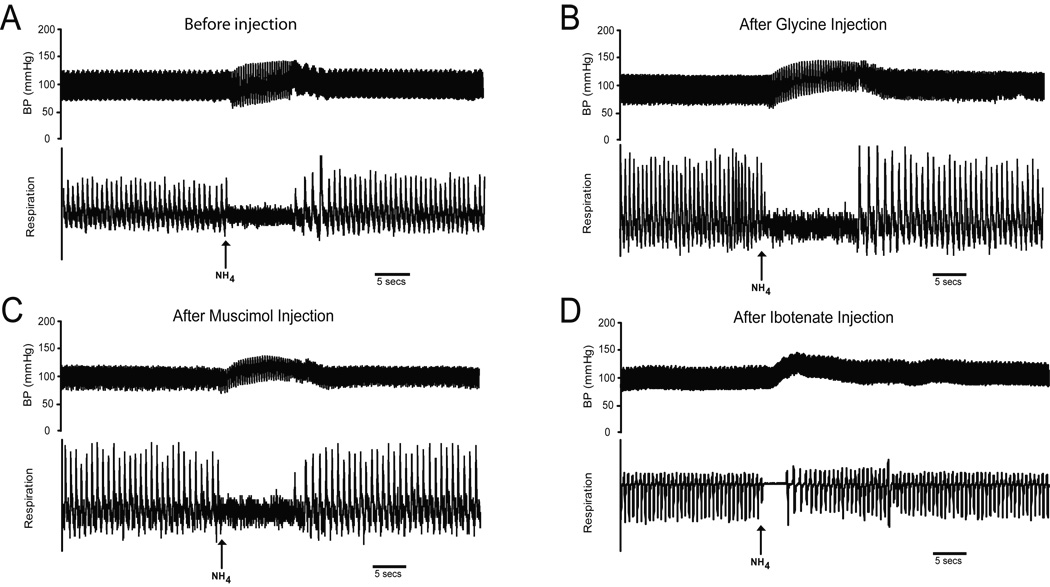
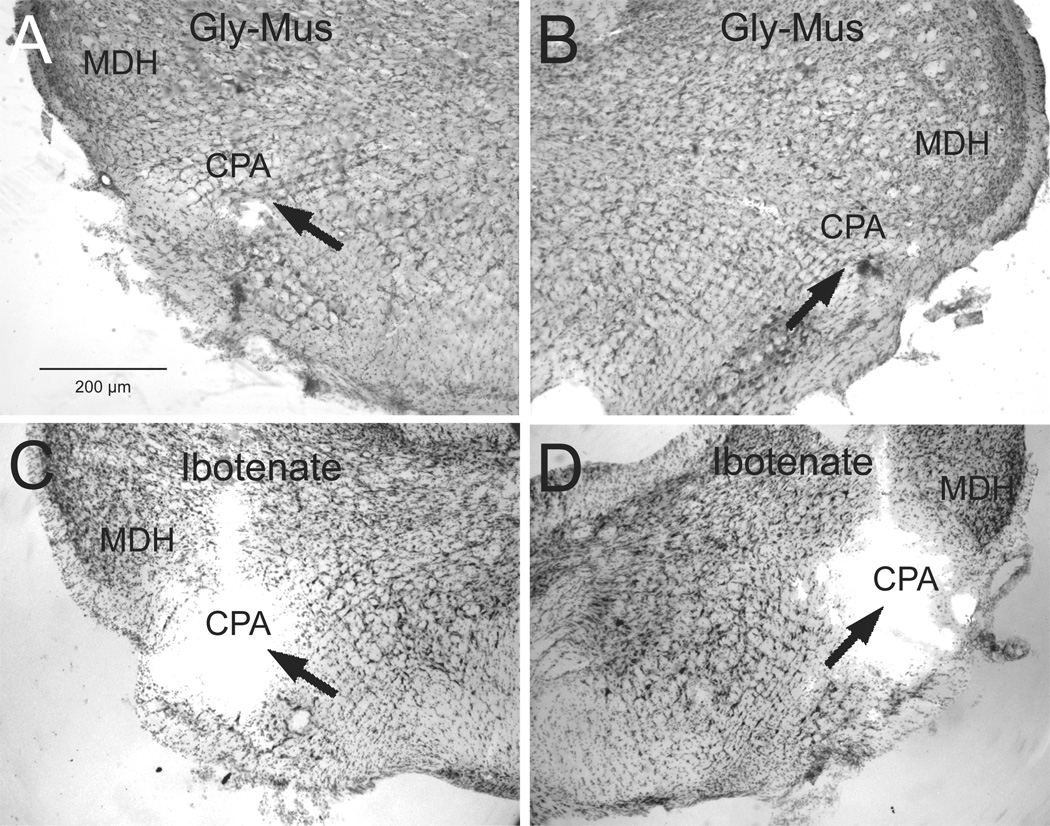
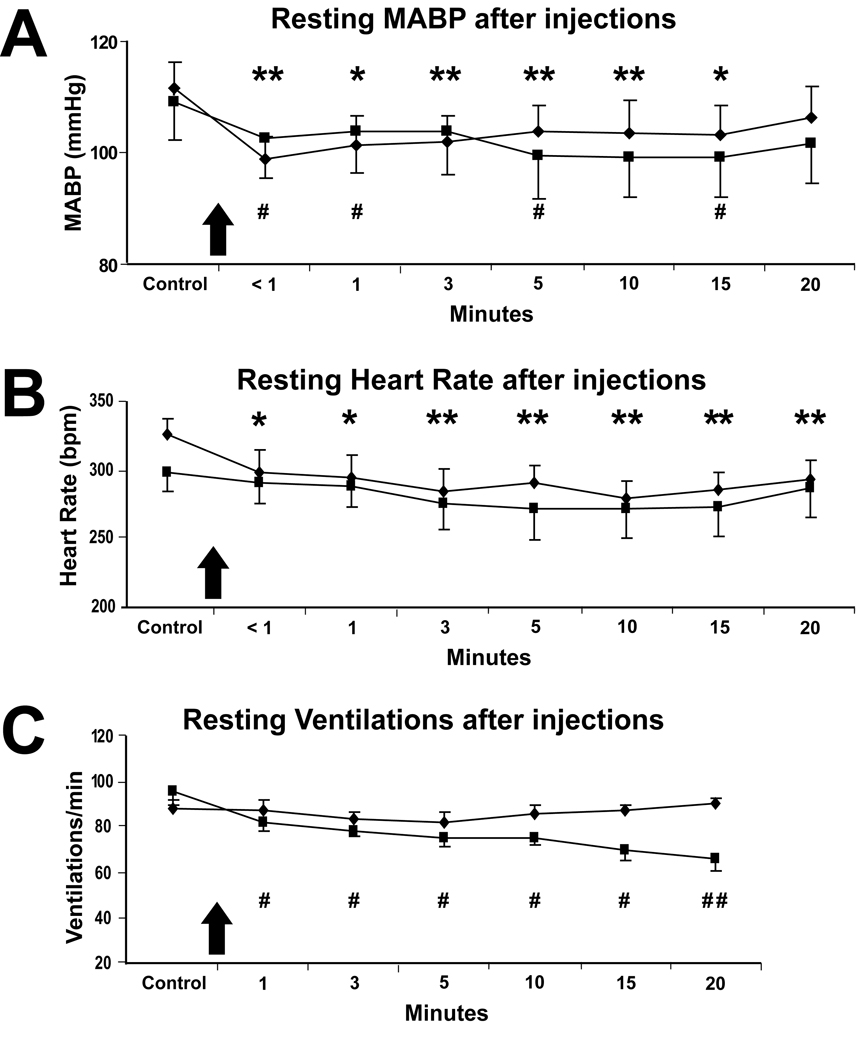
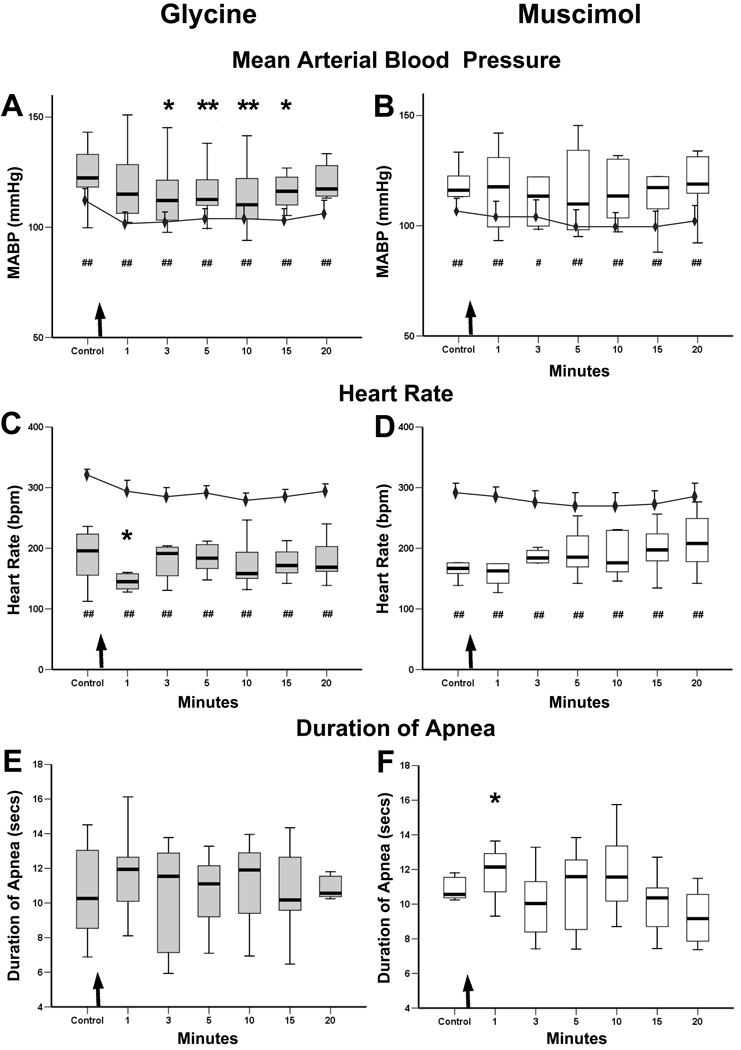
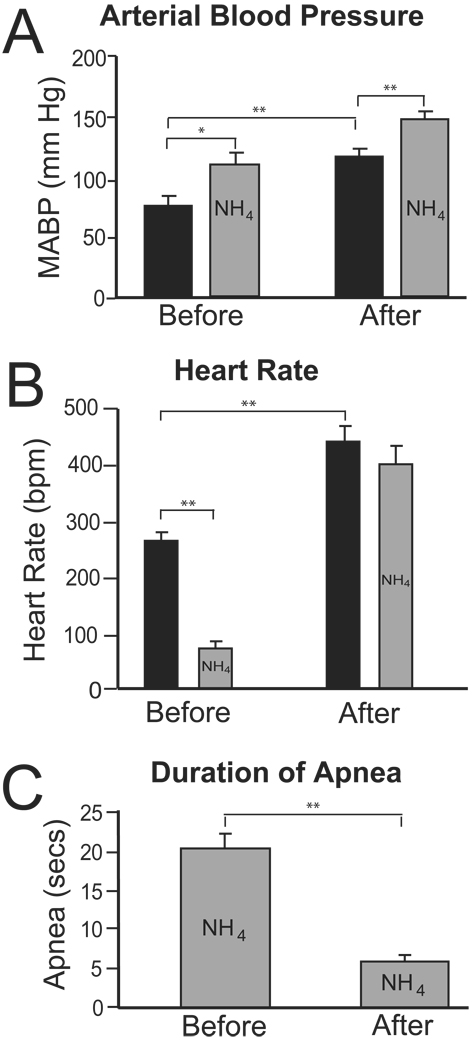
Stimulation of either the caudal pressor area (CPA) in the most caudal ventrolateral medulla with glutamate, or the nasal mucosa with ammonia vapors, induces an increase in mean arterial blood pressure (MABP). In the present study, we determined if neurons in the CPA serve as a relay for the increase in MABP seen after nasal stimulation. Ammonia vapors stimulated the nasal mucosa of rats anesthetized with either urethane alone or ketamine/xylazine and urethane to induce an increase in MABP, a bradycardia, and an apnea. Bilateral injections (50 nl) of glycine (1 M) or muscimol (2 mM) were placed in the CPA and the nasal mucosa again stimulated. The increases in MABP, the bradycardia and the duration of apnea to nasal stimulation were unchanged after either injection. However, resting MABP and HR were decreased significantly after glycine injections and resting MABP and resting respiratory rate were decreased after muscimol injections. The increase in MABP seen with nasal stimulation also did not change after multiple bilateral injections (3x40 nl) of ibotenate (5 microg/microl) in the CPA, but the bradycardia was eliminated and the duration of apnea was significantly shorter. These results suggest that the increase in MABP induced by nasal stimulation is via routes that do not include neurons in the CPA.
用谷氨酸刺激最尾端腹外侧延髓的尾端加压区(CPA),或用氨蒸汽刺激鼻黏膜,均会导致平均动脉血压(MABP)升高。在本研究中,我们确定CPA中的神经元是否作为鼻刺激后MABP升高的中继站。氨蒸汽刺激单独用乌拉坦麻醉或用氯胺酮/赛拉嗪和乌拉坦麻醉的大鼠鼻黏膜,以诱导MABP升高、心动过缓和呼吸暂停。在CPA双侧注射(50 nl)甘氨酸(1 M)或蝇蕈醇(2 mM),然后再次刺激鼻黏膜。注射后,鼻刺激引起的MABP升高、心动过缓和呼吸暂停持续时间均未改变。然而,注射甘氨酸后静息MABP和心率显著降低,注射蝇蕈醇后静息MABP和静息呼吸频率降低。在CPA多次双侧注射(3×40 nl)鹅膏蕈氨酸(5 μg/μl)后,鼻刺激引起的MABP升高也未改变,但心动过缓消失,呼吸暂停持续时间显著缩短。这些结果表明,鼻刺激诱导的MABP升高是通过不包括CPA中神经元的途径实现的。